Healthcare
Recent items mentioning Healthcare across the Databricks ecosystem — releases, news, videos, and community Q&A. Updated hourly.
Databricks shipped two healthcare-specific tools in October: Vital Skills, open-source Agent Skills that give Genie Code HLS domain expertise and stop general agents from silently picking clinical thresholds and defaulting to generic statistical methods 1, and Funke, an open-source library that parses HL7v2 messages into native Spark types while preserving the full message hierarchy 3. Funke is rebuilt around Unity Catalog, Declarative Automation Bundles, and Spark Declarative Pipelines as the successor to Smolder 3. ModMed also uses the Lakehouse and Unity Catalog for secure healthcare AI apps and agentic workflows that give technical and non-technical users near real-time insights 4.
Generated daily from the 4 most recent items mentioning Healthcare. Click any [N] to jump to the source.
Vital Skills: Upskilling Genie Code with Healthcare and Life Sciences skills
Vital Skills is a set of open-source Agent Skills that gives coding agents healthcare and life sciences domain expertise, and Genie Code uses it to apply HLS-specific tools and best practices on Databricks. It addresses general agents silently picking clinical thresholds and defaulting to generic statistical methods. On BiomniBench, Genie Code with Vital Skills outscored Genie Code alone on supported in-scope tasks, with better consistency, accuracy and rigor, fewer missed steps and retries, and closer adherence to industry standards.
Databricks Is Doubling Down On New York City As A Premier AI Talent Hub
Databricks is doubling its New York City office footprint to 120,000 square feet at 5 Bryant Park, adding a dedicated Engineering and Research floor alongside an Executive Briefing Center. The expanded location will house teams driving enterprise AI research, infrastructure such as Unity Gateway, and agentic applications like CustomerLake.
Introducing Funke: Native HL7v2 Parsing on Databricks
Funke is an open-source Python and PySpark library that parses HL7v2 electronic health record messages directly into native Spark types on the Databricks Lakehouse while preserving their complete message hierarchy. Rebuilt around Unity Catalog, Declarative Automation Bundles, and Spark Declarative Pipelines as the successor to Smolder, it includes a runnable demo to help you stand up an end-to-end HL7 ingestion pipeline in minutes.
 News
How ModMed Transforms Healthcare AI and Agentic Workflows with Databricks
ModMed uses the Databricks Lakehouse platform and Unity Catalog to build secure AI-enabled healthcare applications and agentic workflows. The integration of these tools allows both technical and non-technical users to access near real-time data insights and solve complex problems efficiently.
 News
How HSS Offloads Provider Administrative Burden with the Databricks Data + AI Platform
Hospital for Special Surgery uses the Databricks Data and AI Platform to power MD360, an application designed to eliminate administrative burdens for healthcare providers. The platform unifies enterprise data and secures information using Unity Catalog to allow clinicians to focus entirely on patient care.
How Concurrence governs clinical AI at a trillion-token scale with Unity Gateway
Concurrence scaled its clinical AI agent platform to an annualized 1.2 trillion tokens by consolidating its data and AI architecture on Databricks. The system pairs an immutable patient world model built on Delta tables and Lakebase with Unity Catalog and Unity Gateway to enforce compliance-gated model routing and continuous agent evaluation.
Vertical Advantage: Transforming Industries with Lakebase and Agentic AI
Databricks Lakebase partners are shipping production-ready, industry-specific solutions—from fraud and regulatory-change agents to real-time claims, prior authorization, dynamic pricing, and grid intelligence—built on a single governed foundation for operational data, analytics, and AI. Powered by Lakebase's serverless Postgres, sub-10ms operational serving, zero-copy branching, and agent-native memory, these solutions are deployable today and designed to turn platform capability into measurable business value.
Data Mesh vs. Data Fabric: Key Differences and How the Lakehouse Resolves the Debate
Lakehouse architecture ends the mesh-versus-fabric tradeoff by pairing domain-owned data products with centralized governance enforcement, so teams ship analytics and ML products fast without fragmenting compliance. The result, per examples from financial services, healthcare, and retail, is better data quality and lower integration overhead alongside the accountability gains mesh ownership brings.
Relational vs Non-Relational Database: Choosing the Right Data Store
Relational databases enforce schemas and ACID transactions with vertical scaling and strong consistency, making them the right fit for mission-critical systems like banking, healthcare, and e-commerce; non-relational databases trade that for flexible schemas and horizontal scaling with eventual consistency, suited to high-volume workloads like social media, real-time analytics, and IoT. The post breaks down these tradeoffs to help practitioners match the data store to the workload rather than defaulting to one model.
 News
How AI Helps Match Doctors With Communities in Need | Databricks for Good
Databricks provides pro bono services and compute discounts to help nonprofits stay lean through its Databricks for Good program. The video demonstrates the Virtue Foundation agent, which uses Genie and interactive hex maps to identify underserved populations and medical facility distribution in Kenya.
Foundations for an AI-forward healthcare organization
Foundations for an AI-forward healthcare organization tackles the real blocker to health system AI adoption: fragmented data, rigid or undefined governance, and a misaligned operating model — not procurement. It argues that with governance built into the platform and serverless infrastructure, health systems can get a first governed AI use case live in weeks rather than months.
Quality care is the mission. Finance protects the margin.
Quality care is the mission. Finance protects the margin — while revenue-side functions like coding, adjudication, and denials get faster and more complex through AI and agents, finance teams are still working from fragmented systems and weeks-old data. This post argues that Databricks Genie closes that gap as a governed, ontology-grounded AI coworker that answers the three core finance questions — cost-to-reimbursement gaps, denials/underpayments, and trapped cash — with every figure traced to source and correct, not just accurate, in business context.
AI in supply chain: from demand forecasting to AI agents
Accelerating clinical AI adoption across diagnostics, documentation, and drug discovery faces tightening regulatory scrutiny as the European AI Act will classify most clinical systems as high-risk by 2026. Successfully navigating these mandates alongside HIPAA requires teams to anchor deployments in human oversight, bias-tested training data, and staged validation to safely augment clinical judgment.
AI in healthcare: applications and best practices
Clinical AI adoption is accelerating rapidly across diagnostic imaging, clinical documentation, and drug discovery, but tightening regulations like the EU AI Act will classify most clinical systems as high-risk by 2026. Successfully navigating these mandates alongside HIPAA requirements demands staged validation, bias-tested training data, and human oversight to ensure models support rather than replace clinical judgment.
The Ambulatory Intelligence Gap
Health Catalyst's Ambulatory Intelligence bridges the critical data gap in ambulatory growth by combining AI with healthcare expertise to unify disconnected access, referral, capacity, and financial data. This solution delivers same-week visibility and actionable insights through prebuilt metrics, enabling healthcare organizations to immediately identify what is driving their numbers and where to act.
Real Time Healthcare Analytics with Databricks Zerobus and Lakehouse RT via Reyden
Fortifying Enterprise Healthcare Databricks Lakebase with the Security Triad
Zero Code REST Integration for Modern HealthCare Vitals via Databricks Lakebase Data API
Databricks and NVIDIA: Building for the Agentic Era
Databricks and NVIDIA are expanding their collaboration to deliver an end-to-end AI platform, accelerating model training, inference, and agentic AI development on governed enterprise data. This includes multinode training in AI Runtime, GPU support in Databricks Free Edition, Model Serving Enhancements, and support for NVIDIA Agent Toolkit and industry-specific AI frameworks.
HealthCare Prior Authorizations with Databricks Lakebase Vector Search
Empower your healthcare agents with ready-to-use MCP on Databricks Marketplace
Databricks Marketplace now offers ready-to-use biomedical and clinical Model Context Protocol (MCP) servers from partners like Climb and Atropos Health, empowering healthcare agents. Easily build and deploy bespoke agents to production, leveraging a securely governed, centralized MCP Catalog that also supports your own custom MCP servers or data.
Announcing the 2026 Databricks Customer Awards Industry winners
The 2026 Databricks Customer Awards Industry winners have been announced, recognizing ten organizations across diverse sectors like financial services, healthcare, and manufacturing. These winners showcase compelling data and AI stories, demonstrating how they've leveraged Databricks to solve complex challenges and achieve measurable results.
Beyond parsing X12: Closing the gap for revenue cycle workflows in healthcare
Healthcare billers now have an operational workbench built on Unity Catalog gold views, providing a purpose-built UI with a denials queue, remittance drawer, and timely-filing age alerts directly on their fully parsed 835/834/837 EDI data. This solution integrates GenAI via Databricks Foundation Model APIs to auto-draft appeal letters, moving billers beyond manual spreadsheet and SQL work to review and approve instead of writing from scratch.
Modern HealthCare Capacity Planning with Databricks Lake base & AI BI
Winning under CMS TEAM: Building the learning health system to realize success in VBC today and tomorrow
Databricks helps healthcare providers succeed under the mandatory CMS TEAM program by building an AI-enabled data foundation for proactive, data-driven intervention. This enables a unified view across clinical and claims data, embedding predictive insights into care workflows to reduce SNF costs by 15% and readmissions by 12%.
Building a FHIR-native health data platform on Databricks Lakebase
Health Samurai's Aidbox now runs natively on Databricks Lakebase, providing a FHIR-native health data platform that standardizes clinical data at ingestion and makes it instantly available for Spark, ML, and AI. This architecture inherently delivers compliance with CMS-0057 and ONC mandates, eliminating the need for separate compliance workstreams.
Transforming industries with conversational AI: Partner solutions built on Databricks Genie
Databricks Genie now powers innovative, industry-specific conversational AI solutions from leading consulting and SI partners. These ready-to-deploy offerings accelerate enterprise AI transformation across financial services, healthcare, retail, and other key sectors.
Databricks for Good and Virtue Foundation: Partnering to Connect Medical Volunteers to Critical Health Services in 72 Countries
Databricks for Good partnered with Virtue Foundation to use AI for matching medical volunteers to critical health services in 72 countries. This collaboration provides updated core datasets in an accessible format, enabling better clinician skill-to-opportunity matching in developing countries.
A CFO’s guide to managing value-based care financial performance
Databricks Genie for Value-Based Financial Intelligence helps CFOs bridge the VBC Financial Intelligence Gap by enabling conversational querying of integrated clinical-financial data. This allows healthcare finance leaders to quickly monitor patient utilization, track per-member-per-month costs, and identify clinical outliers essential for managing value-based care financial performance.
Databricks Lakebase - Healthcare Patient Risk Scoring using Feature Stores powered by Lake base
The Rosetta stone of CPS: Claroty’s AI-powered library
Claroty's AI-powered CPS Library, built on Databricks Custom Agents and Delta Lake, automates entity resolution for 17M+ industrial and healthcare assets, solving the asset identity crisis where 88% of CPS devices lack exact product codes. This multi-agent AI system improves vulnerability attribution accuracy by over 25% and provides new security recommendations for over 56% of analyzed devices.
CUSTOMER STORY | ENSEMBLE: Optimizing reimbursement through proactive healthcare strategies
Agent Bricks | A Pilot to Production Series - Healthcare & Life Sciences
Operating room utilization is hiding in your scheduling data
Databricks Genie for Surgical Operations Intelligence is now available to help healthcare operations leaders close the "Operational Intelligence Gap" by enabling real-time, conversational querying of surgical scheduling data. This allows for immediate intervention on OR utilization, shifting capacity management from reactive to proactive and addressing forgone revenue and unmet patient needs.
Databricks Lake base - Enterprise Healthcare Data Intelligence via Bidirectional Data Sync
The marketing activation gap has a fix: Databricks and Stitch partner to turn data infrastructure into marketing performance
Databricks and Stitch now partner to bridge the marketing activation gap, turning your data infrastructure into tangible marketing performance. Learn how Stitch connects your Databricks environment to marketing operations, with real-world examples from QSR, retail, and healthcare brands.
From months to minutes: Building real-time clinical data pipelines with natural language
Databricks and Redox now enable real-time clinical data pipelines from EHRs to Unity Catalog with natural language prompts, reducing integration time from months to minutes. This partnership allows AI outputs to be written back into the EHR in real time, transforming Databricks into an operational layer for point-of-care interventions.
 News
How Agentic AI is Rewriting Healthcare | NVIDIA x Databricks
Agentic AI is profoundly changing healthcare by automating administrative tasks for professionals and accelerating scientific research, such as drug discovery. Databricks and NVIDIA are collaborating to build an AI-ready data layer and open-source platforms to unlock insights from digitized medical data, enabling these agentic systems.
 News
Bayada’s Snowflake-to-Databricks Migration: Transforming Data for Speed & Efficiency
Bayada Home Healthcare migrated from multiple fragmented data platforms (SQL Server, Snowflake) to Databricks to unify data silos and enable self-service analytics across their 33,000-person organization. The 5-month migration, accelerated by Tredence's pre-built accelerators, positions Bayada to deploy AI agents for clinical documentation, workforce optimization, and automated compliance processes at their office level.
 News
From Spaghetti Bowl Pipeline to DLT Efficiency
Intermountain Health migrated dozens of legacy spaghetti-bowl data pipelines from a click-ops tool to Databricks Delta Live Tables, gaining code-based versioning, CI/CD capabilities, and improved complexity management despite a steeper learning curve. Asset bundles and CI/CD processes enabled programmatic multi-environment deployment, with Delta Live Tables recommended as a gateway to Databricks tools for modernizing legacy workflows.
 Tutorials
Healthcare Interoperability: End-to-End Streaming FHIR Pipelines With Databricks & Redox
Redox streams healthcare data from EHR systems into Databricks by converting various formats (HL7, XML, X12) to FHIR JSON with normalization and connectivity handling. Databricks processes FHIR data using SQL and AI without specialized software, enabling real-time analytics and bidirectional data exchange for healthcare use cases like prior authorization.
 News
Databricks Lakeflow: The Foundation of Data + AI Innovation for Your Industry
Databricks presents LakeFlow, which enables non-data engineers to self-serve on data pipelines through no-code and low-code tools while maintaining centralized governance. The platform democratizes data access across organizations and reduces data engineering bottlenecks, allowing teams to innovate more quickly.
 News
From Code to Insights: Leveraging Advanced Infrastructure and AI Capabilities
Insulet migrated its data infrastructure from Azure to Databricks, implementing a data mesh architecture with medallion layers, Unity Catalog governance, and Delta Sharing for partner data access. The company achieved real-time analytics, GXP-compliant deployments, and FinOps cost optimization, demonstrating how to balance innovation with operational efficiency.
 News
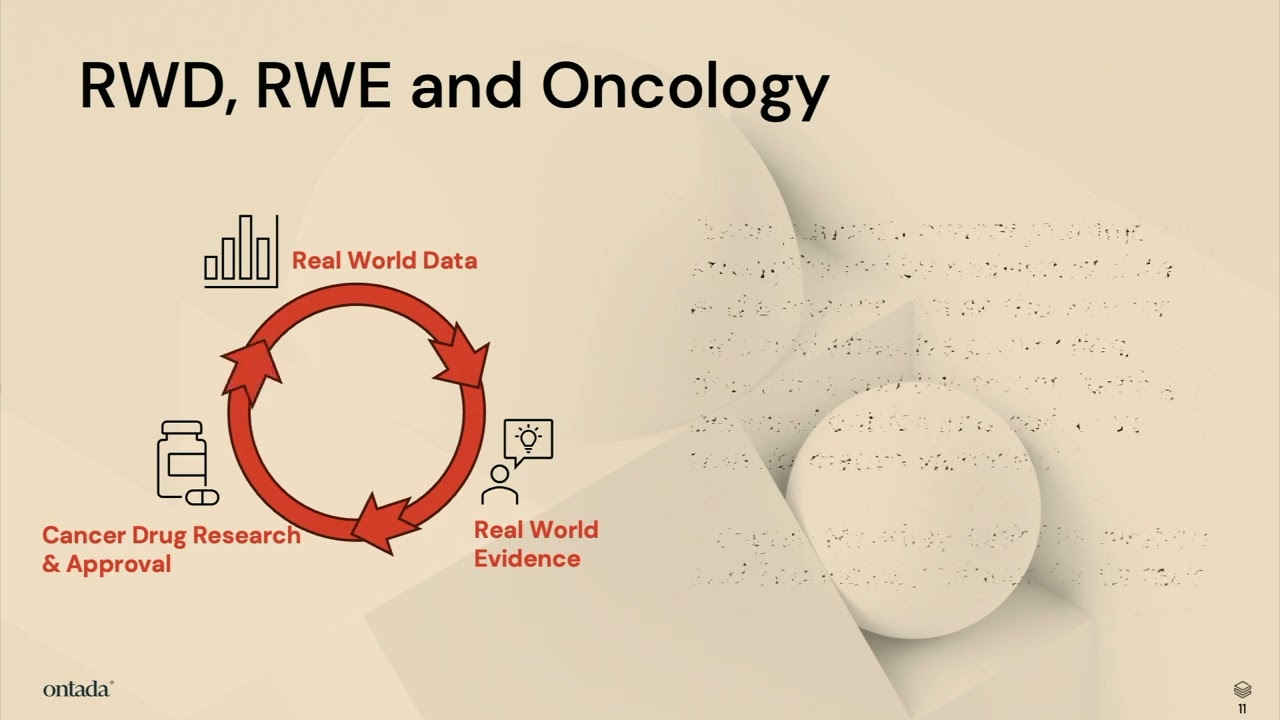
Using Lakehouse to Fight Cancer:Ontada’s Journey to Establish a RWD Platform on Databricks Lakehouse
Ontada migrated its legacy healthcare data warehouse and genomics infrastructure to the Databricks Lakehouse platform on Azure to power real-world evidence generation in cancer research. The implementation utilizes Unity Catalog, Delta Lake, and automated pipelines to ingest, harmonize, and secure large-scale structured and unstructured health data for oncology analytics.
 News
Improving Hospital Operations with Streaming Data and Real Time AI/ML
Providence built a real-time hospital streaming and forecasting platform using Azure, Databricks, and custom hl7 message parsers to address hospital overcrowding and improve patient throughput. The system ingests and processes streaming data from 52 hospitals to power machine learning models that predict patient arrivals, length of stay, and unit-level occupancy up to a week in advance.
 News
Data Architecture: IQVIA's Migration to Databricks Lakehouse for High-Performance Analytics
Iqvia migrated its global health data workloads to the Databricks Lakehouse, achieving an eighty percent reduction in runtimes and cutting processing costs by sixty percent. The company also used Delta sharing on Databricks to deliver pre-integrated data directly to clients via the Databricks Marketplace, reducing customer infrastructure costs and data delivery times.
 News
Large Language Models in Healthcare: Benchmarks, Applications, and Compliance
The video explores the current state of large language models in healthcare, focusing on benchmarks, application use cases, and accuracy gaps compared to traditional NLP methods. It demonstrates open-source optimization tools and a retrieval-augmented generation architecture designed for secure, scalable medical data processing.
 News
Automating Sensitive Data (PII/PHI) Detection
Health Verity and Prophecy demonstrate a low-code data pipeline solution built on Databricks to automate the detection and masking of sensitive healthcare data. The presenters walk through using Prophecy's visual interface and Unity Catalog integration to process encrypted vendor files, apply K-anonymity rules, and handle PII and PHI compliance.
 News
Combining Privacy Solutions to Solve Data Access at Scale
The video demonstrates a privacy technology platform that combines generative AI, differential privacy, and automated policy enforcement to safely provide data access for analytics and machine learning at scale. It showcases how users can query sensitive lakehouse data and train models using synthetic data and privacy-preserving APIs without ever exposing raw underlying records.
 News
Clean Room Primer: Using Databricks Clean Rooms to Use More & Better Data in your BI, ML, & Beyond
Databricks clean rooms enable organizations to securely collaborate and commingle data, models, and code across different cloud platforms without sharing raw underlying assets. The platform demonstrates how businesses in retail, healthcare, financial services, and media can execute SQL and Python workloads to unlock previously restricted BI and machine learning use cases while maintaining privacy and governance.
 News
Sponsored by: Wipro | Personalized Price Transparency Using Generative AI
Wipro demonstrates a generative AI solution built on Databricks that helps healthcare patients easily search and compare complex medical treatment costs from public machine-readable insurance files. The system uses a conversational assistant powered by large language models and the Vega governance framework to answer multi-part questions about out-of-pocket expenses and in-network hospital options.
 Tutorials
LLM in Practice: How to Productionize Your LLMs
The video features a Databricks panel discussion teaching best practices for building and productionizing large language models. The speakers demonstrate methodologies for data privacy, vector database scaling, model fine-tuning, and domain-specific LLM implementation in regulated industries like healthcare.
 News
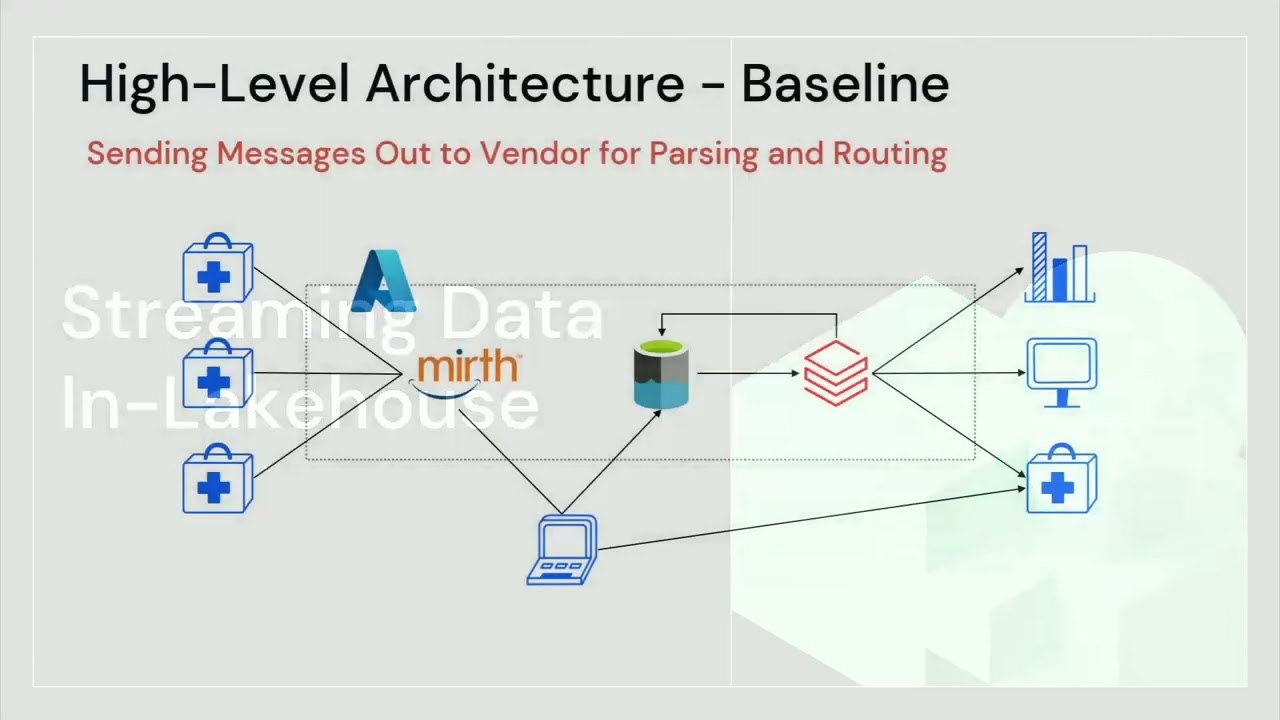
Taking Control of Streaming Healthcare Data
Crisp Shared Services uses Databricks, auto loader, and Delta live tables to ingest, parse, and standardize over a billion healthcare messaging files daily. The architecture enables near real-time data streaming, metadata-driven pipeline configuration, automated quality validation, and scalable analytics for health information exchanges.
 Tutorials
How to Build LLMs on Your Company’s Data While on a Budget
This video demonstrates two distinct methods for adapting open-source large language models to proprietary company data without high costs: using a retrieval-augmented generation pattern with a vector database or fully fine-tuning the model. It compares the practical implementation, hardware requirements, and common failure modes of each approach.
 News
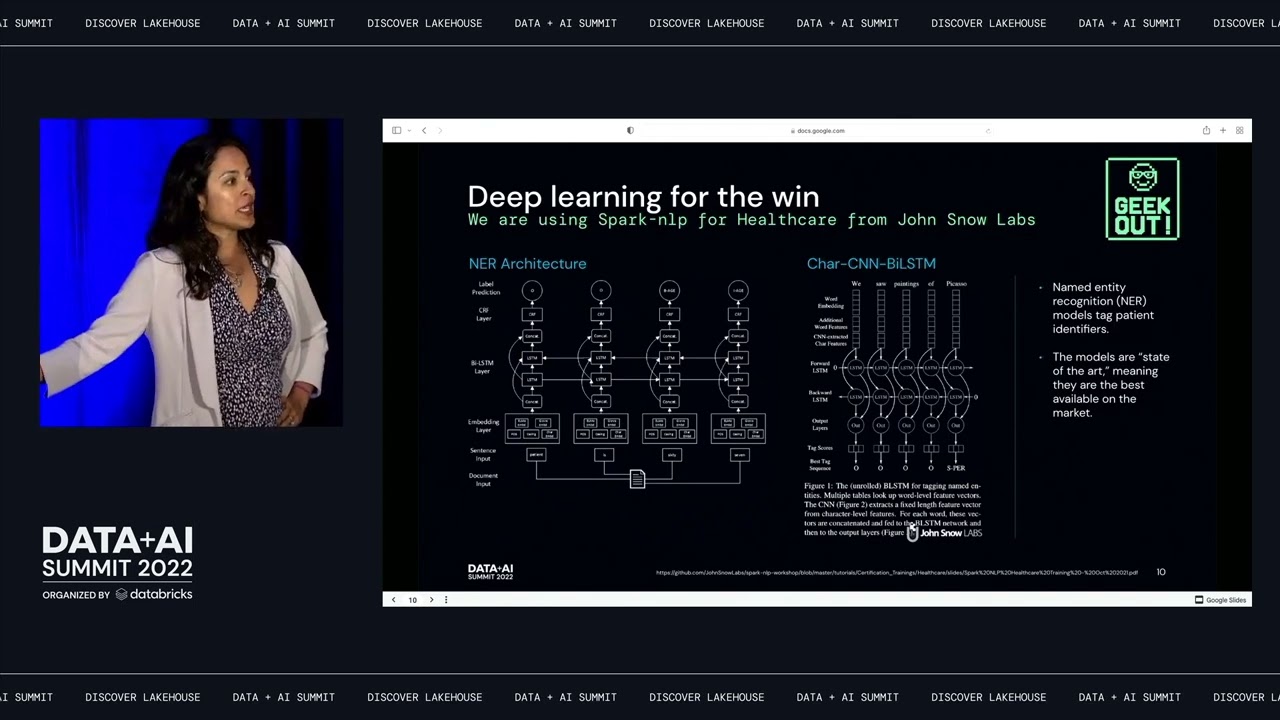
Lessons Learned from Deidentifying 700 Million Patient Notes
Providence and Tegria deidentify over 700 million patient notes by using Spark NLP for Healthcare on Databricks to tag and obfuscate protected health information. The process requires data sampling, human annotation, and equity analysis to evaluate and improve model performance and privacy protection.
 News
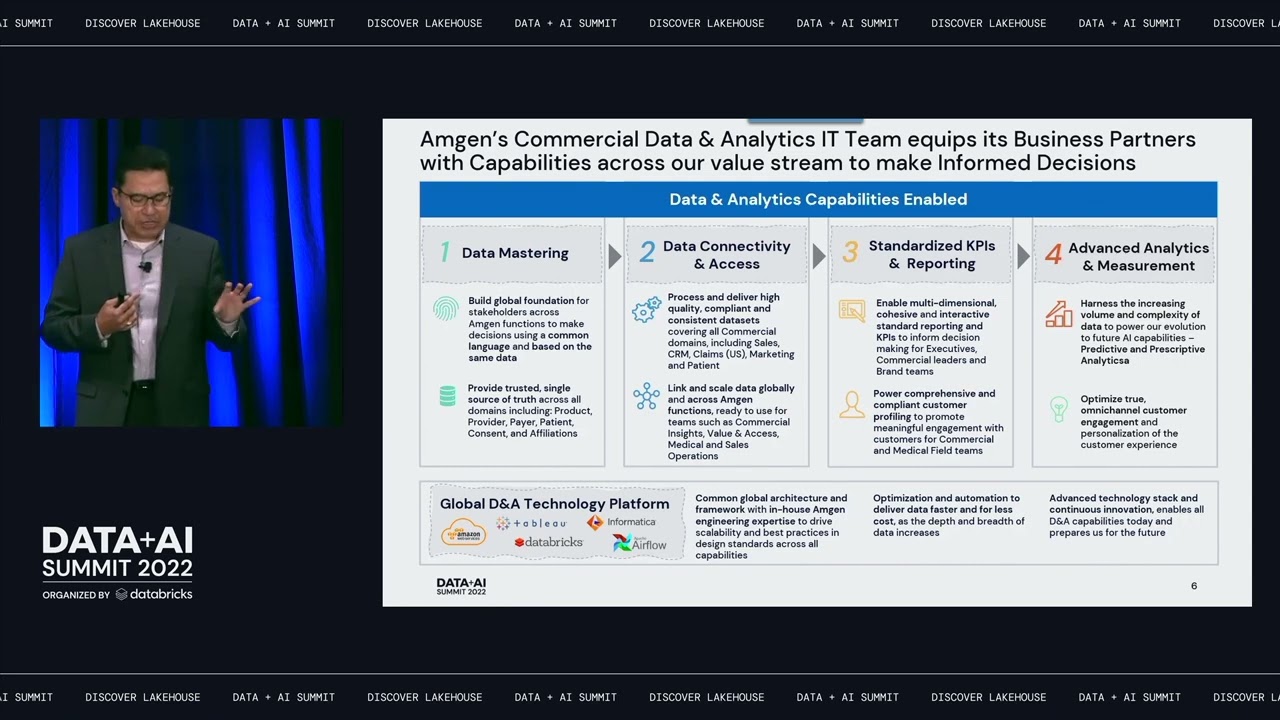
Amgen’s Journey To Building a Global 360 View of its Customers with the Lakehouse
Amgen uses a data lakehouse architecture to create a global 360-degree view of its customers and standardize reporting across regions. The company's data and analytics infrastructure integrates multiple data sources and uses agile processes to improve data quality and enable advanced analytics.
 News
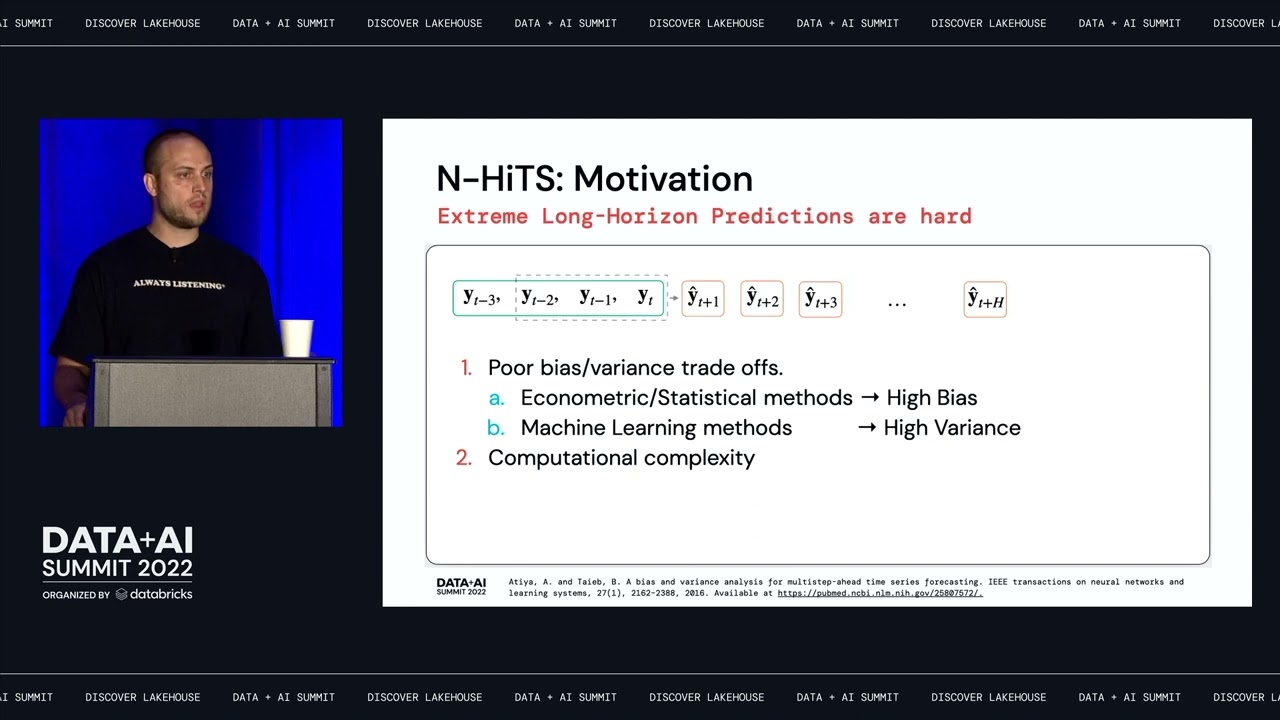
Nixtla: Deep Learning for Time Series Forecasting
Nixtla introduces two open source forecasting libraries, N-BEATSx and N-HITS, which outperform other deep learning and econometric methods with faster computation and better accuracy. The presenters also introduce StatsForecast, a library that provides fast implementations of classical econometric models.
 News
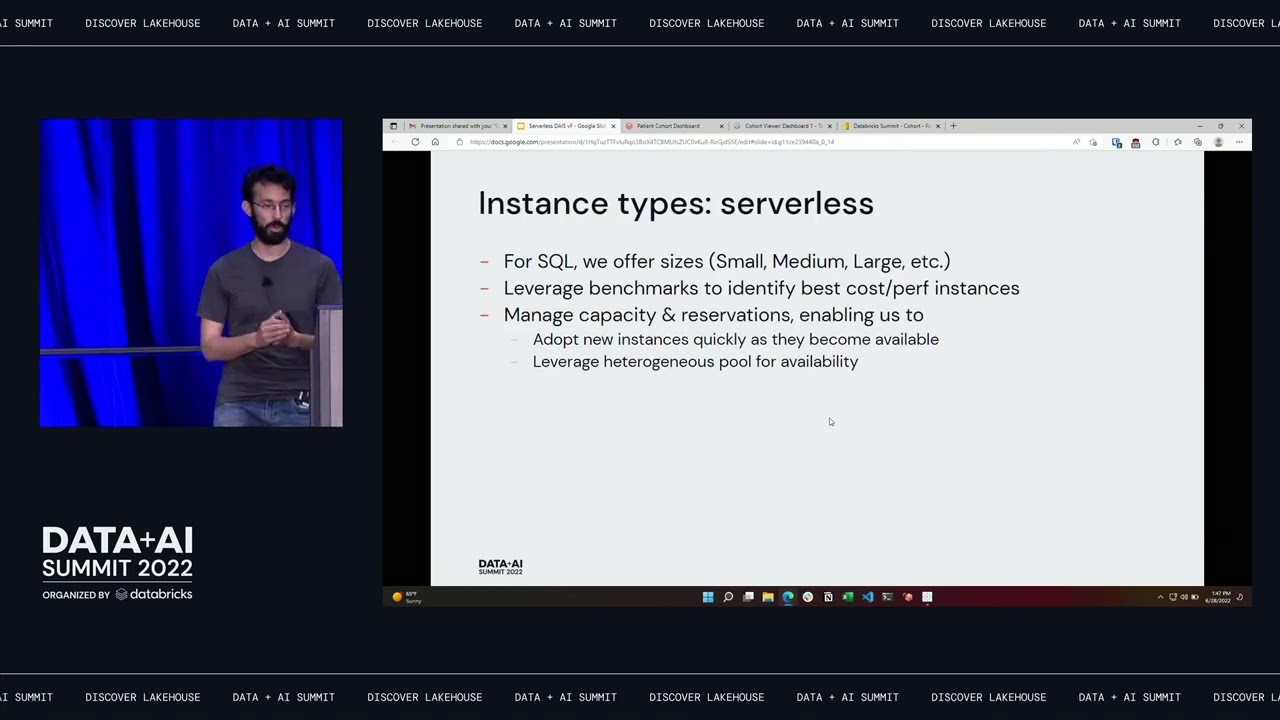
Scaling Your Workloads with Databricks Serverless
Databricks serverless SQL delivers instant query performance, managed resources, and security. Organizations like Kythera use it to speed up healthcare data insights while lowering TCO.
 News
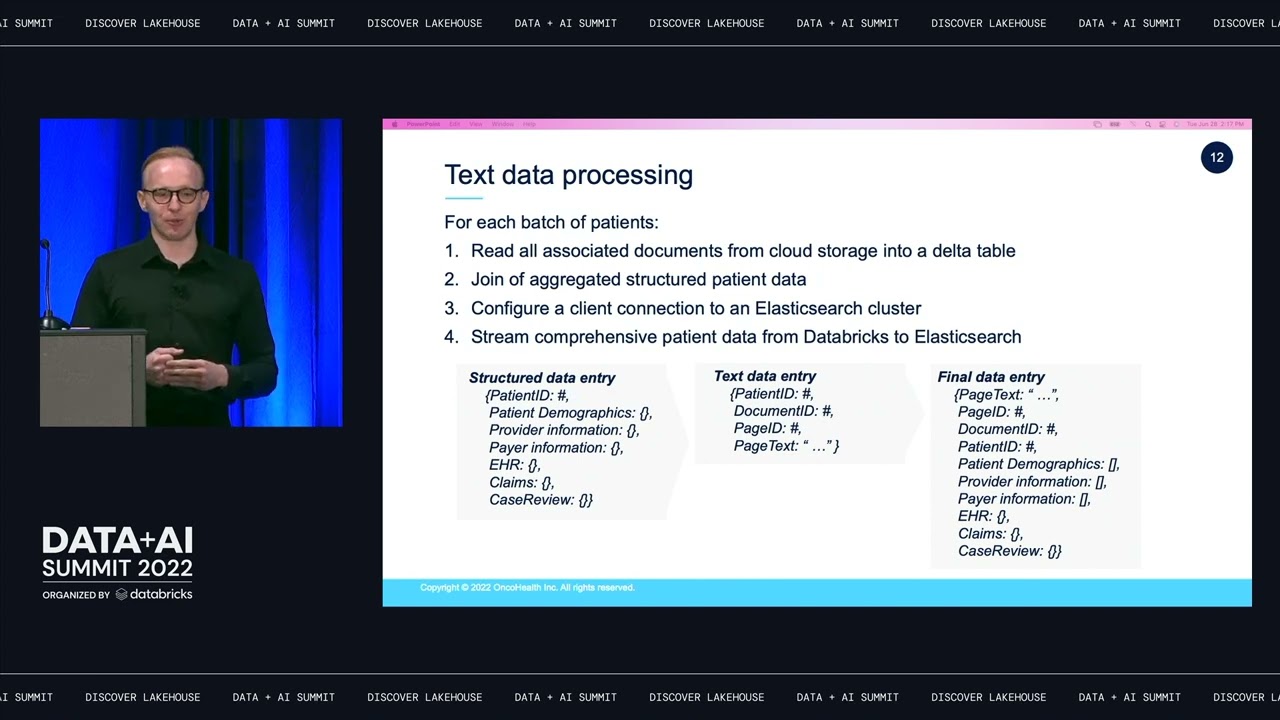
Comprehensive Patient Data Self-Serve Environment and Executive Dashboards Leveraging Databricks
OncoHealth built a comprehensive patient data view and executive dashboard environment in Kibana, combining structured and unstructured data using Databricks and Elasticsearch. The system aggregates medical documents, clinical notes, claims, and electronic health records to provide quick, scalable insights for cancer treatment reviews without accessing protected health information.