Clean Rooms
Recent items mentioning Clean Rooms across the Databricks ecosystem — releases, news, videos, and community Q&A. Updated hourly.
Four Databricks SDK releases in July (Go v0.158.0 and v0.160.0, Java v0.129.0 and v0.130.0, plus Python v0.122.0) steadily widened the Clean Rooms API: shared output settings, notebook asset metadata, and collaborator aliases 56, then JAR analysis assets, review workflows, and task run listing 34, with Python adding task run management 2. On the use-case side, Databricks is positioning Clean Rooms and OpenSharing for real-time fraud signal sharing across federal benefit programs 1, while Stagwell used Clean Rooms with Marketplace apps to match first-party data against identity graphs without exposing raw records 7.
Generated daily from the 7 most recent items mentioning Clean Rooms. Click any [N] to jump to the source.
Bringing real-time fraud prevention to government benefits
Databricks is helping federal agencies move fraud detection for benefit programs from after-the-fact reviews to real time, building on techniques honed with banks, credit card companies, and insurers. With over 80% of federal executive departments already on the platform, tools like OpenSharing and Clean Rooms let agencies share fraud signals across silos without exposing raw data, surfacing schemes no single agency could catch alone.
The SDK adds support for new clean room task run management and PostgreSQL CDF configuration, plus numerous new fields across compute, ML, pipelines, and serving services. Breaking changes include IAM v2 method endpoint updates, type changes for internal IDs, and removal of deprecated fields in jobs and ML services.
Clean Rooms now supports listing task runs and JAR analysis reviews, alongside new configuration fields for Azure capacity reservation groups and pipeline source metadata columns. In a breaking change, the codeSourcePath field has been removed from AiRuntimeTask.
This release adds SDK support for JAR analysis assets, review workflows, and task run listing in Databricks Clean Rooms, alongside a new JDBC connection type for catalog integrations. Additional updates introduce Azure capacity reservation group settings for compute instance pools, initial parent paths for bundle deployments, and lifetime attributes for ML time windows.
The Clean Rooms API now supports shared output settings, notebook asset metadata, and collaborator aliases. Pipeline configurations for Google Ads, Meta Marketing, and TikTok Ads now include custom report options.
This release adds shared output options, notebook metadata, and collaborator alias fields to the Clean Rooms Java SDK. It also introduces custom report options for Google Ads, Meta Marketing, and TikTok Ads ingestion pipelines.
How Stagwell built privacy-safe ID matching on Databricks
Stagwell built a privacy-safe ID matching solution on Databricks, leveraging Databricks Clean Rooms and Marketplace apps to securely match first-party data with identity graphs. This enables brands to create actionable audiences without exposing sensitive information or raw records.
 Releases
Announcing Databricks Clean Rooms with Live Demo. Presented by Matei Zaharia and Darshana Sivakumar
Databricks Clean Rooms enables two parties to securely collaborate on private data, unstructured assets, and machine learning models without exposing sensitive information. The platform utilizes Delta sharing and Lakehouse Federation to allow cross cloud and cross platform joint analysis using Python, R, or SQL.
 News
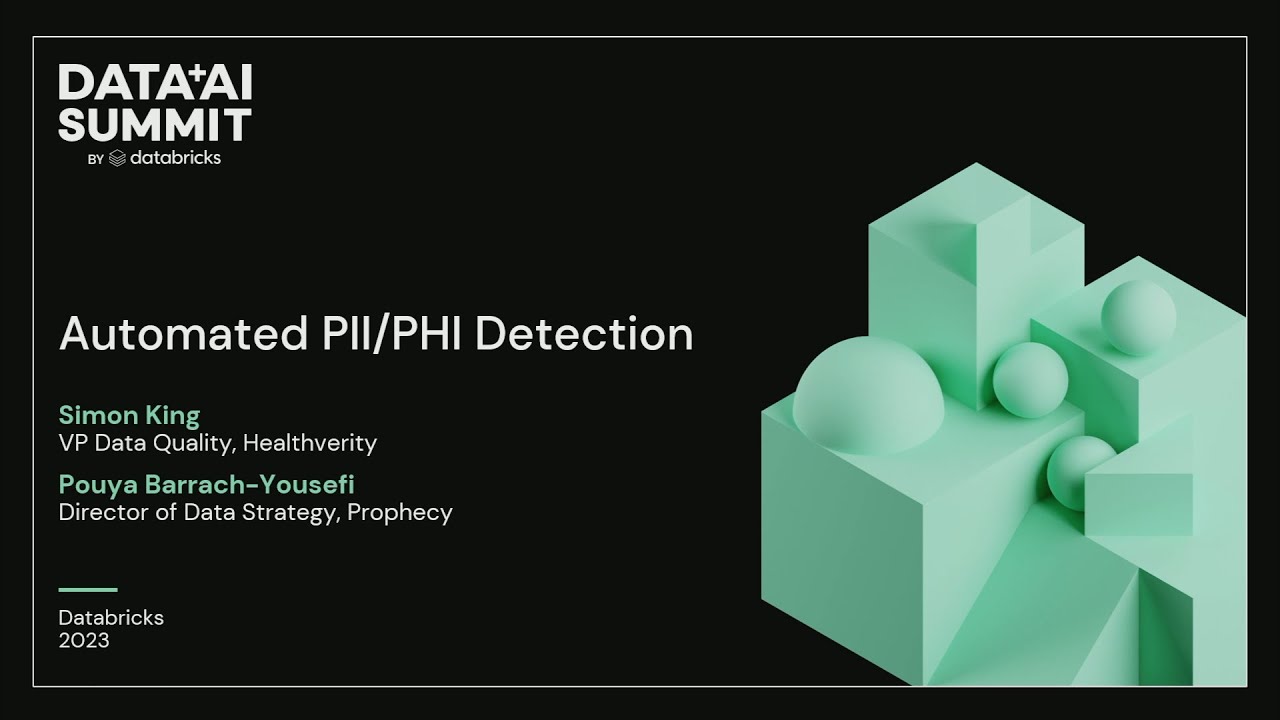
Automating Sensitive Data (PII/PHI) Detection
Health Verity and Prophecy demonstrate a low-code data pipeline solution built on Databricks to automate the detection and masking of sensitive healthcare data. The presenters walk through using Prophecy's visual interface and Unity Catalog integration to process encrypted vendor files, apply K-anonymity rules, and handle PII and PHI compliance.
 News
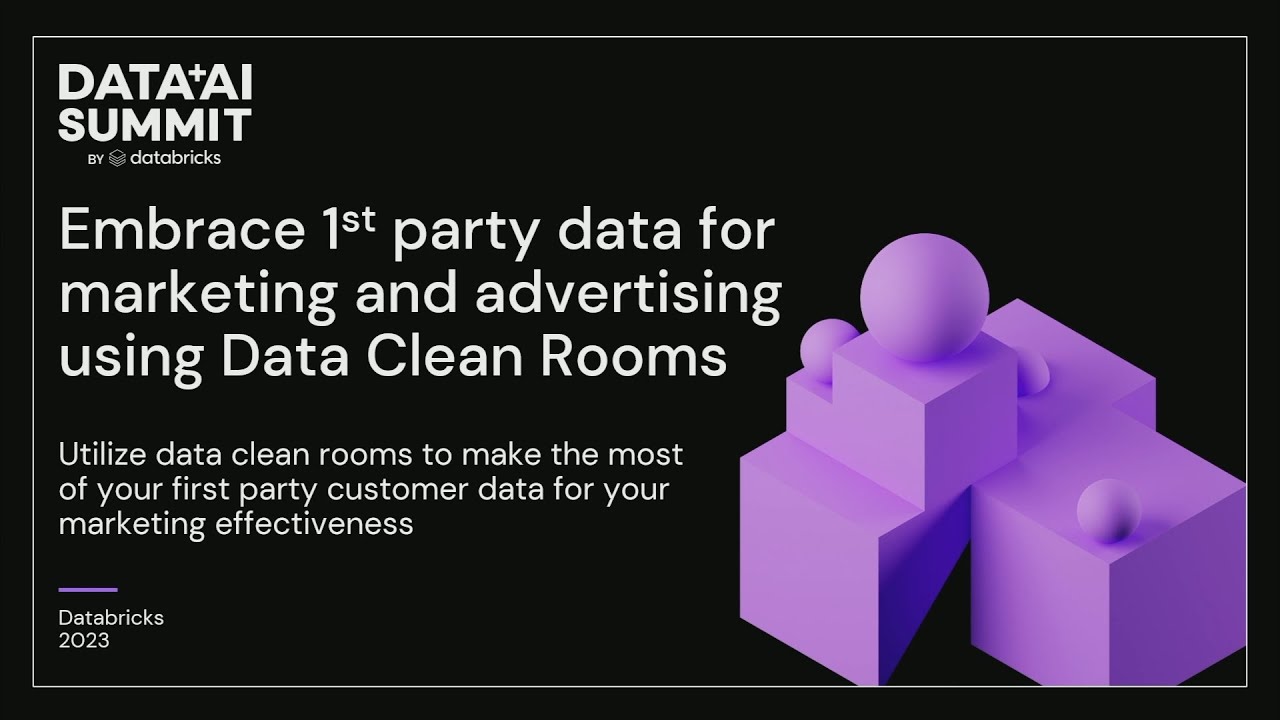
Embrace First-Party Customer Data for Marketing and Advertising using Data Cleanrooms
 News
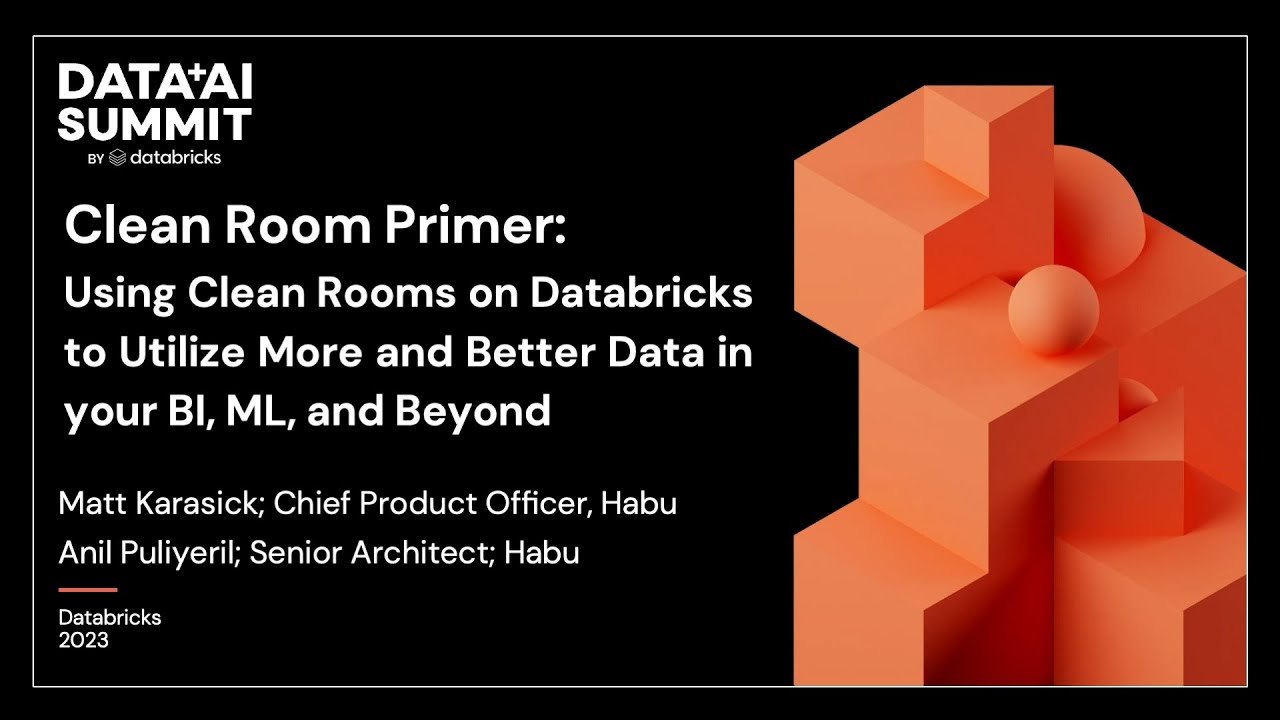
Clean Room Primer: Using Databricks Clean Rooms to Use More & Better Data in your BI, ML, & Beyond
Databricks clean rooms enable organizations to securely collaborate and commingle data, models, and code across different cloud platforms without sharing raw underlying assets. The platform demonstrates how businesses in retail, healthcare, financial services, and media can execute SQL and Python workloads to unlock previously restricted BI and machine learning use cases while maintaining privacy and governance.
 News
What’s New with Data Sharing and Collaboration on the Lakehouse: From Delta Sharing to Clean Rooms
Databricks demonstrated new capabilities for data sharing and collaboration on its lake house platform, including expanded features for Delta sharing, the private preview of data clean rooms, and the general availability of the Databricks Marketplace. The presentation covered how users can securely share and collaborate on datasets, notebooks, volumes, machine learning models, and structured streams across multiple clouds and tools.
 Releases
Delta Sharing - A New Paradigm for Secure Data Sharing and Data Collaboration on Lakehouse
Databricks introduced Delta Sharing, the first open protocol for secure data sharing, allowing organizations to share live data without replication. The presentation also showcased Databricks Marketplace and Databricks Clean Rooms to enhance data collaboration, asset sharing, and privacy-preserving analysis across platforms.