Unity Catalog
Recent items mentioning Unity Catalog across the Databricks ecosystem — releases, news, videos, and community Q&A. Updated hourly.
What is Unity Catalog?
Unity Catalog is the governance layer built into Databricks. It puts every data and AI asset in your account, including tables, views, volumes of files, functions, and ML models, into one three-level namespace (catalog.schema.object) and gives you a single place to control who can access what. Access rules are enforced across your workspaces automatically.
The problem it solves is scattered governance. Without a central catalog, each workspace keeps its own permissions, and there's no shared record of what data exists, where it came from, or who used it. Unity Catalog adds access control down to individual rows and columns, automatic lineage tracking, audit logging, tagging, data quality monitoring, and secure data sharing with other organizations, all in one system.
It's now the assumed foundation of the platform. Workspaces created after November 8, 2023 have it enabled automatically, while older workspaces need a manual upgrade from their legacy metastore. There's also an open source implementation on GitHub, and features such as metric views only work in workspaces enabled for Unity Catalog.
Do I need to enable Unity Catalog?
If your workspace was created after November 8, 2023, it's already enabled automatically. Older workspaces need a manual upgrade, and platform features such as metric views require a workspace enabled for Unity Catalog, so upgrading is usually the practical choice.
What does Unity Catalog actually govern?
Tables, views, volumes for non-tabular files, functions, ML models, and services, all organized in a catalog.schema.object namespace. It also manages securables like storage credentials, external locations, connections, and shares.
Is Unity Catalog open source?
There's an open source implementation of Unity Catalog available on GitHub. The version built into Databricks is managed for you and comes enabled on new workspaces.
Does Unity Catalog work across multiple workspaces?
Yes. It operates automatically across workspaces, enforcing access control, tracking lineage, and logging activity for auditing in one place rather than per workspace.
Sources: What is Unity Catalog? (Databricks docs) · Get started with Unity Catalog (Databricks docs) · Create a metric view, prerequisites (Databricks docs)
dbt-databricks v1.13.0 makes views use a single materialization regardless of use_materialization_v2, so view_update_via_alter now alters Unity Catalog views in place and fails on Hive metastore views 6. Unity Gateway adds governed routing of tasks across multiple AI models, with configurable traffic splits and fallbacks 2, while Unity Catalog also anchors a real-time digital twin built on Spark Real-Time Mode, Lakebase, and Databricks Apps 4. Migration friction persists in practice: practitioners report breakage after moving to Unity Catalog 10, external location access errors after metastore attachment 7, and questions about deploying UC object definitions through DABs and GitHub Actions 8.
Generated daily from the 10 most recent items mentioning Unity Catalog. Click any [N] to jump to the source.
We wrote about this
- Genie One MCP server: setup and migrationHow to connect Claude Code, Claude, Cursor and ChatGPT to the GA Genie One MCP server, and what to change before the Beta endpoint sunsets on 31 October.14 min read
- Databricks put agent skills in Unity Catalog, and gave them two namesA skill is now a catalog object you grant like a table. What the Beta does, the download-versus-live decision it forces, and why the docs cannot decide what to call it.6 min read
- What is Databricks Governance Hub, and what does it actually do?One account-level screen for data health, AI usage, cost, and tags across your whole Databricks estate: what each page shows, how to turn it on, and what is coming next.7 min read
- What is Genie Ontology, and how does it actually work?Half of it is defined on purpose. The other half assembles itself from dashboards and queries you already have. When the two disagree, a score you cannot audit picks the winner.8 min read
 News
Preparing a CFO performance review with Genie One on Databricks | Genie Demo
The video demonstrates how to use Databricks and Genie One to prepare for a CFO performance review by scheduling automated data analysis, checking contract compliance, and generating reports from dashboards.
 News
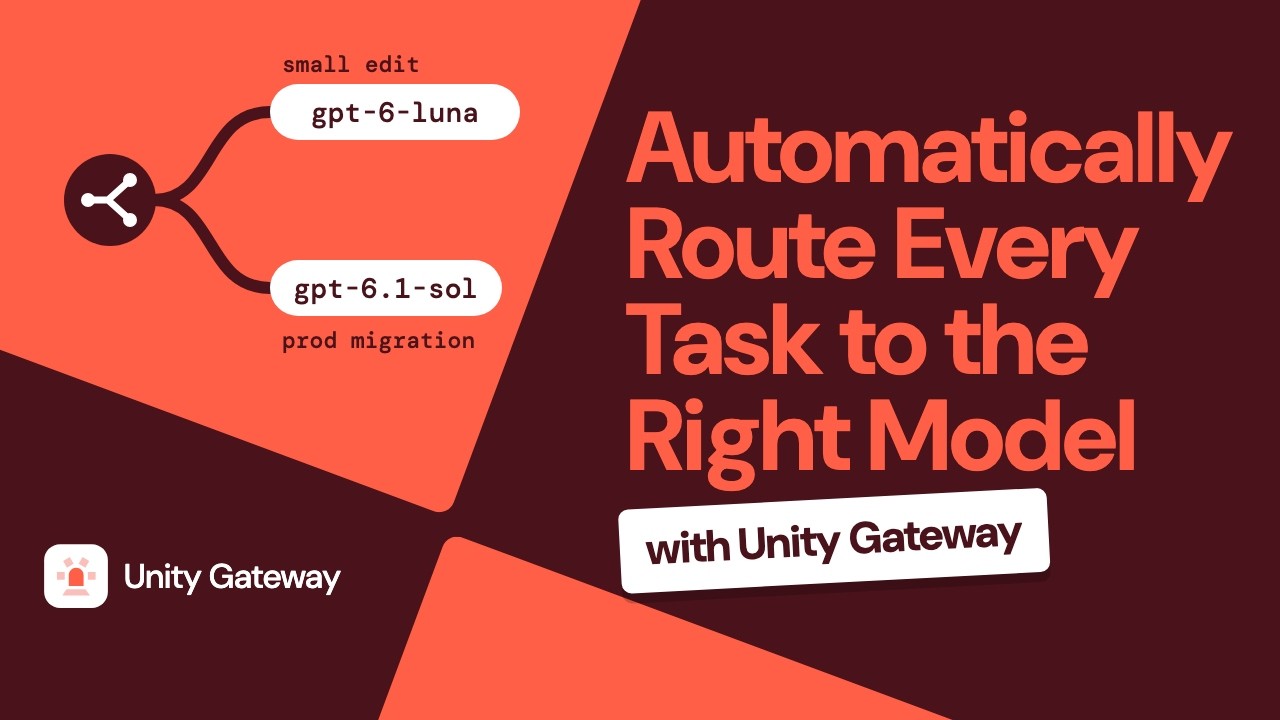
Automatically Route Every Task to the Right Model with Unity Gateway
Unity Gateway manages multiple AI models through a single governed platform and uses smart routing to automatically direct tasks to the most cost-effective and capable model. The demonstration shows how to configure model services, traffic splits, and fallbacks while tracking usage across different development tools.
dbt users on Databricks: do your snapshots handle files that arrive out of order?
If you build SCD2 history with dbt snapshot on top of batch files (daily exports, CDC drops, API extracts), there's a failure mode worth knowing about. Snapshots apply data in the order it arrives. So if Tuesday's file lands after Wednesday's: - with strategy ='check', the late (older) value becomes the "current" row - with strategy ='timestamp', the change is skipped and that period just disappears from history Every run stays green and every test passes. Nothing tells you. We found out when someone asked why an employee's promotion showed up as a demotion. We ended up building dbt-iterative-snapshot, a custom materialization for Databricks. You add sequence_by='batch_date', and on each run it: 1. checks which batches it has already processed (it keeps an audit table) 2. if a new batch is older than one already processed, rolls back the snapshot from that point 3. replays the batches in order, one MERGE per batch It also gives you changed_attributes (which columns changed), per-batch row counts, and an error log for duplicate keys instead of failing the run. dbt Hub: https://hub.getdbt.com/mercedes-benz/dbt_iterative_snapshot/latest/ GitHub: https://github.com/mercedes-benz/dbt-iterative-snapshot It's dbt-databricks only for now (Delta MERGE, Unity Catalog). PRs for other adapters are welcome. I'm curious how others handle this. Do you rebuild SCD2 from raw with window functions, loop dbt snapshot over dates, or just hope files arrive in order? Happy to answer questions, and honest feedback on edge cases is very welcome. Read more: https://reliabledataengineering.com/posts/article_dbt_iterative_snapshot/ submitted by /u/Alone-Security7044 [link] [comments]
 News
Creating a Digital Twin with Spark Real-Time Mode and Lakebase
This video demonstrates how to create a real-time digital twin for a manufacturing cell using Databricks tools such as Spark Real-Time Mode, Lakebase, Databricks Apps, and Unity Catalog. It explains how processing sensor readings instantly allows operators to detect and act on equipment faults, such as a hot spindle, before they negatively impact production quality and efficiency.
Genie Code tasks in jobs are GA
A job task runs your prompt autonomously, reads upstream outputs, calls tools, and returns a link to the resulting Genie Code chat. Pair with performance insights on serverless jobs to auto-open Genie Code for query tuning. Scheduling agents on Databricks has never been easier. If you have Genie Code enabled for skills, MCP servers, and of course a well constructed Unity Catalog this is a game changer to use in your every day worklfows. Oh and yeah you can create in a Asset Bundle https://preview.redd.it/zbrtlo0w0fyh1.png?width=2044&format=png&auto=webp&s=a4b5d43de61e2794238815ad6c16ab9bc228ebcf https://preview.redd.it/m18u7o0w0fyh1.png?width=1894&format=png&auto=webp&s=76508191b06e7f3eddee29731365bf56038a36a4 submitted by /u/Wise_Ear_4064 [link] [comments]
The v1.13.0 release adds additive merging of tblproperties across config levels and opt-in invocation telemetry, and it includes a breaking change for some view models: views now use one materialization regardless of use_materialization_v2, so view_update_via_alter alters Unity Catalog views in place and fails on Hive metastore views. Fixes cover view updates with dropped or renamed columns, Predictive Optimization for auto_liquid_cluster models, transaction: false hooks, materialized view recreation on schema drift, and persist_docs.columns warnings and comments.
Unity Catalog external location access error after metastore attachment
My client wants to maintain Unity Catalog object definitions in a database-project-style folder structure and deploy any new or modified objects through Databricks Asset Bundles (DAB). Is this approach supported using DAB deployments through GitHub Actions?
submitted by /u/Ok-Tomorrow1482 [link] [comments]
How dbt Labs and Fivetran are moving dbt workloads onto the data lake, model by model
Teams can move dbt workloads onto an open Iceberg-based data lake incrementally, using Fivetran's managed data lake, an in-place "Move" of Snowflake-native tables to Iceberg that keeps dependent dbt models and BI dashboards working, and Lake Compute, which shifts simple dbt models onto cheaper lake-native compute one at a time. Built around an Iceberg REST catalog (Apache Polaris, with Glue or Unity Catalog integration) so Snowflake, Databricks, and BigQuery can share the same data, the approach cut roughly 15 to 20 percent from one Snowflake compute bill and targets ingestion and transformation, which the speakers estimated at around 75 percent of stack spend.
What broke when we move to Unity Catalog
We recently moved our workspace to Unity Catalog. It went okay, but a few things broke along the way: -Old table names stopped working. Our code used two-part names like schema.table. We had to update everything to the three-part format catalog.schema.table. -Some jobs failed on shared clusters. A few of our older Python jobs didn’t work in shared access mode. We switched those jobs to single-user clusters. -People lost access to data. Permissions didn’t carry over the way we expected. We had to set up groups and grant access again. Lesson learned: test a few jobs first before moving everything. Has anyone else gone through this? What broke for you, and how did you fix it? submitted by /u/No_Ambition8323 [link] [comments]
Anyone playing around with Databricks Apps yet? Thoughts & initial impressions
Hey everyone, I’ve been testing out the new Databricks Apps feature recently, and I wanted to see how others in the community are using it. Historically, if we wanted to spin up a Streamlit app or a custom dashboard connected to Databricks, we had to deal with separate hosting (App Service, EC2, etc.), network security groups, and handling OAuth tokens separately. With Databricks Apps, running a Streamlit/Dash app directly inside the workspace using Unity Catalog for permissions has been a game-changer for internal tooling. That said, I'm curious: Are you using it for production workloads or just quick internal prototypes? How are you handling CI/CD deployments for these apps? Have you run into any limitations with serverless compute or scaling yet? submitted by /u/SalamanderOpen859 [link] [comments]
Unify your productivity and AI data with Lakeflow Connect
Lakeflow Connect now offers native, fully managed connectors for Atlassian (Jira, Confluence), Microsoft SharePoint, Google Workspace (Drive, Outlook, Gmail), GitHub, and AI providers like OpenAI and Anthropic, with unified governance and no infrastructure to manage. Because both structured and unstructured data land directly in Unity Catalog, teams can power enterprise knowledge bases, AI agents, and developer productivity dashboards without building custom API integrations or pipelines.
 News
Respond to Airport Disruptions Using Lakehouse//RT
Lakehouse//RT and Zerobus enable low latency query processing to help airline operations quickly manage flight disruptions and rebook passengers. This technology allows multiple teams to access real-time data simultaneously without creating a duplicate system, significantly improving decision-making speed during emergencies.
 Tutorials
Lakebase Search: Build AI Retrieval for Agents with Lakebase Postgres
Lakebase Postgres introduces lakebase vector and lakebase text extensions to support hybrid search for AI agents. It leverages the Databricks Lakehouse architecture to synchronize and index data for efficient vector and full text search without requiring external databases.
 Tutorials
Governing AI Agents with Unity Catalog and Unity Gateway on Databricks | Unity Catalog Demo
The video demonstrates how to govern AI agents using Unity Catalog and Unity Gateway on Databricks. It shows setting up access policies, user defined functions, and role filters to control data and model interactions.
 Tutorials
Databricks Pipelines: Write to One Unity Catalog Table from Multiple Sources with FLOWs
Databricks pipelines now allow writing to a managed Unity Catalog table from multiple sources by using one flow per source. Users can migrate existing structured streaming jobs without reprocessing the source data by utilizing checkpoint import features.
Beyond the Dashboard: Why AI Data Assistants Fail Without Unity Catalog Governance
For years, the promise of self-service BI has been a moving target. We gave business users drag-and-drop tools, semantic layers, and natural language query bars. Yet, time and again, we hit the same wall: trust. When a business user asks an AI tool, "What was our fleet downtime last quarter?" , the AI is only as good as the underlying data fabric. If your data is trapped in fragmented silos, uncatalogued, and un-governed, conversational AI quickly becomes an expensive generator of confident misinformation. This is where the paradigm is shifting. With the introduction of tools like Databricks Genie , we are moving past rigid dashboards into the era of conversational analytics. But as Solution Architects, our job isn't just to look at the UI layer—we have to look at the spine of the architecture. Here are three architectural realities I’ve learned while implementing modern Lakehouse patterns: 1. AI Without Governance is Just Automated Chaos You cannot point an LLM at a raw storage bucket and expect accurate insights. Genie relies entirely on the metadata, table descriptions, and foreign key relationships defined in Unity Catalog . If your governance layer is messy, your AI's answers will be messy. Unity Catalog isn’t just a security tool anymore; it is the semantic foundation for enterprise AI. 2. The Shift from "Building Pipelines" to "Curating Context" Tools like Lakeflow Connect and automated ingestion frameworks are taking over the heavy lifting of ETL. As data engineers and architects, our value is no longer measured by how many custom Spark scripts we write to move data. Our value is measured by how well we curate the Gold layer —structuring tables, defining clear column descriptions, and setting up quality expectations so that tools like Genie can actually understand the domain context. 3. Real-Time Trust Beats Real-Time Speed In heavy industries—like managing IoT telemetry for gas turbines—getting data in 5 seconds doesn't matter if the data quality is flawed. Integrating Delta Live Tables (DLT) Expectations as a quality firewall before data hits the consumption layer ensures that both human analysts and AI assistants are querying verified, pristine data. The Takeaway Conversational AI and natural language agents like Genie are the future of data consumption. But they are built on a simple architectural truth: Garbage in, hallucination out. If we want business users to trust AI-driven insights, we have to start by modernizing our foundations with robust governance, automated pipelines, and strict data quality gates. Curious to hear from other architects out there: Have you started deploying conversational AI tools to business users yet? What are the biggest governance or data trust hurdles you've had to overcome? submitted by /u/SalamanderOpen859 [link] [comments]
Databricks Unity Catalog Foreign Catalog – Timezone Mismatch with AWS RDS PostgreSQL Affecting Query
A full month-end finance app built on Databricks Apps
Below are the things covered in the video: 1. Overview: drag the month slider and every figure on the page moves with it, including a cash flow diagram from sales through to profit 2. P&L: the statement drawn as a ladder from revenue down to profit, plus a bridge showing why we beat or missed budget 3. Cafes: ranking, a map of the Front Range, a margin heatmap by month, and how fast each new cafe paid back its fit-out 4. Menu: which items earn their place and which are just popular 5. Cash: a 13-week forecast, overdue invoices by age, and the supplier payment calendar 6. Close: the month-end checklist as a board, with how long each close took historically 7. What-if: move price, volume, wage and ingredient levers and watch profit change 8. A one-page monthly report that prints to A4 Under the hood: seven Delta tables in Unity Catalog, read through a SQL warehouse, with the app running as a Databricks App in Python. All the finance logic (consolidation, budget variances, the close tracker, the cash forecast) sits in one file that a finance analyst could read. submitted by /u/oneaffidavit1 [link] [comments]
Real-time energy trading and analytics on Databricks
Energy trading teams can run live trading and analytics on one Databricks platform instead of separate systems that leave risk data stale and governance duplicated. Spark Structured Streaming Real-Time Mode streams market data into Lakebase (serverless Postgres), which feeds the trading app, ML models, dashboards and Genie One, while Unity Catalog handles permissions, lineage and audit once for all of it.
Genie App Builder
I'm building an app using the Databricks Genie app builder (micro app), and I'm trying to figure out whether it's possible to grant users access to Unity Catalog (UC) tables directly from within the app. But looking at the API scopes, I guess its not possible yet. https://preview.redd.it/82hz0mr358xh1.png?width=797&format=png&auto=webp&s=f5c476db84cbfdb9ac4ea826c91857c62a5830d5 submitted by /u/9gg6 [link] [comments]
Increase Unity Catalog tables-per-schema quota
Had a call with a Databricks PM this week and found out about all the cool things!
Spent 30 minutes on a product discovery call with u/saad-the-engineer from Databricks on Tuesday. Supposed to be about Unity Catalog triggers for jobs. We wandered. At one point I was explaining how I run bronze to silver on most client builds. It’s table-driven, with three Delta tables holding the config: one for table settings, one for column mappings (bronze names to business-friendly names), and one for DQ expectations that get loaded into the declarative pipeline. Genie Code actually picks up the pattern pretty well since it all lives in UC. Saad’s response was basically “cool, have you looked at sdp-meta?” I had not. It’s the Labs metadata framework for Spark Declarative Pipelines. You define bronze and silver in a JSON or YAML onboarding file and one generic pipeline builds the whole graph at runtime. Pretty much what I built by hand. Then he showed me pyDABs (aka Python for DABs). If you’re tired of hand-writing every task in YAML, you can loop through notebooks in a path and generate tasks in code. Mutators let you apply things like notifications or tags across every job in one shot. Every time I brought up something I’d hacked together, he had a “we’ve got that too.” I mentioned DQX and he said it’s one of those Labs projects that works so well they’re in no hurry to touch it. I also got a preview of some cool things that are coming (Stay tuned!) Best conversation of my week, and it was only Tuesday. For those of you running metadata-driven pipelines: did you adopt sdp-meta or roll your own? And what made you pick one over the other? Side note, Scott Haines and I are doing a live session on the Iceberg updates at the end of the month. Let me know if you are interested and I'll share the link! submitted by /u/OkImprovement7010 [link] [comments]
 Tutorials
Building an Agentic Analytics Foundation on the Lakehouse
The video demonstrates how to build an agentic analytics foundation on the Databricks lakehouse platform to ensure AI agents are accurate, secure, and scalable. It explains how to organize data assets into business domains, define metric views, and use Unity Catalog and Unity Gateway for governance and guardrails.
 News
LG Uplus moves from static analytics to real-time AI | Data + AI Executive Series: Fast 5
LG Uplus uses Databricks to operationalize AI and address siloed data challenges across the telecom enterprise. The company integrates AI into core workflows to deliver automated, data-driven customer experiences.
AI Runtime is Generally Available
AI Runtime is now generally available, bringing high-performance GPU infrastructure directly into Databricks with seconds-level launches, flexible environments, and integrated observability, so you can scale training without managing GPU infrastructure. Unity Catalog controls and workload isolation are built in to keep every training workload secure and governed as training becomes more agent-led.
What’s new in Databricks - September 2026?
Databricks shipped the following major GA launches in September 2026: 👉 Spark Declarative Pipelines (SDP): Lakeflow Spark Declarative Pipelines now feature structured maintenance windows for continuous runs, zero-reprocessing migrations (import_checkpoint), multi-source append flows, and explicit cascade deletion (cascade: true) for Unity Catalog tables. 👉Governance and ABAC Security: Metastore-level Attribute-Based Access Control policies and explicit DENY rules are now GA in Unity Catalog, automatically enforcing data protection and access rules across all present and future catalogs. 👉Connectors and Data Applications: Lakeflow Connectors reached GA for Anaplan, Anysphere, and Celigo, while Genie Ones MCP server was officially made generally available for AI assistant workflows. Full article 👉 https://community.databricks.com/t5/product-platform-updates/what-s-new-in-databricks-september-2026/ba-p/173896 submitted by /u/Youssef_Mrini [link] [comments]
Governed Tag Propagation (Beta) in Unity Catalog - How It Works and What to Consider
What makes a catalog open? Unity Catalog Advances the Open Lakehouse
Unity Catalog is the first catalog to support the Apache Iceberg REST catalog spec for REGISTER and UNREGISTER, enabling seamless table movement across catalogs without data duplication. By keeping managed tables in customer-owned storage, it provides full data portability while delivering advanced catalog features directly on tables you own.
 Tutorials
Building Production-Ready AI Agents on Databricks | Agent Bricks Demo
Building production ready AI agents on Databricks involves a six step workflow spanning vector search indexing, agent as code, MLflow tracing, Unity Catalog registration, evaluation, and deployment with review apps. MLflow tracing and evaluation metrics help monitor agent execution steps, relevance, safety, and topic adherence in real time.
How to get the most out of running dbt on Databricks
Consolidating your entire pipeline within a single dbt project on Databricks eliminates fragmented tooling from streaming ingestion through governed metric definitions. This unified approach lets you orchestrate natively using Lakeflow Jobs while enforcing Unity Catalog access rules directly from your dbt project configurations.
Cross-subscription/workspace data access pattern for PII data in Azure Databricks?
We are setting up Azure Databricks for a client with two fully isolated workspaces ( Dev and Prod ). They have completely separate: Workspace IDs Azure Resource Groups Azure Subscriptions The Problem: PII data from a source system is currently landing in an Azure storage location that only the Prod workspace has access to. Because of this, we can read the data in Prod , but not in Dev . We now need to grant a specific group of analysts read-only access to this source PII data directly from the Dev workspace. Questions: What is the standard/cleanest pattern to achieve this? 1) Cross-subscription Azure Managed Identity / Storage Credential grants? 2) Unity Catalog cross-workspace binding / Delta Sharing? Any advice, reference architecture, or lessons learned would be greatly appreciated! submitted by /u/Miserable-Neat4246 [link] [comments]
Databricks Unity Catalog now supports automatic Governed Tag Propagation
Hi, A new cool feature called Tag Propagation appeared in Unity Catalog. It automaticaly propagates tags to downstream tables and views based on UC lineage. Tag propagation - Azure Databricks | Microsoft Learn I've put together a short article explaining how to enable the feature and walking through the small demo step by step. Feel free to check it out: Databricks Unity Catalog: Governed Tags Can Now Propagate Automatically! | by szymon_dybczak | Databricks Community Articles | Oct, 2026 | Medium submitted by /u/szymon_dybczak [link] [comments]
The SDK adds file and directory management methods to the workspace sandbox service alongside duration target support across Jobs APIs. Unity Catalog connections now support a secrets field, policies include governed tags, and disaster recovery failover groups gain replication tracking fields.
 News
Databricks Breaking News: Lakeflow Jobs, DABs, Apps, AI, Private Network Gateway
The video covers multiple new updates in Databricks, including Lakeflow connectors, task value loops, state repartitioning, DAB enhancements, SQL functions, serverless version 6, Unity Catalog skills, app spaces, and network gateways. It demonstrates how to configure Lakeflow job tasks, implement task value loops, and manage serverless compute permissions and environments.
Have you ever changed a Delta table schema and only discovered the impact later?
When a column gets renamed, removed or changes its data type, the table itself might be fine, but downstream jobs can start failing or producing unexpected results. How do you guys find all the dependent jobs and tables before making schema changes.. Is Unity Catalog lineage enough in real projects or do you use other checks too? submitted by /u/Bhanuprakash_1947 [link] [comments]
Transactions are Generally Available, advancing warehousing on the Lakehouse
Multi-statement transactions are now generally available for Delta Lake and Apache Iceberg tables on Databricks, bringing native atomic guarantees to multi-table workflows. Backed by row-level concurrency and Unity Catalog governance, this capability allows practitioners to run critical warehouse workloads directly on open lakehouse data without maintaining separate warehouse systems.
Announcement | Your data, your storage, your rules: A 2026 guide to Unity Catalog managed tables
How our AI Research team uses AI Runtime
Databricks AI Research uses AI Runtime to train and fine-tune models across hundreds of GPUs, supporting an 8x surge in training jobs fueled by agent-driven research. Built-in GPU reliability, fast job launches, and native integrations with MLflow and Unity Catalog accelerate these automated experimentation workflows at scale.
Geospatial queries are up to 38X faster with Lakehouse//RT
Lakehouse//RT now supports spatial SQL and spatial joins directly on governed lakehouse data, delivering up to 38X faster query performance than traditional data warehouses under 50 concurrent users. This eliminates the need for a separate geospatial serving layer while bringing real-time latency, Unity Catalog governance, and more than 100 spatial functions to your architecture.
 Tutorials
Run Live Energy Trading, Risk, and Analytics in Databricks
Databricks enables real-time energy trading and risk management by combining Spark Real-Time Mode and Lakebase for unified operational and analytical data processing. The platform provides a single source of truth with Unity Catalog governance, streamlining trading desks, price forecasting, and reporting within one environment.
Databricks Unity Catalog: The Safe Way to Govern AI
Lakebase CDF to Unity Catalog vs firewall on storage
I have a use case where Lakebase CDF (transparent syncing of tables from PostgreSQL to Unity Catalog) would be super convenient. However I found that currently the CDF doesn't support storage accounts behind a firewall, accessible through a private endpoint, etc. They have to be publicly accessible, which is a no-no for most corporate data. Can anyone from DataBricks share whether it's on your roadmap to add support for this and when? submitted by /u/djfeelx [link] [comments]
Using Lakehouse Federation to bypass Bronze ingestion for near real-time pipelines; feasibility and security questions
(Used AI to refine my question better and structure the question) TL;DR: Trying to reduce our pipeline runtime to under 3 minutes by bypassing Bronze ingestion and using Lakehouse Federation. Looking for: A setup guide/checklist I can hand to our IT Admins to establish the initial connection. Advice on a security flaw: How do I prevent users from bypassing our custom Unity Catalog RLS/PII controls simply by materializing (CTAS) data out of the federated catalog? Hey everyone, I’m working through a performance optimization challenge in Azure Databricks and wanted to bounce my intended approach and a few assumptions off the community. The Context -> The Workflow: 10–15 users trigger a Databricks job multiple times a day, sometimes concurrently. -> The Process: We pull data from a source database, apply transformations, and write out about 8 tables into Unity Catalog using a Medallion architecture. The largest table is 20M rows, which we ingest incrementally with a 2-day lookback. -> The Bottleneck: The pipeline currently takes 4–5 minutes (optimized down from 9). Our target is under 3 minutes. Since the source-to-Bronze ingestion alone takes 1.5 to 2 minutes, I am looking into Lakehouse Federation. If we bypass the initial ingestion and query the frequently refreshed datasets directly from a federated catalog, we should comfortably hit that sub-3-minute target. Before I commit to this architecture, I’m hoping to validate a couple of things since I don't have an admin playground environment to test this out myself: Division of Setup / Admin Privileges Because I don't have Account Admin access, I want to understand exactly what I need to ask IT to configure versus what I can do myself. Is there a clear guide or documentation that outlines the standard division of setup? For example, do admins just need to create the CONNECTION object and grant me CREATE FOREIGN CATALOG on the metastore, leaving me to map the schemas? I just want to know the exact steps so I can submit a precise IT ticket. RLS & PII via Control Tables on Federated Data I am independently working on refactoring our data security posture. Currently, we manage PII and Row-Level Security (RLS) using custom "control" tables in Unity Catalog. This works perfectly for our native Databricks tables. My assumption with Federation is that while I can apply these same functions to the foreign tables, anyone with read access to the federated catalog could simply run a CREATE TABLE AS SELECT... (materialize the data), bypassing the dynamic filters entirely and exposing the raw PII. -> Is my understanding of this design flaw accurate? -> Has anyone successfully implemented control-table-based RLS on federated catalogs, or is there a better, more standard way to handle this in a federated setup? Appreciate any insights or reality checks from anyone who has implemented this in production! submitted by /u/aRTy_k1d [link] [comments]
UnityCatalog 0.7.0
Unity Catalog 0.7.0 enables native Apache Iceberg REST catalog support by default, allowing external query engines to read, write, and manage Iceberg tables directly. Dropping managed tables, volumes, or models now automatically and permanently purges underlying cloud storage files after a default seven-day delay.
Federation vs. ETL: Why I’m starting to hate moving data just to look at it.
I’ve been working heavily with Unity Catalog’s Query Federation lately, and it’s forcing me to rethink my "ELT everything" default. For a long time, the standard architecture was: Copy everything from operational DBs (SQL Server, Oracle, etc.) into the Lakehouse so we can join it. But the "ETL Tax"—the storage costs, the stale data, and the pipeline maintenance—is starting to feel like overkill for ad-hoc reporting. Why Query Federation is winning me over: Pushdown is clean: With Query Federation, Databricks pushes the SQL via JDBC to the source. The remote DB does the compute, and I just get the result back. It saves me from creating yet another massive ingestion job that I have to monitor. The "Governance" Win: This is the biggest selling point for me. I can manage security in Unity Catalog (UC) and it "wraps" the remote data. My users get the same catalog.schema.table experience, and I don’t have to manage 50 different connection strings for them. Automatic Lineage: Finally, I can see where data in a report actually came from, even if it originated in a legacy SQL Server. My Rule of Thumb (The "Architecture Bridge"): Use Federation for: Ad-hoc reporting, dashboards needing "live" data, and rapid data exploration. Stick to ETL for: Multi-terabyte aggregations, complex transformations (SCD Type 2, deduplication), and historical reporting. I’m not going to stress out a production operational DB with a massive GROUP BY at 10 AM. submitted by /u/SalamanderOpen859 [link] [comments]
Stop migrating data to Databricks: Are you using Lakehouse Federation yet?
I’ve been diving deep into Unity Catalog lately, and the "Lakehouse Federation" feature is genuinely a game-changer for reducing ETL bloat. For a long time, the default answer to "how do I analyze this external data?" was "copy it into the lake." We’re finally moving away from that. Here is the breakdown for anyone trying to cut down on unnecessary data movement: The two ways to federate: Catalog Federation (The "Data-Centric" approach): How it works: Connects Databricks to external metadata (AWS Glue, Hive, Snowflake Iceberg). The Magic: Databricks compute does the heavy lifting (reading raw files in S3/ADLS). It’s fast, low-cost, and creates a "live" bridge to your storage. Best for: Incremental migrations and long-term hybrid storage. Query Federation (The "Database-Centric" approach): How it works: Pushes SQL via JDBC to remote databases (Postgres, MySQL, SQL Server, Synapse, etc.). The Magic: The remote DB does the compute. You get the result set back without touching the raw underlying tables. Best for: Ad-hoc reporting against operational/production databases where you don't want to break their performance with heavy ETL loads. Why it’s actually useful: Centralized Security: Unity Catalog acts as the single security guard. You don't need to manage separate credentials for your users on the remote DB. Automatic Lineage: This is the biggest win for me—Databricks automatically maps the lineage from the remote system to your report. No more "mystery data." Unified Syntax: You query everything using catalog.schema.table regardless of whether it’s sitting in Databricks, Snowflake, or an on-prem SQL Server. submitted by /u/SalamanderOpen859 [link] [comments]
The SDK adds support for Slack and Microsoft Teams notification destinations, as well as ModelService securable types in Databricks Apps. Model provider configurations in Unity Catalog now include pricing fields and support for Bedrock Mantle.
Building an Expense Management App with the Genie App Builder Leveraging Lakebase + AI for Image Scanning
I previously did not consider Databricks a great place to build apps on with AI. With the release of Genie App Builder (still in beta), that has changed, and now I see it as a serious player in the AI app building space. Before I start, quick disclaimer: I am part of the Databricks MVPs, work for a consulting company that is a Databricks partner, etc. That said, this review is fully based on my experience, my own words, my own testing, etc. Always try things out yourself! Things I appreciated: +By far, this feels like the most polished Databricks beta that has been released. If the goal is to make this easy for business users to develop applications easily and securely, this feels like it is already there. Granted, I have not tested with multi-users yet, but it feels very polished already. +Native integration with Databricks features like Lakebase. +Even though it has native integrations to Databricks features, it didn't force these features in building what I did when it was otherwise unnecessary. For example, the dashboard it built as part of the application was not an AI/BI Dashboard. I would have expected it do that, but it didn't, and rightfully so, as it would not have been truly the best thing for this use case, so truly a customer first thing here. +Respects governances/access controls, meaning I can develop an application freely in the sandbox environment, but if I want to deploy it, organizational safeguards, Unity Catalog, and other controls built on Databricks apply. Things that could be better: -With the goal of empowering citizen devs (or i should just say, business users that are technical enough), there needs to be an easier way to send request for access/capability etc to admins. Right now, the builder tells you through the chat, but that is not as intuitive as having a clear UI-embedded to-do things before deploying etc. One step further would be that the developer can notify the administrator of this need. -I found that when I developed an application that had to use a sandbox only capability when access was otherwise unavailable (see above), just hung when I tried to reopen the dev experience for it. I had to troubleshoot through the chat interface as to why that was happening to figure this out. Additional Note : Currently free at the moment, but pricing is not yet available since we are in beta. Will be interesting to see how the overall value of this capabilities plays out factoring the ease & governance vs compute & token costs. Closing Thoughts I think this is on track to be one of Databricks' best released feature, and a serious entry in the space that is otherwise feel with undifferentiated app building solutions. Is it creating a new category? No. But it feels like an Apple-level product, where being the best at executing is sometimes better than being the first to do something. And I believe it will pay off as businesses look more carefully as to where they spend their hard-earned money on. From a "data + AI platform vendor" perspective, this is currently the best offering of its kind. From an "app building vendor" perspective, there are still solid players out there, but for enterprise focused apps, in the top 3 of options I would consider, and for sure the first one I would try if my stack was heavily Databricks focused. submitted by /u/JosueBogran [link] [comments]
Monitoring a custom Agent (Responses) serving endpoint with an experiment on the Unity Catalog
CUSTOMER STORY | CARIAD unifies global automotive data with OpenSharing and Unity Catalog
Is Delta Sharing the end of external ETL? My notes on Open vs D2D.
Just spent some time digging into the Unity Catalog and Delta Sharing documentation. Here’s the TL;DR on the two patterns for anyone looking to implement this: Open Sharing (The "Universal" Path): Audience: Recipients without Databricks (using Power BI, Pandas, Tableau). Mechanism: Presigned URLs + Bearer Tokens. Constraint: Tabular data only (tables/views). Security: Can be restricted via IP filtering. D2D (The "Native" Path): Audience: Both parties are on Unity Catalog-enabled Databricks. Assets: Tables, Views, Volumes, Notebooks, and Models. Pros: No token management; Zero egress costs if in the same region. Performance: DBR 16.2+ uses scoped credentials, making it basically as fast as a local table read. Observations: The "Zero-Copy" aspect is the real winner here. The audit trail in system tables alone covers about 95% of standard compliance needs (GDPR/SOC). The Coastal Community Bank case study (2 months to 2 days for onboarding) seems to be the gold standard for ROI here. Discussion: Is anyone actually using the Open Sharing side with external vendors in production? How are you handling the token rotation/security for non-Databricks clients? Or are you finding that most of your partners are already on the Databricks ecosystem? submitted by /u/SalamanderOpen859 [link] [comments]
Databricks ABAC Now Follows Your Data: External Engines and Views
Databricks ABAC row filters and column masks now reach external Apache Spark (GA) and Unity Catalog views (Beta) submitted by /u/Lenkz [link] [comments]
The Databricks Java SDK now includes the MODEL_SERVICE enum value for Unity Catalog securable types in Databricks Apps. This update allows developers to configure and reference model serving endpoints as securable resources within app manifests.
The Python SDK now includes a new model_service enum value for Unity Catalog securable types under Databricks Apps. This update allows practitioners to configure Model Serving endpoints as securable resources within Databricks App manifests.
 News
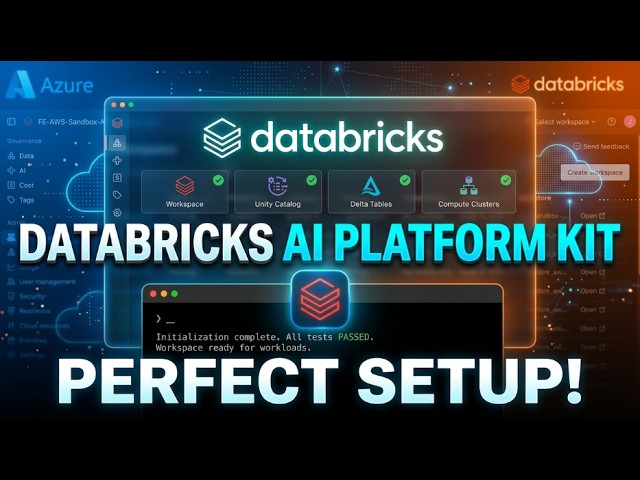
Why Is Everyone Using the Databricks AI Platform Kit?
The Databricks AI platform kit enables users to quickly configure a new workspace through a terminal installation process. The tool generates and executes Terraform scripts to automatically deploy necessary cloud resources, networking, and Unity Catalog structures.
 News
How HelloFresh Optimizes 100% of Meta Ad Spend With Genie Agents on Databricks
HelloFresh uses Databricks Genie agents and Unity Catalog to optimize 100 percent of its Meta advertising spend and break down internal data silos. This data infrastructure reduces weekly maintenance and reconciliation hours significantly while accelerating ad testing and campaign launches.
What's new in Databricks AI/BI (Oct 2026): multi-fact modeling, Row Zero spreadsheets, Excel Add-in GA
If you work in BI on Databricks, this monthly roundup might be useful. This month's edition covers: Relationships now support multi-table schemas and measures across fact tables with different granularities (via shared dimensions) "Ignore filters" on dashboard widgets, handy for calendar hierarchies Row Zero acquisition: spreadsheets on billions of rows with a live connection to governed data Excel Add-in is GA: browse Unity Catalog, pull metric views in as native pivot tables, and ask Genie One from inside Excel Full post: https://aibilakehouse.substack.com/p/beyond-the-star-schema-spreadsheets Disclosure: all three authors work at Databricks. Happy to answer questions or hear what you'd like covered next. submitted by /u/Good_Robin [link] [comments]
Unity Catalog model provider configurations now include fields for Bedrock Mantle and pricing information. A corresponding Bedrock Mantle enum value was also added to the external model provider type options.
Announcing Workday Data Connect federation in Unity Catalog
The new Workday Data Connect connector (Beta) brings zero-copy federation to Unity Catalog, allowing teams to query Workday's shared Iceberg tables directly from cloud storage without ingestion pipelines or data duplication. Queries run on Databricks compute under Unity Catalog governance, enabling you to combine live HR and financial data with existing Databricks datasets for Genie-powered exploration, workforce analytics, and AI.