Delta Live Tables
Recent items mentioning Delta Live Tables across the Databricks ecosystem — releases, news, videos, and community Q&A. Updated hourly.
A change in Delta Live Tables deletion behavior leaves associated tables intact rather than removing them when a pipeline is deleted 1. For pipeline execution, practitioners emphasize explicitly targeting specific table names to prevent pipelines from triggering infinite loops 2.
Written October 2026 from the 5 most recent items mentioning Delta Live Tables at that time. It refreshes when this topic next has enough new material. Click any [N] to jump to the source.
Beyond the Dashboard: Why AI Data Assistants Fail Without Unity Catalog Governance
For years, the promise of self-service BI has been a moving target. We gave business users drag-and-drop tools, semantic layers, and natural language query bars. Yet, time and again, we hit the same wall: trust. When a business user asks an AI tool, "What was our fleet downtime last quarter?" , the AI is only as good as the underlying data fabric. If your data is trapped in fragmented silos, uncatalogued, and un-governed, conversational AI quickly becomes an expensive generator of confident misinformation. This is where the paradigm is shifting. With the introduction of tools like Databricks Genie , we are moving past rigid dashboards into the era of conversational analytics. But as Solution Architects, our job isn't just to look at the UI layer—we have to look at the spine of the architecture. Here are three architectural realities I’ve learned while implementing modern Lakehouse patterns: 1. AI Without Governance is Just Automated Chaos You cannot point an LLM at a raw storage bucket and expect accurate insights. Genie relies entirely on the metadata, table descriptions, and foreign key relationships defined in Unity Catalog . If your governance layer is messy, your AI's answers will be messy. Unity Catalog isn’t just a security tool anymore; it is the semantic foundation for enterprise AI. 2. The Shift from "Building Pipelines" to "Curating Context" Tools like Lakeflow Connect and automated ingestion frameworks are taking over the heavy lifting of ETL. As data engineers and architects, our value is no longer measured by how many custom Spark scripts we write to move data. Our value is measured by how well we curate the Gold layer —structuring tables, defining clear column descriptions, and setting up quality expectations so that tools like Genie can actually understand the domain context. 3. Real-Time Trust Beats Real-Time Speed In heavy industries—like managing IoT telemetry for gas turbines—getting data in 5 seconds doesn't matter if the data quality is flawed. Integrating Delta Live Tables (DLT) Expectations as a quality firewall before data hits the consumption layer ensures that both human analysts and AI assistants are querying verified, pristine data. The Takeaway Conversational AI and natural language agents like Genie are the future of data consumption. But they are built on a simple architectural truth: Garbage in, hallucination out. If we want business users to trust AI-driven insights, we have to start by modernizing our foundations with robust governance, automated pipelines, and strict data quality gates. Curious to hear from other architects out there: Have you started deploying conversational AI tools to business users yet? What are the biggest governance or data trust hurdles you've had to overcome? submitted by /u/SalamanderOpen859 [link] [comments]
Change in DLT Pipeline Deletion Behavior associated Tables Not Being Deleted
Avoid DLT infinite loops by targeting specific table names
Hi, Databricks Engineer at Abilytics here. If you use Delta Live Tables with wildcard streaming reads like spark.readStream.table("events_*"), your pipeline can trigger unexpected full refreshes or infinite dependency loops when DLT infers schema evolution on newly matched upstream tables. Instead, explicitly declare your dependencies using the live schema namespace. Reference tables directly by their exact identifier, such as spark.readStream.table("live.events_bronze"). This ensures the DAG resolver builds a deterministic execution graph without misinterpreting wildcard patterns as dynamic schema changes during optimization. If this is useful, there's more on Databricks | Platform Engineering | AI at Abilytics — AI Systems, Data Engineering & Platform Engineering Services. submitted by /u/AbilyticsEng [link] [comments]
PSA: old Databricks names vs new ones. Which rename got you?
Databricks has renamed a lot of features over the past year, and a lot of tutorials, blog posts, Stack Overflow answers and even AI assistants still use the old names. If you search the docs for the old name, the results can be confusing, and code samples can look unfamiliar even when you know the concept cold. The ones I see trip people up most: Delta Live Tables / DLT → Lakeflow Spark Declarative Pipelines (often shortened to Lakeflow Declarative Pipelines) APPLY CHANGES INTO → AUTO CDC APIs Databricks Asset Bundles / DABs → Declarative Automation Bundles The concepts didn't change much, but the vocabulary did. Two questions for the sub: Has a rename caught you out, at work, in docs, or in a code review? Did I miss any? I'm sure there are more, especially on the ML / GenAI side. I'll keep this list updated with whatever people add. Edit: removed Liquid Clustering from the list. Fair point from a commenter that it's a change in recommendation, not a rename. Still worth knowing though: older material treats partitioning + Z-Order as the default, and current docs recommend Liquid Clustering for new tables. submitted by /u/UnluckySugar610 [link] [comments]
Data Quality in Microsoft Fabric – Native features vs. external tools (like Databricks Expectations)?
Hey everyone! I’ve been working a lot with data quality frameworks in Databricks (leveraging things like Delta Live Tables expectations or custom validation notebooks), and I'm curious about how the community is handling Data Quality in Microsoft Fabric. Does Fabric have a native, built-in feature for data quality/expectations (similar to what Databricks offers), or are most of you relying on external tools, libraries (like Great Expectations/Soda), or custom PySpark/SQL validation notebooks inside Data Engineering pipelines? How are you currently enforcing quality checks before data hits your Gold/Semantic layers in Fabric? Would love to hear your approaches and best practices! I read this documentation here: https://learn.microsoft.com/en-us/purview/unified-catalog-data-quality-fabric-lakehouse?WT.mc_id=510336 , but it doesn't say much. submitted by /u/SuperbNews2050 [link] [comments]
Live Table Vs custom made framework
Hi everyone. I’d like to know how you’ve been approaching your new Databricks projects, especially regarding Delta Live Tables. For new data environments, are you implementing projects using Delta Live Tables, or do you continue to develop using your own custom Spark code? Late last year, I completed a project using Delta Live Tables. There were a few things that bothered me, such as: - not being able to use conditional logic within the Live Table code; - materialized views—despite offering incremental refresh capabilities—often ended up performing full refreshes anyway; - the inability to specify which metadata columns should be updated during the merge process. I’m about to define the architecture for some clients who use Databricks, and I’m torn between using my custom framework built with Spark code or migrating to the industry-standard approach of using Live Tables. submitted by /u/warleyco96 [link] [comments]
DLT Pipeline - Overwrite except for one Append table
Building High-Quality and Trusted Data Products with Databricks
Building enterprise-ready data products requires pairing dedicated product ownership and upfront data contracts with end-to-end quality controls. Practitioners can operationalize this lifecycle on Databricks by validating pipelines with Delta Live Tables expectations, automating quality alerts with Lakehouse Monitoring, and centralizing governance and documentation in Unity Catalog.
This release introduces a breaking change by removing the CodeSourcePath field from AI runtime job tasks. It also adds the EffectiveWorkspaceId field for disaster recovery stable URLs and the SourceMetadataColumn field for Delta Live Tables pipeline configurations.
This release adds the serverlessComputeId field to Delta Live Tables pipeline configurations, including pipeline creation, editing, cloning, and specification models. Databricks practitioners can now programmatically configure and manage serverless compute resources for their pipelines using the Java SDK.
This release adds a new ServerlessComputeId field to Delta Live Tables pipeline configurations in the Go SDK. Practitioners can now use this field when creating, editing, cloning, or specifying the configuration of serverless pipelines.
The Databricks Python SDK v0.116.0 adds new workspace services for AI Search and Bundle Deployments, along with configuration options for Vector Search facets, Delta Live Tables auto-clustering, and custom catalog retention hours. This release also introduces a breaking change by removing the legacy bundle workspace service and package.
 Tutorials
52 Lakeflow Spark Declarative Pipelines | New Pipeline Code Editor | AUTO CDC |External Target Sinks
Databricks' LakeFlow Spark Declarative Pipelines (SDP), formerly Delta Live Tables (DLT), offers a unified solution for data ingestion, transformation, and orchestration, now open-sourced with Apache Spark 4.1. The video demonstrates using the new pipeline code editor to build SDPs in Python and SQL, showcasing features like auto CDC (formerly apply changes) and external target sinks.
 Tutorials
CI/CD for Databricks: Advanced Asset Bundles and GitHub Actions
Databricks Asset Bundles enable CI/CD automation through GitHub Actions by defining infrastructure as YAML, with workflows that deploy across dev, test, staging, and production environments. The session covers advanced DAB features like variable overrides, lookups, and Python SDKs for parameterization, plus structured testing strategies using unit, integration, and system tests at each pipeline stage.
 Tutorials
Advanced JSON Schema handing and Event Demuxing
Databricks Delta Live Tables provides automated schema inference and evolution for varying JSON schemas using from_json with dynamic updates and variant data types for optimized ingestion. Event demuxing routes diverse event streams across multiple destinations using declarative flows and sync APIs with automatic pipeline allocation and complex fan-out pattern support.
 Tutorials
Orchestration With Lakeflow Jobs
Lakeflow Jobs is a native orchestrator for Databricks that automates data workflows through scheduling, data-triggered execution, and built-in observability without requiring external tools. The presentation demonstrates building an end-to-end ETL pipeline with data ingestion from Salesforce, transformation via Delta Live Tables, and automated dashboard updates, all configured through a visual UI.
 News
Harnessing Real-Time Data and AI for Retail Innovation
The session demonstrates a retail recommendation system that uses vector search to find similar customers and recommends their unpurchased products, powered by LLM analysis of customer reviews. It shows how Databricks integrates Delta Live Tables, batch inference, and real-time data processing to operationalize personalized recommendations at scale.
 Tutorials
Top Performance and Cost Optimizations for DLT
Performance optimization for DLT involves identifying CPU, memory, and IO bottlenecks and adjusting instance types, partition sizes, and autoscaling strategies to balance cost and speed. Databricks offers built-in optimizations like liquid clustering, Photon vectorized execution, microbatch pipelining, and Enzyme to reduce workload latency and cost automatically.
 News
From Spaghetti Bowl Pipeline to DLT Efficiency
Intermountain Health migrated dozens of legacy spaghetti-bowl data pipelines from a click-ops tool to Databricks Delta Live Tables, gaining code-based versioning, CI/CD capabilities, and improved complexity management despite a steeper learning curve. Asset bundles and CI/CD processes enabled programmatic multi-environment deployment, with Delta Live Tables recommended as a gateway to Databricks tools for modernizing legacy workflows.
 News
Innovating Retail Data: Unilever’s Transformation with Databricks DLT
Unilever replaced its legacy data pipelines with Databricks Delta Live Tables using a medallion architecture, enabling serverless streaming, automated data quality checks, and unified governance through Unity Catalog. The migration delivered 25% infrastructure cost reduction, 200-500% faster data processing, and real-time analytics at scale.
 News
Unifying Human-Curated Data Ingestion and Real-Time Updates with Databricks DLT, Protobuf and BSR
Clinician Nexus built a data pipeline using Databricks Delta Live Tables, Protocol Buffers, and Buf Schema Registry to ingest Excel files with automated schema validation and breaking-change detection. The system uses slowly-changing-dimensions tables and Kafka to provide iterative, auditable data cleaning with real-time updates to downstream applications.
 News
Building Real-Time Trading Dashboards With DLT and Databricks Apps
Real-time trading dashboards built with Delta Live Tables, OLTP, and Databricks Apps can achieve 1-2 second latency, substantially reducing the 60-90 second delays of traditional warehouse approaches. Barclays demonstrated this technique in a live Plotly/Dash dashboard showing trading quotes with approximately 2-second end-to-end latency from the API.
 Tutorials
Lakeflow Declarative Pipelines Integrations and Interoperability: Get Data From — and to — Anywhere
Databricks Delta Live Tables now enables reading from and writing to any data source via new APIs for UC service credentials, custom Sync integrations, and Python data sources, with upcoming features like update flows and a real-time trigger for sub-100ms latency. This expands DLT beyond its original lakehouse-focused ingestion and ETL use cases to support reverse ETL, complex merges, and real-time operational workloads.
 News
Transforming Customer Processes and Gaining Productivity With DLT
Bradesco Bank replaced its on-premises CRM data pipeline with Delta Live Tables to solve three-day data delays and processing bottlenecks that hindered customer engagement strategy. The migration cut processing time from 80+ hours to 3.5 hours, reduced team effort from 8-15 people to 2, and enabled contextual customer offers that achieved 2x higher conversion rates through improved attribution modeling.
 Tutorials
Getting the Most Out of DLT: A Deep Dive on What’s New and Best Practices
Databricks' Declarative Pipelines (rebranded from Delta Live Tables) allow users to write production-grade ETL pipelines in just a few lines of SQL or Python by abstracting away checkpoint management, streaming logic, and failure handling. The system uses an optimizer called Enzyme to automatically select the most efficient incremental computation strategy—whether materialized views, streaming tables, or change data capture patterns—based on query type and data characteristics.
 Tutorials
42 Streaming Tables and Materialized Views in DBSQL | Background Working | Schedule data Refresh
Streaming tables in Databricks SQL read incremental files from volumes using read_files with include_existing_files set to false, while materialized views store precomputed aggregations that refresh incrementally rather than recomputing all data. Both features use Delta Live Tables pipelines in the background and support automatic scheduling with SCHEDULE EVERY or cron syntax for periodic refreshes.
Added migrate-dlt-pipelines command for Delta Live Tables migration from HMS to UC and expanded HMS Federation to support MSSQL and PostgreSQL. Fixed schema skip/unskip functionality and enhanced local code migration with automatic fixing capabilities via the improved migrate-local-code command.
 News
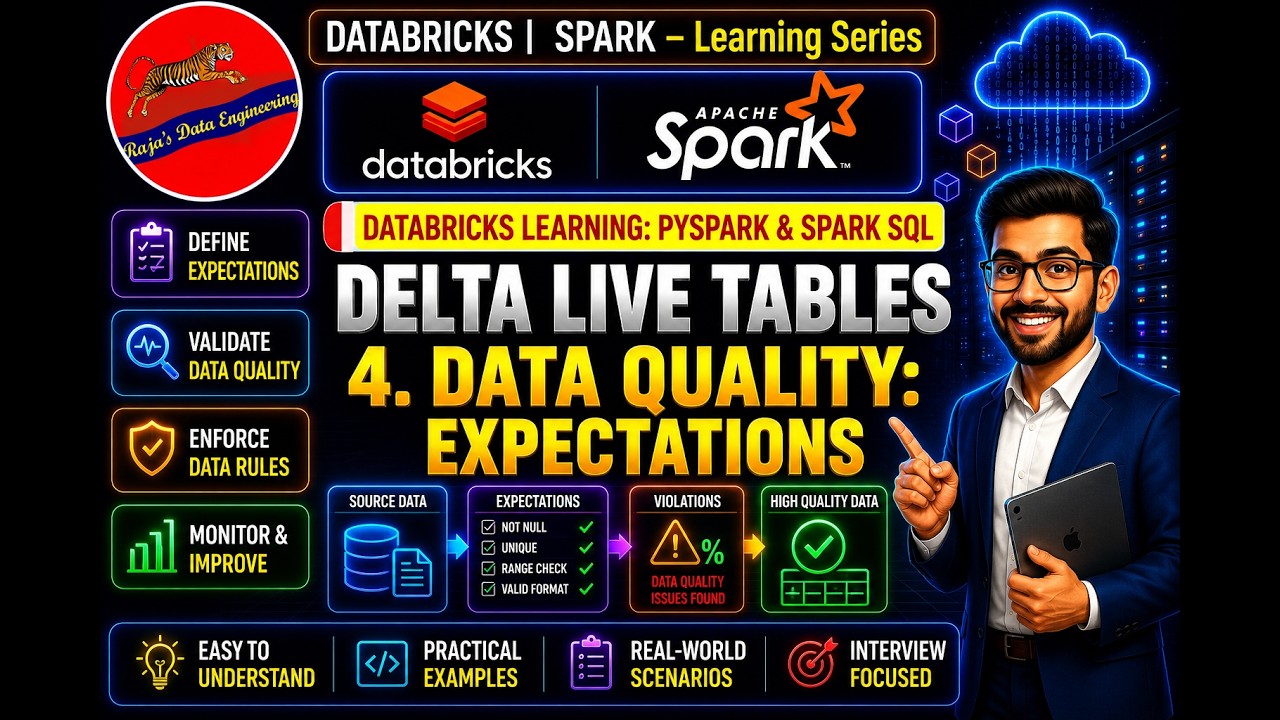
125. Databricks | Pyspark| Delta Live Table: Data Quality Check - Expect
Delta Live Tables in Databricks use expectations to perform data quality and validation checks on datasets using Python decorators or SQL constraints. Expectations consist of a constraint name, a validation logic definition, and a violation action of either warning, dropping invalid records, or failing the entire process.
 Tutorials
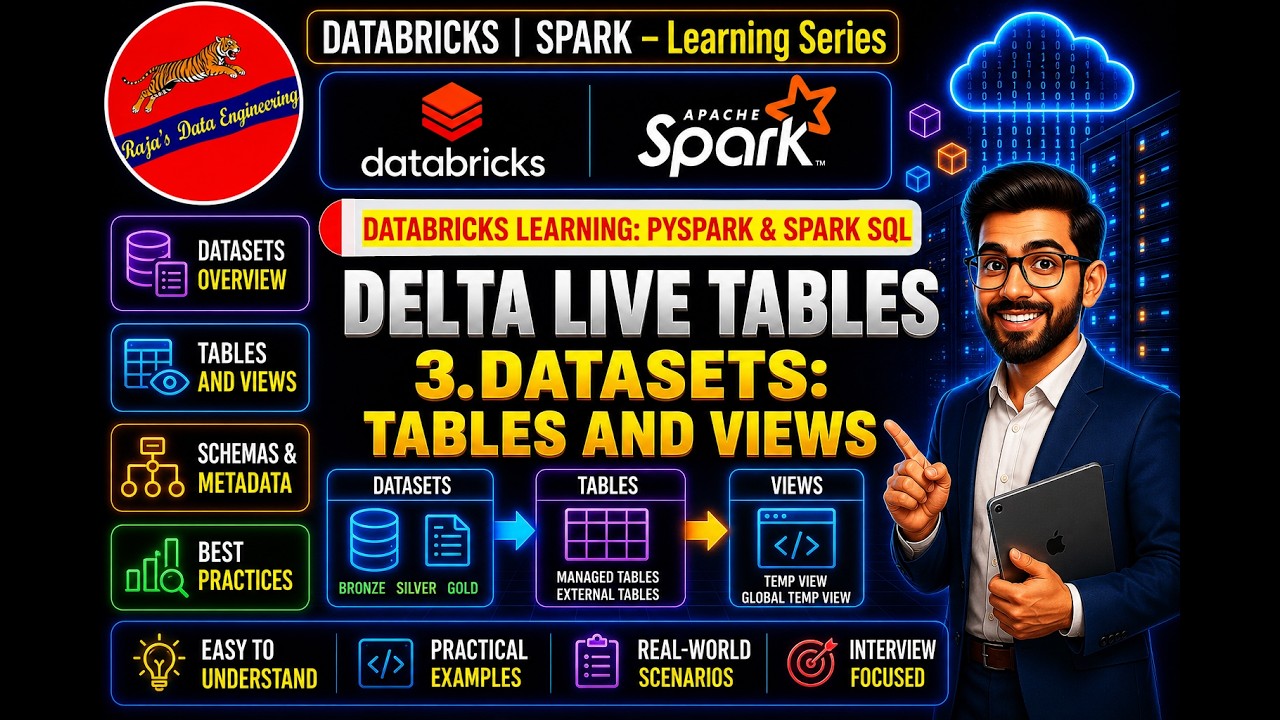
124. Databricks | Pyspark| Delta Live Table: Datasets - Tables and Views
Delta Live Tables in Databricks utilize three primary datasets: streaming tables, materialized views, and standard views. The video demonstrates the specific use cases, architectural layers, and syntax for each dataset using PySpark and Spark SQL.
 Tutorials
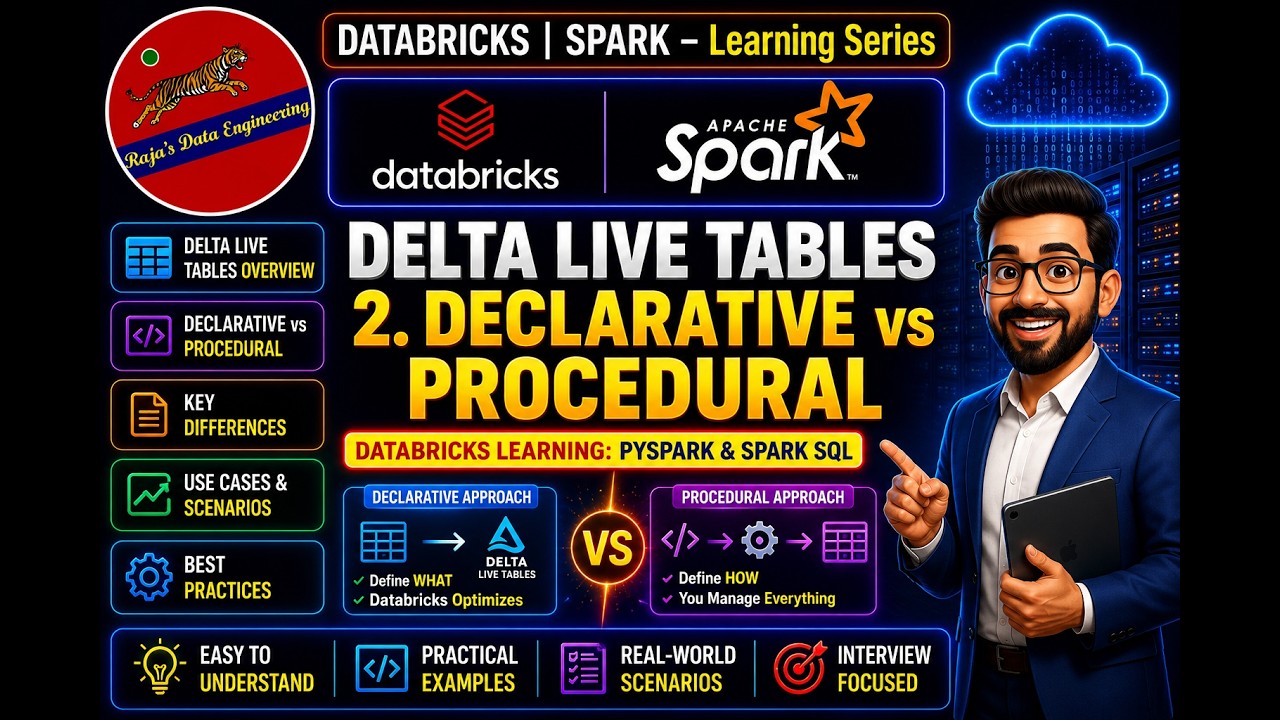
123. Databricks | Pyspark| Delta Live Table: Declarative VS Procedural
Procedural data engineering approaches require developers to explicitly write and order every step of extraction, transformation, and loading logic. In contrast, declarative approaches like Databricks Delta Live Tables allow developers to specify only the desired final outcome while an underlying engine automatically determines the execution steps.
 Tutorials
122. Databricks | Pyspark| Delta Live Table: Introduction
This video introduces Databricks Delta Live Tables as a declarative development framework designed to simplify and accelerate ETL pipeline creation. It details traditional pipeline challenges like complex medallion architectures, manual data quality checks, and difficult monitoring, while demonstrating how Delta Live Tables automate infrastructure management and error handling.
 Tutorials
Databricks CI/CD: Intro to Databricks Asset Bundles (DABs)
This video demonstrates how to use Databricks Asset Bundles to manage CI/CD workflows and reproducibly deploy data engineering code from development to production. The tutorial covers initializing a bundle project, configuring resources using YAML files, and automating deployments through the Databricks CLI and GitHub Actions.
 News
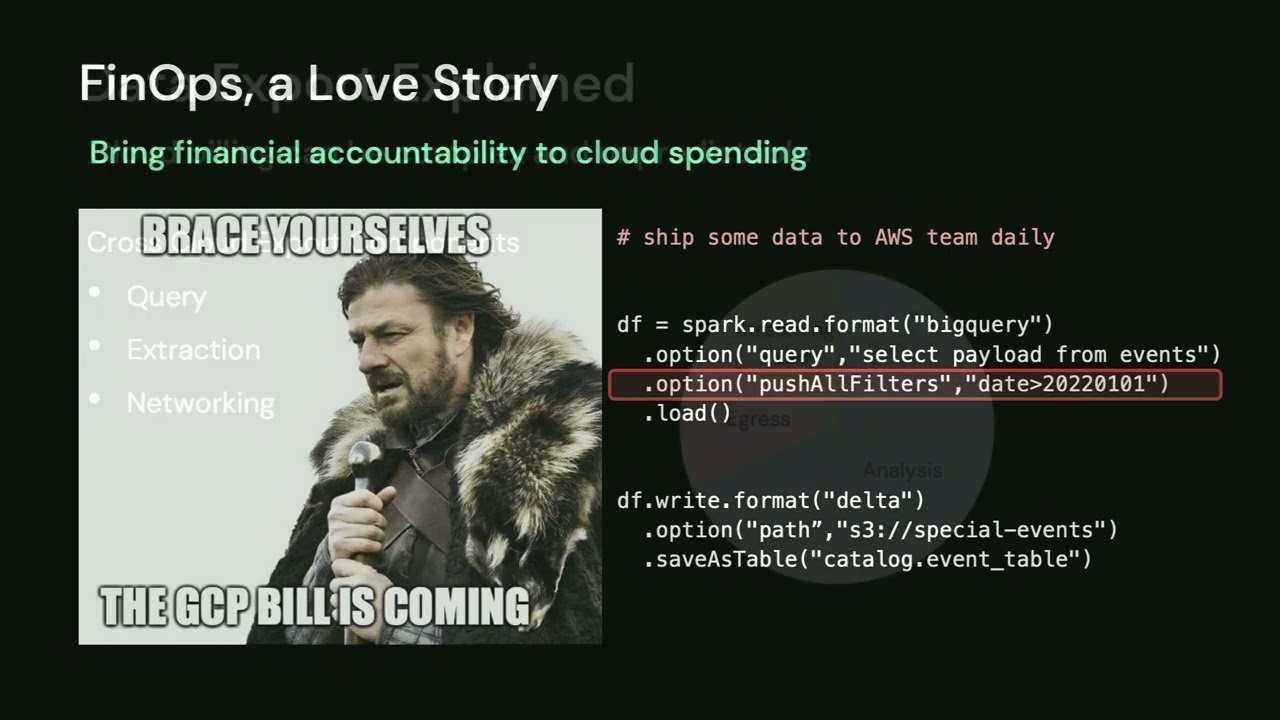
The Future is Open: Data Streaming in an Omni-Cloud Reality
The video teaches how to build a multi-cloud data streaming architecture using open formats, Apache Spark, and Delta Live Tables to avoid expensive proprietary data extractions. It demonstrates two infrastructure-as-code methods for managing data pipelines across clouds using the dbx project and the Databricks Terraform provider.
 News
Five Things You Didn't Know You Could Do with Databricks Workflows
The video demonstrates advanced Databricks Workflows features including serverless jobs, repair and rerun capabilities for failed tasks, and late-job notifications. It also covers orchestrating external tools like DBT, managing modular jobs, and utilizing file arrival triggers for automated orchestration.
 News
Using Cisco Spaces Firehose API as a Stream of Data for Real-Time Occupancy Modeling
Honeywell uses Databricks Delta Live Tables and Cisco Spaces firehose data to ingest billions of daily IoT sensor events for real-time building occupancy modeling. The presentation demonstrates how combining continuous streaming telemetry with static metadata enables automated optimization, data quality monitoring, and improved facility energy management.
 News
Best Practices for Running Efficient Apache Spark™ Workloads on Databricks
The video demonstrates best practices for optimizing Apache Spark workloads and developing applications on the Databricks platform. It highlights key features such as Unity Catalog for governance, Delta Live Tables, the VS Code extension, Databricks Asset Bundles, workflows, and predictive I/O for faster queries and updates.
 Tutorials
Streaming Data Analytics with Power BI and Databricks
The video demonstrates how to implement real-time streaming data analytics by combining Microsoft Power BI with Databricks lakehouse architectures. It details three specific scenarios using Delta live tables, structured streaming, direct query, composite models, and push APIs to build live reporting dashboards.
 News
Sponsored: AWS-Real Time Stream Data & Vis Using Databricks DLT, Amazon Kinesis, & Amazon QuickSight
Amazon Kinesis ingests real-time streaming data from Internet of Things device simulations, while Databricks processes and analyzes this stream using Delta Live Tables. The processed data is subsequently stored in a Delta Lake on Amazon S3 for downstream analytics and predictive modeling.
 News
Real-Time Streaming Solution for Call Center Analytics: Business Challenges and Technical Enablement
Hitachi Solutions designed and implemented a real-time streaming data pipeline using Azure Databricks and Delta Live Tables to ingest call center metrics from Genesis Cloud. The solution successfully reduced data streaming latency to just seconds and displayed updated agent activity and queue metrics in Power BI dashboards.
 Events
Embracing the Future of Data Engineering: The Serverless, Real-Time Lakehouse in Action
Databricks demonstrates a serverless real-time lakehouse architecture by streaming mobile phone sensor data into a cloud pipeline. The presentation features live ingestion through Kinesis, Delta Live Tables, Apache Spark structured streaming, and cross-cloud data sharing using Delta Sharing.
 News
Simon + Denny Live: Ask Us Anything
Databricks employee Danny Lee and developer advocate Simon Whitely answer audience questions about data engineering, Delta Lake, Spark, and large language models. The hosts cover topics such as prompt engineering, Delta live tables, cloud data warehousing, performance optimization, and the differences between data formats.
 News
US Army Corp of Engineers Enhanced Commerce & National Sec Through Data-Driven Geospatial Insight
The video details how the U.S. Army Corps of Engineers modernizes its National Dredging Quality Management program by migrating from a legacy on-premises Oracle stack to a Databricks lake house architecture. It demonstrates how this cloud migration processes billions of streaming vessel telemetry points in under a minute to enhance real-time geospatial analytics, automation, and decision-making for national waterways.
 News
Scaling AI Applications with Databricks, HuggingFace and Pinecone
This video teaches how to scale AI applications by combining Databricks, Hugging Face, and Pinecone to manage embeddings and vector databases. It demonstrates a code walkthrough of building a data pipeline using Databricks Delta Live Tables to sanitize data, generate embeddings with open-source Hugging Face models, and store them in Pinecone.
 News
High Volume Intelligent Streaming with Sub-Minute SLA for Near Real-Time Data Replication
This video demonstrates a metadata-driven ETL framework built on Databricks that automates data ingestion, curation, and quality checks across both batch and streaming sources. It also explains an intelligent streaming optimization using dynamic thread pools to process Kafka change data capture events more cost-efficiently.
 News
Apache Spark™ Streaming and Delta Live Tables Accelerates KPMG Clients For Real Time IoT Insights
KPMG demonstrates how Apache Spark streaming, Delta Live Tables, and the Databricks Lakehouse accelerate real-time IoT insights for predictive maintenance. The presentation walks through a manufacturing use case using Azure Event Hubs, a medallion architecture, machine learning models, and Tableau dashboards to detect machine faults and prevent costly downtime.
 Community
Sponsored by: Avanade | Enabling Real-Time Analytics with Structured Streaming and Delta Live Tables
The video demonstrates how Delta Live Tables simplifies data pipeline creation by automating infrastructure management, data quality checks, and performance optimization through familiar Python and SQL APIs. It also highlights the integration of Delta Live Tables with Unity Catalog to provide unified data governance, physical and logical data isolation, and comprehensive end-to-end lineage tracking.
 News
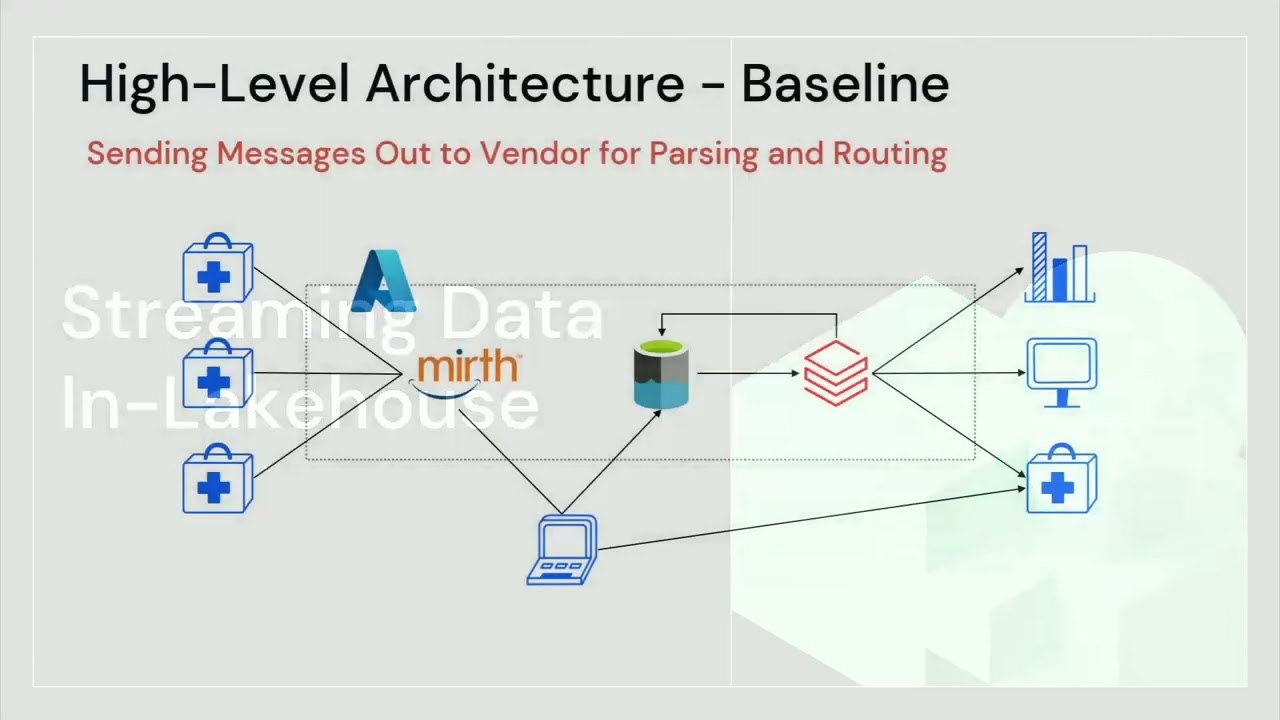
Taking Control of Streaming Healthcare Data
Crisp Shared Services uses Databricks, auto loader, and Delta live tables to ingest, parse, and standardize over a billion healthcare messaging files daily. The architecture enables near real-time data streaming, metadata-driven pipeline configuration, automated quality validation, and scalable analytics for health information exchanges.
 Tutorials
How to Build a Metadata Driven Data Pipelines with Delta Live Tables
This video demonstrates how to build metadata-driven Delta Live Tables pipelines to dynamically scale ETL development without writing custom code for every new table. It teaches viewers how to use JSON configuration files, ingestion APIs, and a generic notebook framework to automate bronze and silver layer processing and handle incremental updates.
 News
Using DMS and DLT for Change Data Capture
This video demonstrates how to implement change data capture pipelines using AWS Database Migration Service and Databricks Delta Live Tables. The speakers present a live end to end demonstration parsing MySQL transaction logs into S3 and processing them with Delta Live Tables for real time synchronization.
 Tutorials
Databricks Asset Bundles: A Standard, Unified Approach to Deploying Data Products on Databricks
Databricks asset bundles allow teams to use YAML configuration files and the Databricks CLI to write code once and deploy data products consistently across development, staging, and production workspaces. The tool helps standardize CI/CD workflows, co-version project code with configurations, and manage cloud resources such as jobs and Delta live tables.
 News
Introduction to Data Engineering on the Lakehouse
The video explains how the Databricks lake house platform unifies data lakes and data warehouses to simplify data engineering, governance, and analytics. It demonstrates building automated data pipelines using Delta live tables for ingestion and transformation, and databricks workflows for orchestration.
 News
Introduction to Data Streaming on the Lakehouse
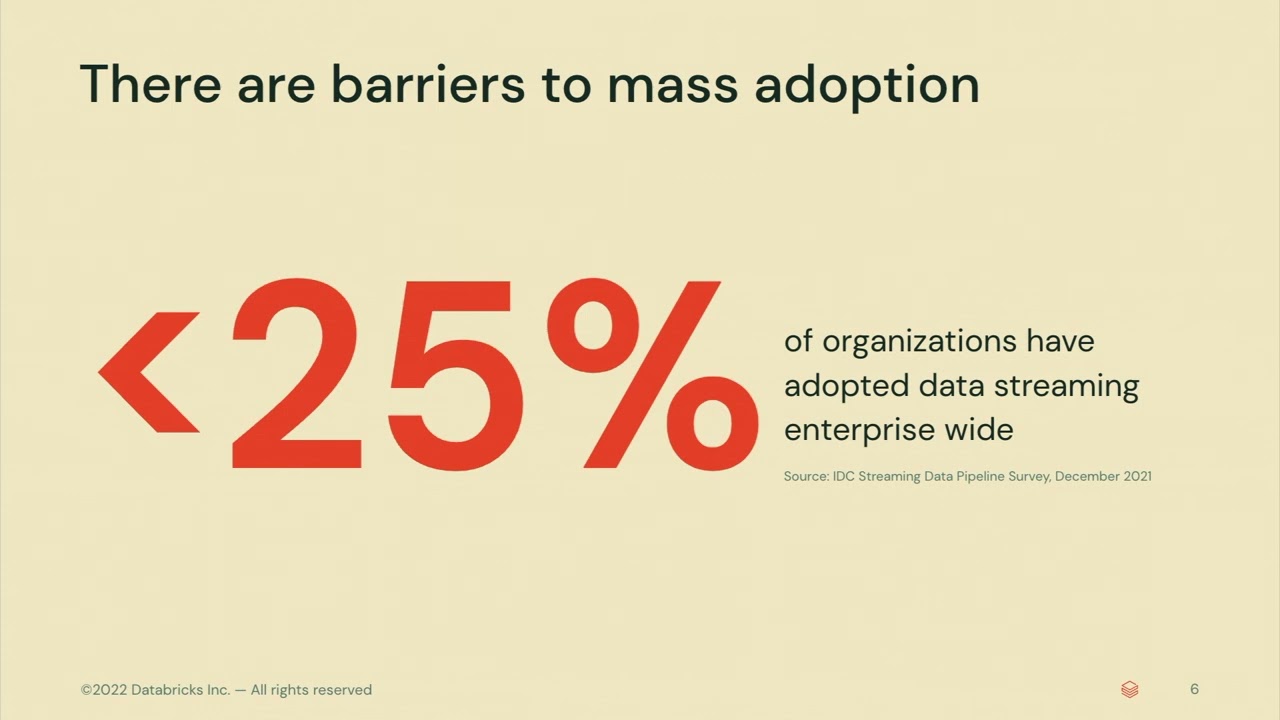
The video demonstrates how to use the Databricks lake house platform and Delta Live Tables to ingest, process, and govern real-time streaming data at scale. It features a case study from Block showing how they implement change data capture, automated scaling, and unified data pipelines using the platform.
 Tutorials
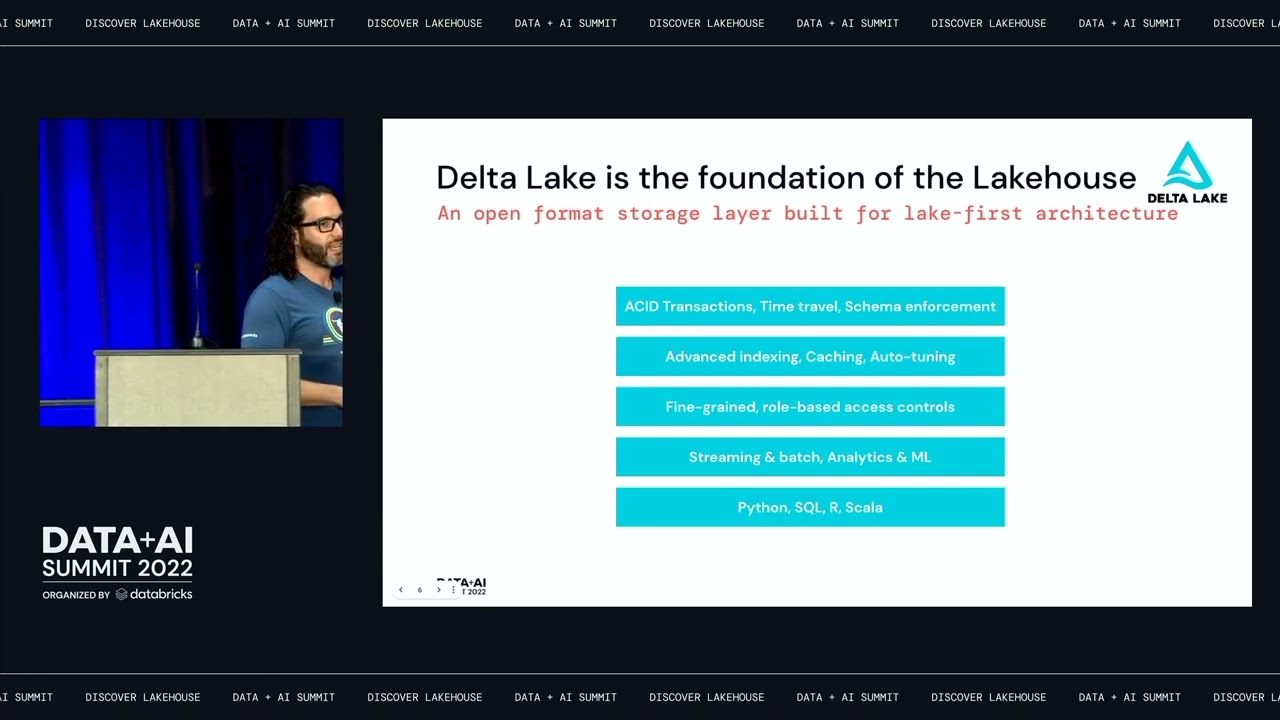
Delta Live Tables A to Z: Best Practices for Modern Data Pipelines
This video teaches how to build modern data pipelines using Databricks Delta Live Tables, covering both core declarative concepts and software engineering best practices. It demonstrates how to create streaming tables and materialized views using SQL and Python, leverage change data capture, and use Databricks asset bundles for version control.
 Tutorials
So Fresh and So Clean: Learn How to Build Real-Time Warehouses on Lakehouse
Databricks SQL warehouses built on Delta Lake architecture offer a cost-effective alternative to traditional data warehouses, combining high performance with ACID transactions, time travel, and robust governance. The video demonstrates how using Delta Live Tables and serverless compute enables automated ETL, improved data quality control, and scalable real-time analytics with low latency.
 News
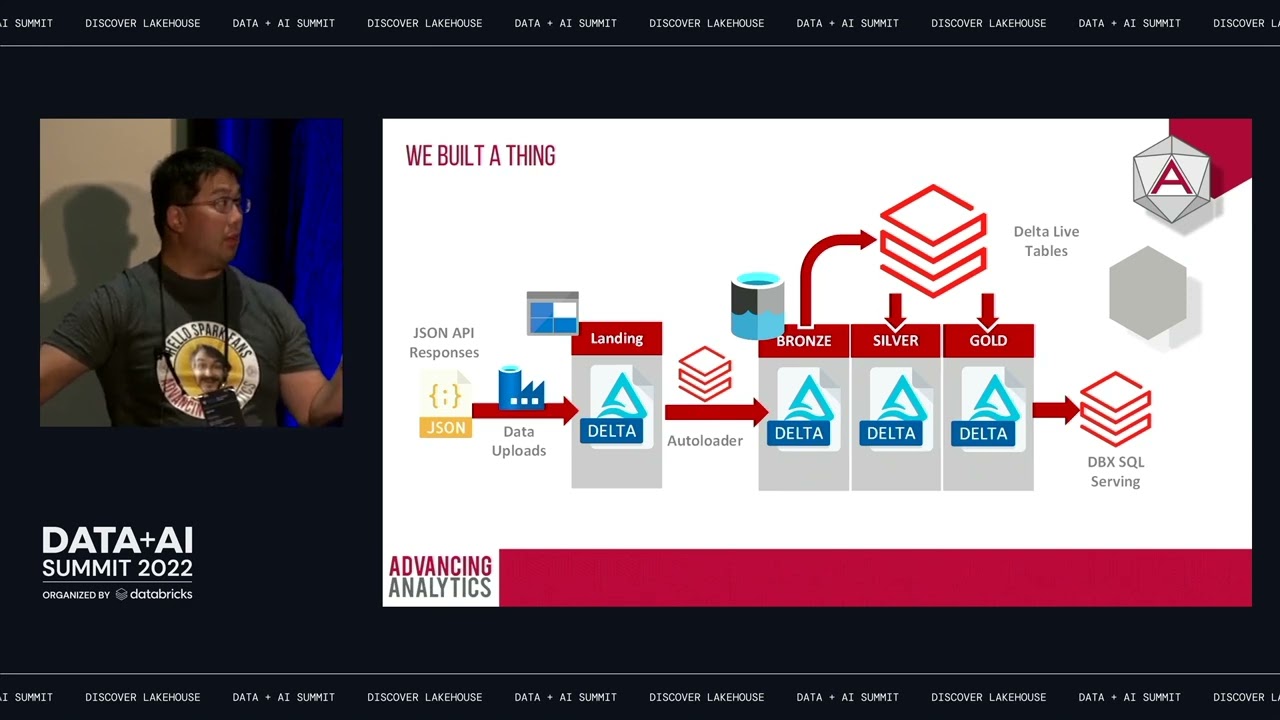
Near Real-Time Analytics with Event Streaming, Live Tables, and Delta Sharing
The presentation explores event-driven architecture, event streaming, change data capture, schema registries, and Delta Live Tables to achieve near-real-time analytics. It also highlights Delta Sharing as a secure method for sharing live data without duplication.
 News
Simon Whiteley + Denny Lee Live Ask Me Anything
This video covers a live Ask Me Anything session with Simon Whiteley and Denny Lee discussing Delta Lake, Delta Live Tables, Autoloader, and Databricks SQL architecture. It provides expert advice and answers audience questions about data engineering best practices and troubleshooting techniques within the Databricks ecosystem.
 News
Dive Deeper into Data Engineering on Databricks
Data engineering on Databricks helps teams tackle challenges with data pipelines using Delta Live Tables and the Databricks Lakehouse Platform. This platform enables continuous and scheduled data ingestion, schema evolution, data quality rules, and automated infrastructure management.
 News
Moving to the Lakehouse: Fast & Efficient Ingestion with Auto Loader
Auto Loader provides incremental loading with exactly-once semantics for ingestion into Delta Lake. The video covers how Auto Loader works, compares directory listing and file notification modes, and demonstrates schema inference and evolution features.
 News
Delta Live Tables: Modern Software Engineering and Management for ETL
Delta Live Tables allow data professionals to define SQL and Python pipelines using live syntax for automated dependency management, error handling, and quality control. The feature called Enzyme optimizes incremental ETL updates on Delta tables without recomputing entire datasets.
 News
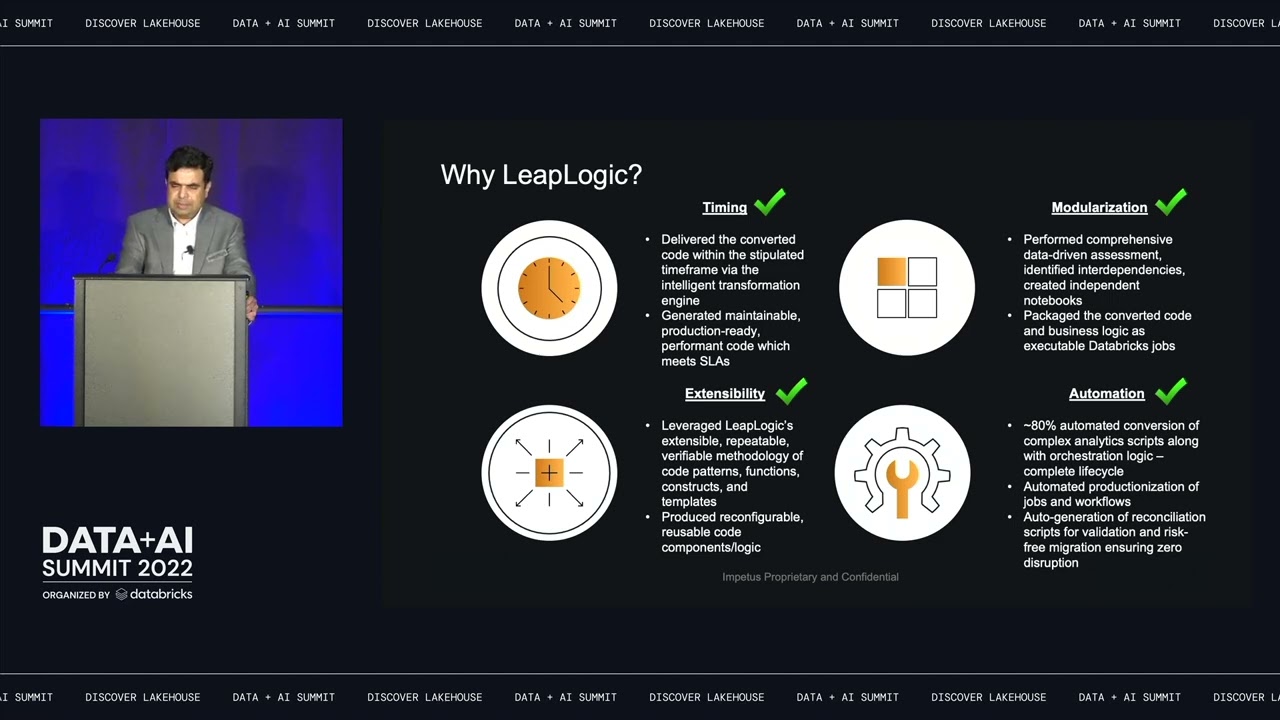
How AARP Services, Inc. automated SAS transformation to Databricks using LeapLogic
AARP Services migrated legacy SAS data science workloads to the Databricks platform using the LeapLogic automation tool. This end-to-end migration process covered assessment, transformation, validation, and operationalization.