Asset Bundles
Recent items mentioning Asset Bundles across the Databricks ecosystem — releases, news, videos, and community Q&A. Updated hourly.
What is Asset Bundles?
Declarative Automation Bundles, formerly Databricks Asset Bundles, are the infrastructure-as-code layer for Databricks projects. You describe everything a project needs in configuration files: jobs, pipelines, dashboards, model serving endpoints, and MLflow experiments and registered models. The Databricks CLI then validates that definition and deploys the whole project to a workspace as one unit.
Bundles exist to bring ordinary software engineering practice to data and AI work. Because the entire project lives in version-controlled files, you get code review, testing, and CI/CD instead of hand-edited jobs that drift apart across workspaces. The same bundle deploys to development, staging, and production with per-target overrides, so promoting a pipeline is a deploy command rather than a rebuild by hand.
Bundles have been generally available since April 2024. The rename to Declarative Automation Bundles landed in March 2026, partly because the word assets was ambiguous on the platform. The direction since GA: resources can be defined in Python as well as YAML, bundles are editable in the workspace UI, and new bundles created with CLI 1.3.0 or later deploy through a direct engine instead of Terraform.
Why were Databricks Asset Bundles renamed?
Databricks renamed them Declarative Automation Bundles on March 16, 2026, saying the new name better reflects what bundles do and that assets meant too many different things on the platform. The change is non-breaking: the bundle CLI command still works and existing configuration needs no edits.
Are bundles generally available?
Yes. Bundles reached GA in April 2024 with Databricks CLI 0.218.0. Editing, testing, and deploying bundles from the workspace UI became generally available in October 2025.
Do I have to write YAML, or can I use Python?
YAML is the default format for bundle configuration. Python support is also generally available (since October 2025, with CLI 0.275.0), and it lets you define resources in Python and modify them programmatically during deployment.
Do bundles use Terraform under the hood?
Older bundles deploy through a Terraform-based engine, but bundles created with CLI 1.3.0 or later default to the direct deployment engine, which became generally available in June 2026. Either way you never write Terraform yourself; the CLI handles validation and deployment from your bundle files.
Sources: What are Declarative Automation Bundles?, Databricks docs · Declarative Automation Bundles feature release notes, Databricks docs · Declarative Automation Bundles FAQs, Databricks docs
Practitioners are pushing Asset Bundles into harder territory: one thread asks whether Unity Catalog object definitions can be kept in a database-project-style folder structure and deployed through DAB via GitHub Actions 3. Another asks how to link a bundle-managed Genie space to an AI/BI dashboard across environments 4. A monorepo thread covers dependency management 1, and a community post refers to the tooling as "Declarative Automation Bundles" 7.
Generated daily from the 10 most recent items mentioning Asset Bundles. Click any [N] to jump to the source.
monorepo and dependencies
Hi, how do u handle dependencies in a monorepo on Databricks? So we have one `pyproject.toml` and we build it into one whl, which every job installs. It holds the libraries that DBR does not ship. The libraries that DBR already ships we pin in the dev group at the runtime version, so we have them locally for tests and checks, but they dont go into the whl. We started adding more products, so the repo grew into a monorepo, and now every job installs libraries it does not need. The options i see: - Pin the job-only libraries in the job environment in `resources/`, and keep them in a dev group in `pyproject.toml` for local tests and mypy. The catch is 2 pins to keep in sync. - Optional extras per product, and the job installs `dist/*.whl[extra]`. One pin, but i am not sure DABs accepts the extra on a wheel path. - One whl per product, which feels like too much for now. What pattern do u use for this? Any pain with the ones above? submitted by /u/ptab0211 [link] [comments]
Environment Variables in Databricks Serverless
Environment variables are now available in Serverless through both the UI and DABs. Use environment variables for constant things like catalog or environment. Keep using job parameters for things that are often changing (like a different date for a job run). You can also use environment variables to reference passwords from secrets scopes and, soon, from UC secrets. Read more: https://databrickster.medium.com/environment-variables-in-databricks-serverless-207512b996c4 https://www.sunnydata.ai/blog/databricks-serverless-environment-variables submitted by /u/hubert-dudek [link] [comments]
My client wants to maintain Unity Catalog object definitions in a database-project-style folder structure and deploy any new or modified objects through Databricks Asset Bundles (DAB). Is this approach supported using DAB deployments through GitHub Actions?
submitted by /u/Ok-Tomorrow1482 [link] [comments]
Asset Bundles: how to link a bundle-managed Genie space to an AI/BI dashboard across environments (o
AI Agent Memory
Databricks supports agent memory storage. The amazing part is that Lakebase stores the memory, so we can also inspect the saved record. We can save "User prefers Mexican recipes" and recall it through a client with the question "What should I cook for dinner?" more news https://medium.com/databrickscommunity/databricks-news-genie-cli-app-builder-agent-memory-dabs-41820427fcc2 submitted by /u/hubert-dudek [link] [comments]
Materialized views and streaming tables from Python
We can now use dp.materialized_view and dp.table directly in a serverless notebook to create standalone materialized views and streaming tables. more news https://medium.com/databrickscommunity/databricks-news-genie-cli-app-builder-agent-memory-dabs-41820427fcc2 submitted by /u/hubert-dudek [link] [comments]
Declarative Automation Bundles
Had a call with a Databricks PM this week and found out about all the cool things!
Spent 30 minutes on a product discovery call with u/saad-the-engineer from Databricks on Tuesday. Supposed to be about Unity Catalog triggers for jobs. We wandered. At one point I was explaining how I run bronze to silver on most client builds. It’s table-driven, with three Delta tables holding the config: one for table settings, one for column mappings (bronze names to business-friendly names), and one for DQ expectations that get loaded into the declarative pipeline. Genie Code actually picks up the pattern pretty well since it all lives in UC. Saad’s response was basically “cool, have you looked at sdp-meta?” I had not. It’s the Labs metadata framework for Spark Declarative Pipelines. You define bronze and silver in a JSON or YAML onboarding file and one generic pipeline builds the whole graph at runtime. Pretty much what I built by hand. Then he showed me pyDABs (aka Python for DABs). If you’re tired of hand-writing every task in YAML, you can loop through notebooks in a path and generate tasks in code. Mutators let you apply things like notifications or tags across every job in one shot. Every time I brought up something I’d hacked together, he had a “we’ve got that too.” I mentioned DQX and he said it’s one of those Labs projects that works so well they’re in no hurry to touch it. I also got a preview of some cool things that are coming (Stay tuned!) Best conversation of my week, and it was only Tuesday. For those of you running metadata-driven pipelines: did you adopt sdp-meta or roll your own? And what made you pick one over the other? Side note, Scott Haines and I are doing a live session on the Iceberg updates at the end of the month. Let me know if you are interested and I'll share the link! submitted by /u/OkImprovement7010 [link] [comments]
The Fraud Analyst AI Coworker: Detecting Telecom Fraud in Real-Time on One Platform
Databricks Lakebase, Databricks Apps, and Genie combine into a single fraud detection stack for telecom, with Lakebase removing the analytical/transactional split for faster data sync, Apps powering a custom case-management workbench, and Genie acting as an AI coworker that answers natural-language questions over governed fraud data. The post argues that real-time network telemetry strengthens fraud models as attackers use agentic AI at machine speed, and the Telecom Fraud Prevention Solution Accelerator deploys the risk engine, workbench, and investigation agent via Databricks Asset Bundles, adaptable to other industries.
Audio transcription in SQL
ai_transcribe is another databricks AI function. It converts audio into timestamped text with speaker labels, directly from SQL. The Beta currently supports English and Spanish. more news https://medium.com/databrickscommunity/databricks-news-genie-cli-app-builder-agent-memory-dabs-41820427fcc2 submitted by /u/hubert-dudek [link] [comments]
Feature request: let DABs alert resources load query_text from an external .sql file
Complete CI/CD Implementation for Databricks with Azure DevOps and Asset Bundles | Step-by-Step Demo
How do you manage, in a Databricks Asset Bundles-based CI/CD, the permissions and access resources that a bundle cannot declare?
We have a DABs-based CI/CD in a monorepo and want to split it: deploy the DABs from the data-code repo and keep the Terraform infrastructure in a separate repo. The original idea was that Terraform would change at a different pace and its deployments would be manual, with no automated dependency on DABs deploys. However, at work they’re now saying this infrastructure part should be tied to the DABs deployment and not be manual, and I’m unsure where it should live and how to automate it. We mainly run into four cases: Cross-boundary grants: our pipeline needs to read a table owned by another team, so we need to grant SELECT on that table/schema to our service principal. Postgres grants: a job needs to connect to a Lakebase database and requires a GRANT on a Postgres schema, table, or role. Share contents: we need to add or remove tables and views from a Delta Sharing share consumed by an external consumer. Notification destinations: a job or pipeline needs to send alerts to a notification destination (email, Slack, webhook) that the bundle cannot declare. Today, all of these live in Terraform outside the bundle, so every time the data code needs one of these changes, we have to coordinate a separate MR and deployment in addition to the bundle deploy. Where do you put these in your pipeline: inside the bundle, in a separate Terraform stack applied after the bundle deploy, in the platform repo, or another way? What issues have you run into with each approach? Tx so much submitted by /u/Appropriate_Tip_9580 [link] [comments]
Databricks maintenance and cleanup: Visualize, Clean, and Log with Declarative Automation Bundles
Blog post: Deploying Databricks Genie Agents/Spaces to different environments with DABs
Databricks Automation Bundles (DABs) has built-in support for deployment of Genie Agents, but there is one big problem when you need to deploy to multiple environments - the agent definition contains hardcoded table names. I wrote a blog post on why this happens and how it could be solved with PyDABs. The corresponding source code is on GitHub: https://github.com/alexott/pydabs-genie-agent-retarget and also published to PyPI as pydabs-genie-agent-retarget package so you can easily plug it in into your project. submitted by /u/Acrobatic-Room9018 [link] [comments]
 News
Databricks Breaking News: Lakeflow Jobs, DABs, Apps, AI, Private Network Gateway
The video covers multiple new updates in Databricks, including Lakeflow connectors, task value loops, state repartitioning, DAB enhancements, SQL functions, serverless version 6, Unity Catalog skills, app spaces, and network gateways. It demonstrates how to configure Lakeflow job tasks, implement task value loops, and manage serverless compute permissions and environments.
Databricks Asset Bundles now utilize a multipart upload endpoint for improved deployment throughput and automatically retry operations encountering transient server errors. This release also adds uv workspace support for local environment setup alongside fixes for bundle deployment binding, immutable folders, and relative path resolution.
DABs in the Wild
Our team is a team of engineers responsible for centralized analytics and infrastructure on Databricks. We went live about 2 years ago and implemented a monolithic repo structure where we save all of our code including ci/cd, functions, sql, notebooks, lakeflow job yml, to a single repository that also deploys the common development (notebooks) to the Workspace.. Knowing this setups explicit limitations, we're working on implementing DABs into our team norms (already adopted on a very small ad-hoc scale) which will bundle each projects files together into its own unit of work, and will still be managed via our repository under /bundles directory. We'll have a GitHub action watching this directory and will deploy changes when they happen to that directory specifically. With this solution though, we could potentially get a ton of projects within the /bundle directory over time with other limitations as well. This got me curious what other teams workflow/architecture is around DAB's and how do you have it setup within your databricks environment and how have you scaled it within a team? submitted by /u/RunningOnDadrenaline [link] [comments]
Genie spaces with DABs - how do you deal with the table ordering?
Release: v2.21.0 (#2248)
Databricks Asset Bundles now exclusively deploy using the direct engine, removing the Terraform deployment engine and its bundled binary. This release also restores default TLS certificate verification for SDK calls and sorts folders alphabetically in the Workspace File System view.
Use multiple triggers for Lakeflow Jobs
A Lakeflow Job can now have up to five independent triggers. Any active trigger can start the job. For table updates, specify whether all or any monitored table must change; in DABs, use ALL_UPDATED or ANY_UPDATED. more news https://medium.com/databrickscommunity/databricks-news-serverless-genie-code-ltap-lakeflow-61853d8e422a submitted by /u/hubert-dudek [link] [comments]
Multiple triggers on one Lakeflow job (beta): finally killing the duplicate “month-end close” job
I can't tell you how many times I've heard this common finance ask: refresh reporting tables daily at 6 AM, but during month-end close, run every hour plus whenever the ERP drops a reconciliation batch. Until now that meant multiple jobs pointing at the same notebooks (or a parent job with run-job tasks), and keeping parameters and dependencies in sync across both. There’s now a beta feature that allows multiple triggers on a single job: Enabled per workspace by an admin under Previews (“Multiple Triggers”) Up to 5 triggers per job during preview Mix types: multiple crons, table update, file arrival Each trigger pauses/resumes independently In DABs / Jobs API you define a list of triggers instead of the single schedule block Gotcha: any trigger firing starts the job, and max concurrent runs defaults to 1. If a file-arrival run is still going when the cron fires, the second run (queues/is skipped, depending on your queue setting). Worth testing the overlap before you put this on anything high priority. Has anyone tried this yet? Curious how others are finding uses for this. submitted by /u/OkImprovement7010 [link] [comments]
Run a Databricks job when a file on git / DABs changes
DABs can run a job during deployment when a tracked file changes (JSON, CSV, etc.). Use job_runs with on_file_change to refresh configuration or merge it into a Delta table. whole article: https://medium.com/databrickscommunity/databricks-dabs-ci-cd-4-ways-to-automate-your-deployments-6a732d9e928c https://www.sunnydata.ai/blog/databricks-asset-bundles-job-runs submitted by /u/hubert-dudek [link] [comments]
Add custom_tags and budget_policy_id support to Declarative Automation Bundle presets
Introducing Funke: Native HL7v2 Parsing on Databricks
Funke is an open-source Python and PySpark library that parses HL7v2 electronic health record messages directly into native Spark types on the Databricks Lakehouse while preserving their complete message hierarchy. Rebuilt around Unity Catalog, Declarative Automation Bundles, and Spark Declarative Pipelines as the successor to Smolder, it includes a runnable demo to help you stand up an end-to-end HL7 ingestion pipeline in minutes.
SharePoint Lists ingestion is now in Beta in Lakeflow Connect
Hey r/databricks , SharePoint Lists ingestion is now available in Beta with Lakeflow Connect. You can ingest structured data from Microsoft SharePoint Lists into Delta tables. The Beta supports two ingestion patterns: Ingest one SharePoint List into one Delta table. Ingest all Lists from a SharePoint site into one destination schema, with one Delta table per List. SharePoint Lists ingestion is available through the managed SharePoint connector API. You can create a pipeline using Declarative Automation Bundles or a Databricks notebook. UI-based authoring is not available in this Beta; we are working on adding it. To try the Beta, ask a workspace admin to open Previews , search for SharePoint Lists Connector , and turn it on. Tutorial Option 1: Declarative Automation Bundle This Declarative Automation Bundle configuration ingests one List: resources: pipelines: sharepoint_list_pipeline: name: sharepoint_list_pipeline catalog: main schema: ingest_destination_schema channel: PREVIEW ingestion_definition: connection_name: objects: - table: destination_catalog: main destination_schema: ingest_destination_schema destination_table: sharepoint_list connector_options: sharepoint_options: entity_type: LIST url: https:// .sharepoint.com/sites/ /Lists/ Option 2: Databricks notebook Step 1: Open the SharePoint example notebook , select Open in Databricks or Import Notebook , and import a copy into your workspace. Step 2: Do not modify cell one. Replace the pipeline configuration in cell three with the following, updating the placeholders: pipeline_spec = """ { "name": " ", "catalog": "main", "schema": "ingest_destination_schema", "ingestion_definition": { "connection_name": " ", "objects": [ { "table": { "destination_catalog": "main", "destination_schema": "ingest_destination_schema", "destination_table": "sharepoint_list", "connector_options": { "sharepoint_options": { "entity_type": "LIST", "url": "https:// .sharepoint.com/sites/ /Lists/ " } } } } ] }, "channel": "PREVIEW" } """ create_pipeline(pipeline_spec) Step 3: Click Run all to create the pipeline. Ingest multiple SharePoint Lists If there are multiple SharePoint Lists you want to ingest in the same pipeline, simply create a separate table object within the same pipeline spec definition and point the url at the Lists you're interested in. The SharePoint connector also supports ingesting all of the SharePoint Lists across an entire site. For site-level ingestion, follow the same steps above, but use a schema object instead of a table object and point the url to the SharePoint root site. Each List is written to its own destination table. Limitations: The current Beta does not support tenant-wide List ingestion nor SharePoint List attachments. See the documentation for complete Declarative Automation Bundle and Databricks notebook examples, including site-level ingestion. If you try it, let us know what kinds of Lists you are ingesting and where you run into friction. submitted by /u/BricksterJ [link] [comments]
Validate new code before updating your production job with Databricks DABs
Test new code before updating your production job. With job_runs, immutable snapshots, and a validation dependency, a failed check can keep production on its previous code. See the full article: https://medium.com/databrickscommunity/databricks-dabs-ci-cd-4-ways-to-automate-your-deployments-6a732d9e928c https://www.sunnydata.ai/blog/databricks-asset-bundles-job-runs submitted by /u/hubert-dudek [link] [comments]
The Terraform deployment engine for Databricks Asset Bundles has been removed, requiring users to migrate to the direct engine or remain on CLI v1.19.x. Additional updates include a fix for large integer corruption in API commands, group-level run-as support in bundles, and expanded authentication options for Databricks Apps.
You can now run an SDP pipeline as a group
A pipeline's run-as identity can now be an account group. Updates run with the group's permissions, and the tables the pipeline publishes are owned by the group. What it is Every pipeline runs as some identity. That identity decides what the pipeline can read and write, and who owns the tables it creates. Until now you could pick a user or a service principal. You can now pick an account group too. A Databricks role is a group under the hood, so setting run-as to a group also lets a pipeline run as a role. Why you'd want it If a pipeline runs as one person, it depends on that person's account staying active. When they leave and the account is deactivated, the pipeline can stop running and the tables it published can become inaccessible to everyone else. Service principals already fix part of this. Groups go a step further: a whole team owns the pipeline, and it keeps working as people join and leave the team. No owner reassignment when someone moves on. How to use it https://preview.redd.it/1ml56gev61uh1.png?width=1848&format=png&auto=webp&s=40275cf04ac3a837108289df8e8f16a855acfd98 In the UI: Open the pipeline, click Settings. Click the pencil next to Run as. Pick an account group you belong to, or one you have Assume permission on. Groups show up next to users and service principals. Click Save. The new identity applies on the next update. You can also assume a group’s identity to change / create a pipeline. And you can change the owner of a standalone MV/ST to a group as well! { "name": "sales-etl", "run_as": { "group_name": "sales-eng" } } Declarative Automation Bundles: resources: pipelines: sales_etl: name: sales-etl run_as: group_name: sales-eng What you need CAN_MANAGE on the pipeline. Either membership in the group, or Assume permission on it (for groups used for exclusive access). The group has to be an account group assigned to the workspace. Workspace-local groups don't work, and neither do the built-in admins, users and account users groups. Grant the group every permission the pipeline needs. Updates run as the group, so your own access to the source and data isn't enough. Docs: https://docs.databricks.com/aws/en/ldp/configure-pipeline#set-the-run-as-identity-to-a-group Please let us know what you think! submitted by /u/saad-the-engineer [link] [comments]
Databricks project structure: how do you organize metadata, sql, yml, etc
Hi everyone, I’m currently designing the structure of a Databricks project using Declarative Automation Bundles and I’m interested in how others approach the organization of their codebase For a generic example, imagine a data platform with several domains, such as Sales, Customers, and Operations. Each domain has Bronze, Silver and Gold tables. I’m trying to answer a few questions: 1. How do you organize your Bundles / YAML files? For example, would you structure it something like: sales/ databricks.yml resources/ bronze/ silver/ gold/ customers/ operations/ Or would you have a single databricks.yml and organize the domains underneath it? And within resources/, would you have one YAML per job, per pipeline, per domain, etc.? 2. How do you define table and column metadata? For example, suppose I have a SQL transformation that creates a Gold table. Would you define the comments directly in the transformation SQL, for example using column COMMENT definitions? Or would you maintain metadata separately, for example: metadata/ customer.sql sales.sql containing COMMENT ON TABLE and ALTER TABLE … ALTER COLUMN … COMMENT statements? I like the idea of separating transformation logic from data documentation, but I’m wondering what people actually use in production. submitted by /u/Quantumizera [link] [comments]
Run a job on every Databricks DABs deployment with job_runs
Databricks DABs can run a job every time you deploy. Use job_runs with on_bundle_deploy: true for deployment checks, logging, or configuration updates. See full article: https://www.sunnydata.ai/blog/databricks-asset-bundles-job-runs SunnyData https://databrickster.medium.com/databricks-dabs-ci-cd-4-ways-to-automate-your-deployments-6a732d9e928c submitted by /u/hubert-dudek [link] [comments]
Practical Enterprise Blueprint for Greenfield impementation
What is the closest thing to a practical, opinionated enterprise Azure Databricks blueprint? I’m not looking for docs on individual features. I know Databricks, IaC, UC, Asset Bundles, CI/CD etc. very well (seasoned architect, DBX engineer professional). What I’m missing is how experienced Databricks architects/FDEs usually put the whole thing together for a greenfield setup. Things like: repo split: Azure/IaC, UC, platform, data products (how many repos, how to exchange secrets, how may MIs) dev/test/prod topology (catalog and workspace relation) managed identities and ownership model UC structure, RBAC vs ABAC (federated IAM setup) what belongs in one Asset Bundle, how many bundles, how to deploy/orchestrate them (monorepo or not, asset bunle per source acqusistion/data product or broader) CI/CD and environment promotion (branching strategy, deploying multiple platform team vs data product responsibilities ingestion/integration/orchestration patterns The official docs are good, but mostly describe these things in isolation. Is there a solid repo, reference implementation, blog series, conference talk, consultancy blueprint, or even a good Reddit/forum thread that shows the whole platform design ? Basically: if a Databricks FDE started a vanilla enterprise Azure setup tomorrow, what would the default starting point look like? Mostly interested in high friciton points where reality of operating platform meets "best practice". My focus is "classic" data warehousing, rather ML/AI/apps. submitted by /u/wicked_medusa [link] [comments]
Genie Agent can't be added to git repo or DAB. Nothing working.
Has anyone tried working on a Geni Agent, and then tried committing those results into git? Admittedly I'm a bit new to Databricks, and to DABs, but this story is missing, and the whole experience is quite unintuitive . Any developer generally expects to be able to commit their work to source control when they've invested their time. But I'm finding that incredibly hard, when it comes to these Genie Agents. Obviously the first thing I tried to do is clone the agent into a git-controlled folder and push it to git. That didn't work. It says the asset type is unsupported. submitted by /u/SmallAd3697 [link] [comments]
PSA: old Databricks names vs new ones. Which rename got you?
Databricks has renamed a lot of features over the past year, and a lot of tutorials, blog posts, Stack Overflow answers and even AI assistants still use the old names. If you search the docs for the old name, the results can be confusing, and code samples can look unfamiliar even when you know the concept cold. The ones I see trip people up most: Delta Live Tables / DLT → Lakeflow Spark Declarative Pipelines (often shortened to Lakeflow Declarative Pipelines) APPLY CHANGES INTO → AUTO CDC APIs Databricks Asset Bundles / DABs → Declarative Automation Bundles The concepts didn't change much, but the vocabulary did. Two questions for the sub: Has a rename caught you out, at work, in docs, or in a code review? Did I miss any? I'm sure there are more, especially on the ML / GenAI side. I'll keep this list updated with whatever people add. Edit: removed Liquid Clustering from the list. Fair point from a commenter that it's a change in recommendation, not a rename. Still worth knowing though: older material treats partitioning + Z-Order as the default, and current docs recommend Liquid Clustering for new tables. submitted by /u/UnluckySugar610 [link] [comments]
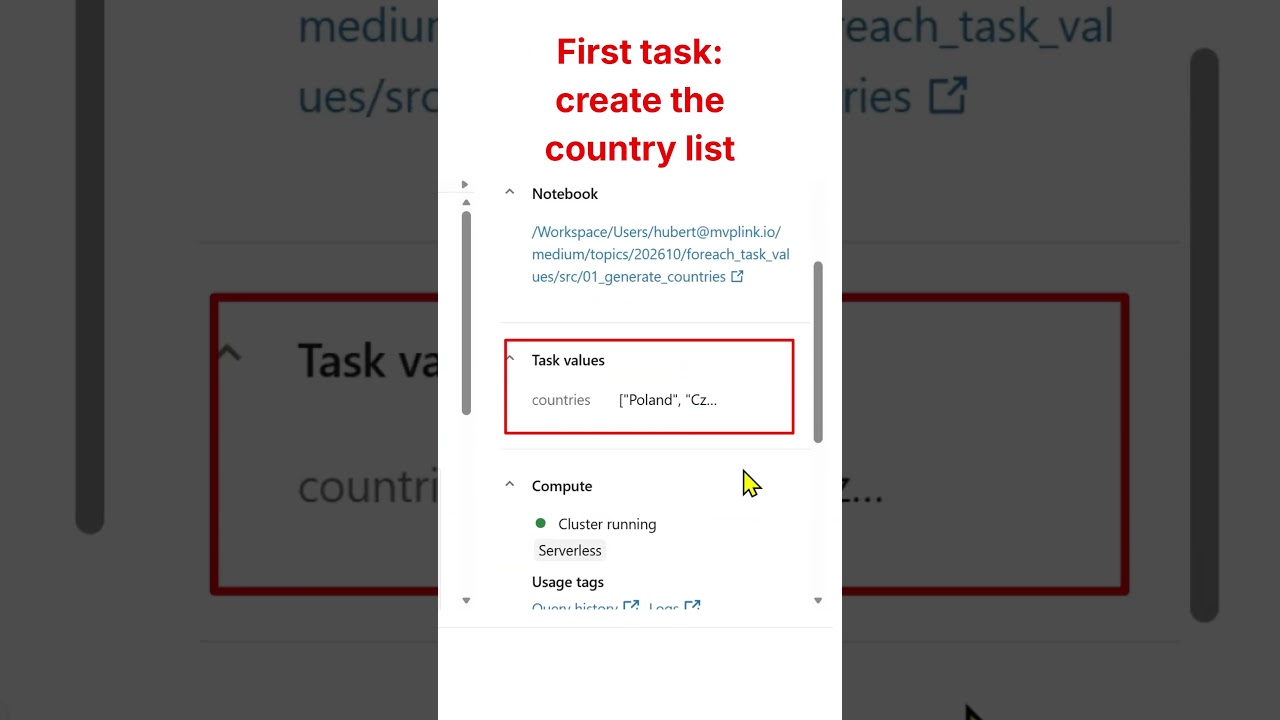 News
databricks TaskValue and Lakeflow - orchestrate using Python lists and arrays
The CLI introduces a preview image push command for the Databricks Artifact Registry, preconfigures coding assistants in serverless SSH sessions, and adds expiration flags for Postgres branch creation. In Asset Bundles, clusters now support library configurations, Terraform deployments migrate to the direct engine prior to execution, and Postgres snapshot schedules are restricted to YAML.
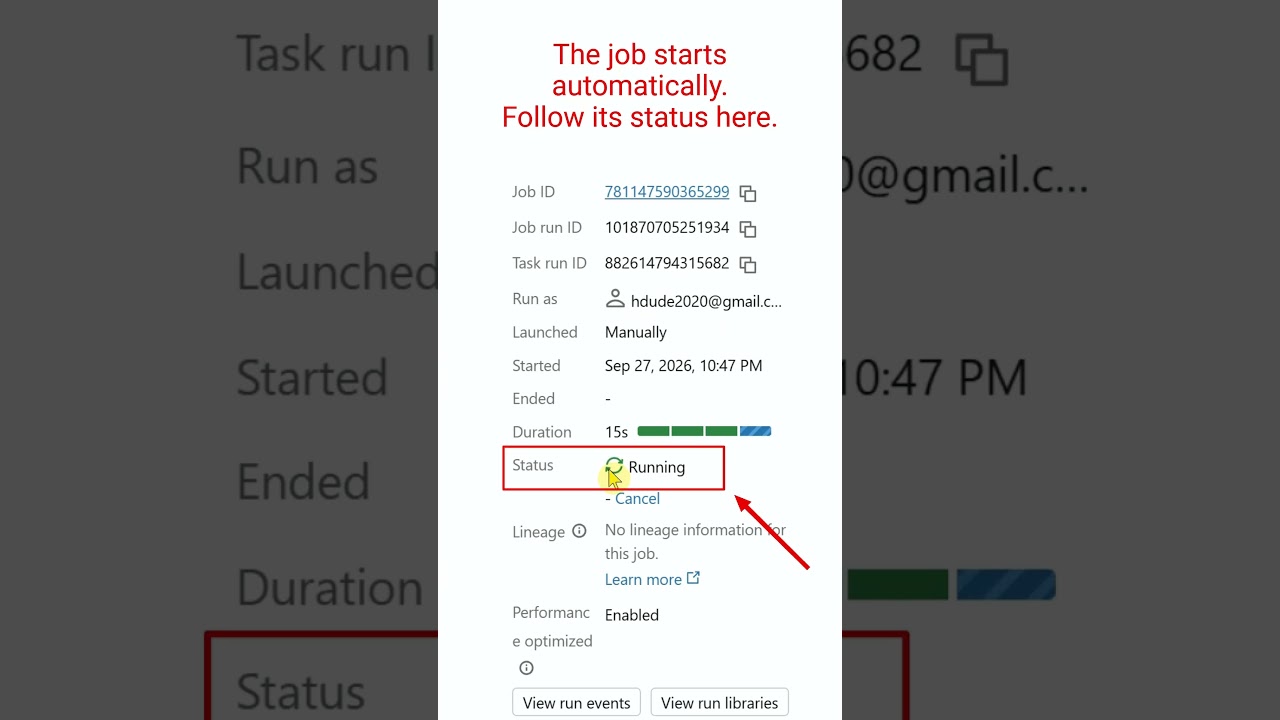
Databricks Usage in real world?
Hi all, I want to understand how AZure Databricks is actually being used in real world data engineering teams. For those of you working with Databricks, how do you use it in your current job? Likee, do you write most of your code in notebooks and publish those notebooks through Git? Or are you using Asset Bundles for ci/cd and deploying jobs and workflows through different environments? I’m trying to get a clear picture of how ADB is used in actual companies. Help this buddy out. TIA!!! submitted by /u/Wise_Beat_7035 [link] [comments]
Azure devops yml deployment of asset bundle
I need help on deploying asset bundles from Azure Devops. Where does the azure-pipelines.yml live, what parameters are required in the azure-pipelines.yml, does anyone have a basic example of it working as I'm completely lost in the complexity of it. Thanks. submitted by /u/GardenShedster [link] [comments]
AI Runtime commands have moved from experimental to databricks air, and SSH commands now support keeping detached background processes running after tunnel disconnect. Databricks Asset Bundles direct engine resolved multiple issues around unnecessary resource recreations, Unity Catalog grant convergence, and Git-sourced Python tasks.
Databricks CI/CD multi-repo DAB deploy
In my company we are starting with databricks and they have entrusted me with the cicd part, for now what best fits our needs is multi repo arch for the management of dab's. I would like to separate the ci from the CD and I miss a helmfile type tool that allows me to centralize in a repo all the dabs and their versions that are deployed in an environment. Do you have experience with any similar setup? On the other hand, we work with the to-be-continuous gitlab ecosystem and they don't have components for databricks either. I appreciate any comments submitted by /u/Appropriate_Tip_9580 [link] [comments]
Managing "Secret" Injection in DABs across Dev/Stage/Prod
Editor Space in Databricks
Sometimes it’s the small things that make everyday work noticeably better 😀 Databricks recently introduced Spaces for organizing notebooks and other workspace content - and it immediately reminded me of organizing tabs in a browser. As someone who always has way too many tabs open, having a simple way to group related work and keep things organized can make a real difference. With Spaces, you can: save and restore your open tabs keep each space anchored to a specific folder scope the file browser and search to that folder move open tabs into an existing or new space quickly switch between different work contexts create dedicated spaces for pipelines, Declarative Automation Bundles, and Git folders name, color, and pin spaces so they’re easy to recognize Organize your work with spaces - Azure Databricks | Microsoft Learn https://reddit.com/link/1wioox7/video/v79baqqgp1qh1/player submitted by /u/szymon_dybczak [link] [comments]
Built a Databricks medallion pipeline for NYC Taxi data
Been working on this as a way to get hands-on with Databricks Asset Bundles and Unity Catalog governance. It's a migration of an old on-prem NYC Taxi analytics stack (ClickHouse + Spark + Docker + Terraform) into a proper Bronze/Silver/Gold lakehouse. A few things I focused on: Auto Loader for incremental ingestion, triggered by file arrival Data quality handling that doesn't just drop bad rows — duplicates, zero-distance trips, and reversed fares go into dedicated quarantine tables instead of being silently discarded Databricks Asset Bundles for deploy/orchestration (dev + prod targets) 3 published AI/BI dashboards on top of the Gold layer (fleet ops, finance, compliance) It's intentionally small in scope — meant to demonstrate the lakehouse pattern, not be a production-scale platform. Currently only Green Taxi data; FHV comparison is planned next. Repo: https://github.com/Hamza-Bouali/NYC-DATABRICKS Would love feedback, especially on the Silver-layer data quality rules or the bundle structure open to critique. https://preview.redd.it/ej6hvzrbokph1.png?width=1667&format=png&auto=webp&s=b090b2c5165efcc83fb3f2b5c38ff6ef34c8ef48 https://preview.redd.it/rih9a5sbokph1.png?width=1879&format=png&auto=webp&s=1b85b90608e1b1273da4f8cbb4fa65d9f2c397a7 https://preview.redd.it/kjdor4sbokph1.png?width=1687&format=png&auto=webp&s=677c6194ede0cd01a8630ee98f85d11a5146b410 submitted by /u/No-Pollution-2274 [link] [comments]
Azure AI Foundry + Databricks Architecture | Deploy Genie Agent with DAB...
Azure AI Foundry Databricks architecture, Deploy Genie Agent with DABs, Databricks Genie Agent, Azure Databricks Genie Space, how to deploy genie agent with declarative automation bundles, azure ai foundry + databricks integration, fully operating genie architecture databricks, databricks unity catalog genie agent, azure databricks bronze silver gold architecture, agent to agent nlq databricks, databricks spark python sql delta lake unity catalog, production ready genie agent deployment, databricks vector search index genie, microsoft purview databricks governance submitted by /u/macxima [link] [comments]
Databricks Asset Bundles: How to manage dependencies between volumes/files and cluster creation?
How to organize your notebook tabs?
It was a real pain, but now, with a few tricks, you can manage them better. First, in Workspace files, next to the DABs folder or git repo, there is a small shortcut to show only tabs from that DABs folder or git repo. Alternatively, you can also use the switcher in Home next to Notebook. If you need to organize your tabs differently, there is new functionality: spaces, which let you group them however you like. more news https://medium.com/databrickscommunity/databricks-news-serverless-genie-code-ltap-lakeflow-61853d8e422a submitted by /u/hubert-dudek [link] [comments]
Using Databricks Asset Bundles and Lakeflow Jobs in a Real Project
Databricks Asset Bundles introduces PyDABs catalog support, updates default templates to Databricks Runtime 16.4, and adds validation checks before completing migrations to the direct engine. The release also fixes several direct deployment engine update bugs and improves Python fallback handling during local environment setup.
Managing Databricks Genie Agents as Code with Databricks Declarative Automation Bundles (DAB)
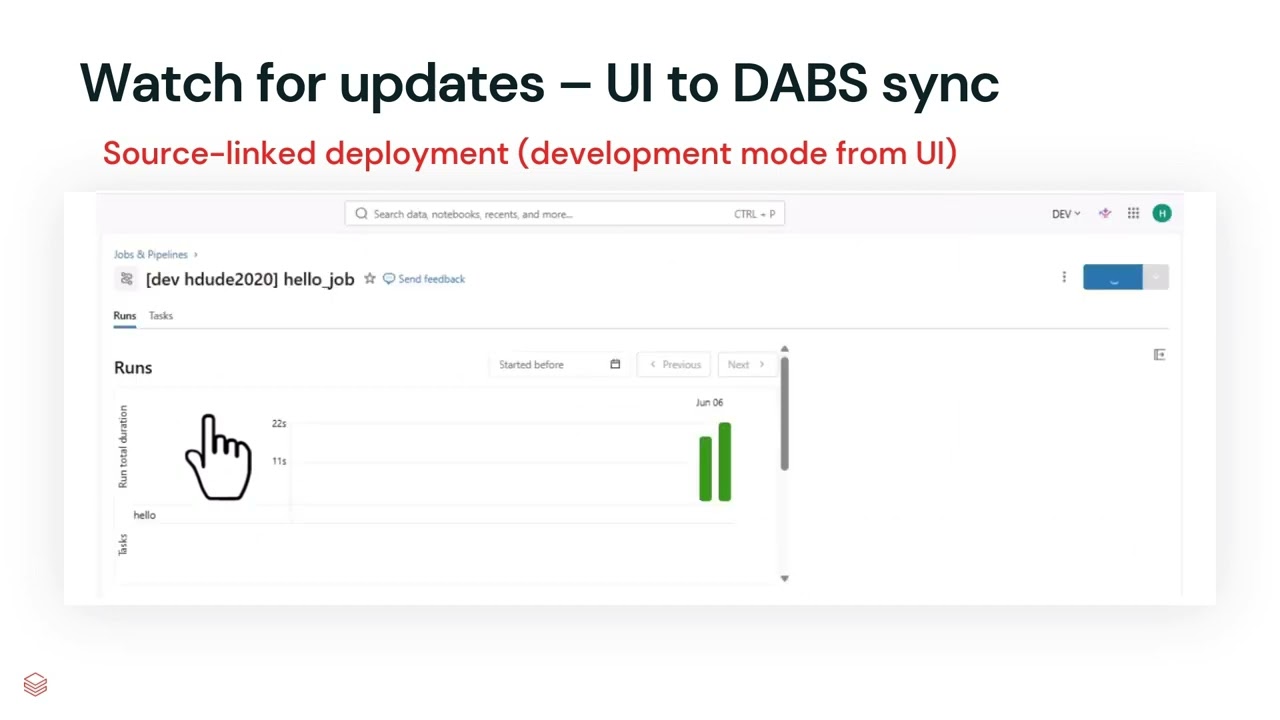
UI to DABs sync
When working from the web experience in development mode with source-linked deployment set to true (the default for development mode), you can edit jobs and pipelines in the UI, and changes are automatically propagated to your YML files. So it is like the best of two worlds: ow-code and IaC. Please remember to review any changes in Git, especially non-UI elements such as variables or mutators. Whole talk with audio https://www.databricks.com/dataaisummit/session/dabs-do-pro-all-best-tips-and-tricks submitted by /u/hubert-dudek [link] [comments]
 News
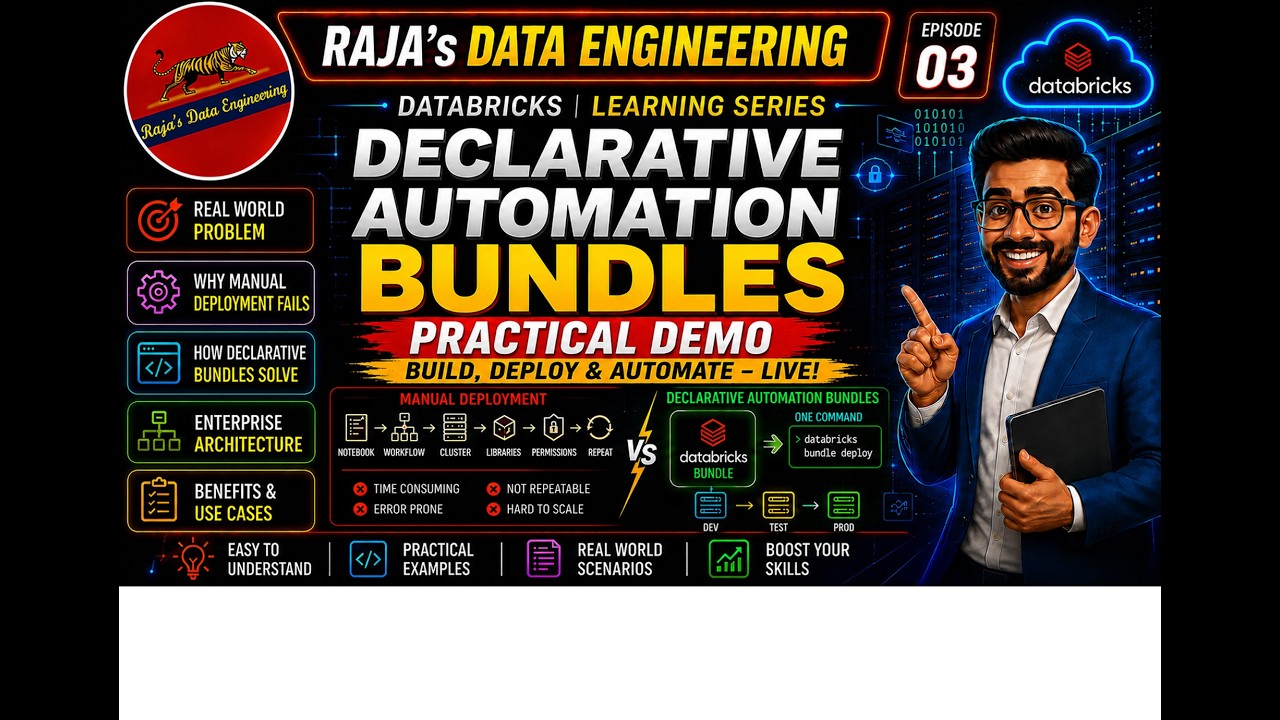
136: Declarative Automation Bundles| Part 3 | Demo
This video demonstrates how to build, deploy, and manage a retail sales pipeline project using Databricks Asset Bundles. It covers installing the Databricks CLI, configuring authentication, validating projects, and using commands to deploy, run, and destroy bundles across different environments.
Databricks Asset Bundles now correctly handles app updates during bundle deployment when an active deployment already exists. It also fixes reference resolution and deployment failures for resource keys starting with an underscore.
What's new and what's next in DABs
What's new and what's next in DABs
Direct mode is GA and is now the default for bundles created from the workspace (since 13th August 2026); it will become the general CLI default on 26th August 2026. Let's see what direct mode brings and what will come next. https://medium.com/databrickscommunity/dabs-go-direct-ga-faster-better-and-life-after-terraform-edc502d54378 https://www.sunnydata.ai/blog/databricks-dabs-direct-mode-ga submitted by /u/hubert-dudek [link] [comments]
Bundles automatically migrate from Terraform state to the direct engine on clean deploys (opt-out via engine: terraform), and SSH sessions stay connected during idle periods with automatic keepalives every 30 seconds. Direct engine bundle operations now correctly handle removed configuration fields, support cluster policies resources, and include a DATABRICKS_BUNDLE_RESOURCE_MAX_WAIT timeout setting.