Databricks Apps
Recent items mentioning Databricks Apps across the Databricks ecosystem — releases, news, videos, and community Q&A. Updated hourly.
Databricks Apps now anchors full end-to-end stacks: a real-time manufacturing digital twin pairs it with Spark Real-Time Mode, Lakebase, and Unity Catalog 1, and a telecom fraud stack uses Apps for a case-management workbench alongside Lakebase and Genie 9. It has also reached education, listed among the industry tools students use in Databricks Free Edition courses 5, while community builders are shipping a month-end finance app 6 and a RAG-based engineering handbook 7. Practitioners are hitting operational friction too, with open questions on deployment 2, idle timeout behavior 4, and a deployment failure on a new workspace possibly tied to quota 8.
Generated daily from the 10 most recent items mentioning Databricks Apps. Click any [N] to jump to the source.
 News
Creating a Digital Twin with Spark Real-Time Mode and Lakebase
This video demonstrates how to create a real-time digital twin for a manufacturing cell using Databricks tools such as Spark Real-Time Mode, Lakebase, Databricks Apps, and Unity Catalog. It explains how processing sensor readings instantly allows operators to detect and act on equipment faults, such as a hot spindle, before they negatively impact production quality and efficiency.
Question regarding Databricks Apps deployment
Anyone playing around with Databricks Apps yet? Thoughts & initial impressions
Hey everyone, I’ve been testing out the new Databricks Apps feature recently, and I wanted to see how others in the community are using it. Historically, if we wanted to spin up a Streamlit app or a custom dashboard connected to Databricks, we had to deal with separate hosting (App Service, EC2, etc.), network security groups, and handling OAuth tokens separately. With Databricks Apps, running a Streamlit/Dash app directly inside the workspace using Unity Catalog for permissions has been a game-changer for internal tooling. That said, I'm curious: Are you using it for production workloads or just quick internal prototypes? How are you handling CI/CD deployments for these apps? Have you run into any limitations with serverless compute or scaling yet? submitted by /u/SalamanderOpen859 [link] [comments]
Query on Databricks apps idle time out
How to teach with Databricks Free Edition
Databricks Free Edition can anchor a full data and AI curriculum, from intro data science and statistics through data engineering, BI, machine learning, AI, and capstone projects. Students work with the same tools used in industry, including Apache Spark, Delta Lake, MLflow, Lakebase, Genie, and Databricks Apps, while instructors can hand out assignments through an existing LMS or GitHub and share datasets via cloud storage, Open Sharing, or Marketplace.
A full month-end finance app built on Databricks Apps
Below are the things covered in the video: 1. Overview: drag the month slider and every figure on the page moves with it, including a cash flow diagram from sales through to profit 2. P&L: the statement drawn as a ladder from revenue down to profit, plus a bridge showing why we beat or missed budget 3. Cafes: ranking, a map of the Front Range, a margin heatmap by month, and how fast each new cafe paid back its fit-out 4. Menu: which items earn their place and which are just popular 5. Cash: a 13-week forecast, overdue invoices by age, and the supplier payment calendar 6. Close: the month-end checklist as a board, with how long each close took historically 7. What-if: move price, volume, wage and ingredient levers and watch profit change 8. A one-page monthly report that prints to A4 Under the hood: seven Delta tables in Unity Catalog, read through a SQL warehouse, with the app running as a Databricks App in Python. All the finance logic (consolidation, budget variances, the close tracker, the cash forecast) sits in one file that a finance analyst could read. submitted by /u/oneaffidavit1 [link] [comments]
Quest 5 Complete - Engineering handbook knowledge base with RAG, deployed on Databricks Apps.
Databricks Apps/Jobs Deployment Issue on New Workspace: Due to Quota?
My company sells a data analytics application to professional sports teams. The application is built as a Databricks App, deployed into a customer's workspace. The underlying data model is seeded by ETL that lives in my own company's workspace, with the gold tables shared as pinned version views into the customer's workspace, where a daily job syncs the views into Lakebase on the customer side. I built this on Databricks partially because the customers typically don't have robust IT teams in-house. Rather than requiring them to self-manage a bunch of infrastructure or host my own costly SaaS backend, I figured I could save a lot of complexity by setting up a Databricks workspace for them and deploying the application code into it via DAB from a central repo. I'm having an issue with a new customer that I onboarded yesterday. They created a new Azure subscription for the purpose of deploying the Databricks workspace + our application. Everything deployed successfully, but the Databricks App stops itself after approximately two hours. At first I thought it was a transient issue and restarted the app, but it keeps recurring. Troubleshooting has been challenging, because App logs are not visible when an App is stopped. I was able to get the following from the CLI ( databricks apps get -o json ): "app_status": { "message": "App status is unavailable.", "state": "UNAVAILABLE" }, "compute_size": "MEDIUM", "compute_status": { "message": "App compute was stopped due to workspace or account status.", "state": "STOPPED" }, Both the Azure subscription (Azure Plan) and the Databricks workspace (Premium + RBAC) do not appear to be in a trial state. Both were set up in the past 48 hours. I suspect this is some kind of new workspace restriction on the Databricks side, but I'm not sure what can be done about it. The App is deployed into a few different workspaces and runs without issue, but all of the workspaces have existed for a while. This is the first Workspace that was deployed specifically for the App. I found this thread on Databricks Community that describes a similar issue, but it appears to have died without a resolution. Has anyone run into a similar issue, and is there anything that can be done about this? It's likely that many of our customers will need a new Databricks workspace to deploy our application, so if this is a recurring issue, we may need to rethink our entire architecture. submitted by /u/Minute_Visual_3423 [link] [comments]
The Fraud Analyst AI Coworker: Detecting Telecom Fraud in Real-Time on One Platform
Databricks Lakebase, Databricks Apps, and Genie combine into a single fraud detection stack for telecom, with Lakebase removing the analytical/transactional split for faster data sync, Apps powering a custom case-management workbench, and Genie acting as an AI coworker that answers natural-language questions over governed fraud data. The post argues that real-time network telemetry strengthens fraud models as attackers use agentic AI at machine speed, and the Telecom Fraud Prevention Solution Accelerator deploys the risk engine, workbench, and investigation agent via Databricks Asset Bundles, adaptable to other industries.
Release v1.22.0 adds support for the features resource type, lets bundle deployment bind and unbind accept type.key references, and removes the 50-workspace limit in auth login. It also adds DATABRICKS_BUNDLE_STRICT_PROFILE_MATCH for exact profile matching, and release binaries now require macOS 13 Ventura or later.
 News
Databricks Breaking News: Lakeflow Jobs, DABs, Apps, AI, Private Network Gateway
The video covers multiple new updates in Databricks, including Lakeflow connectors, task value loops, state repartitioning, DAB enhancements, SQL functions, serverless version 6, Unity Catalog skills, app spaces, and network gateways. It demonstrates how to configure Lakeflow job tasks, implement task value loops, and manage serverless compute permissions and environments.
Databricks Apps vs Model Serving: Authentication, Cost, and Performance Compared
Databricks Apps gives you the app you wanted, without the React plumbing or the Power Apps limits
Power real-time applications and agents with Document Intelligence
Document Intelligence real-time REST APIs enable applications to parse, classify, and extract information from documents as they arrive rather than relying on delayed batch pipelines. You can embed these APIs directly into Databricks Apps or custom agents to power interactive workflows and drive real-time business decisions.
What's New in Lakeflow Designer - October 2026 Roundup
Lakeflow Designer now includes new operators for data cleaning, deduplication, quality checks, and flexible joins, along with canvas support for materialized views, table merges, and live cursor presence. The update also previews upcoming additions, such as Databricks Apps integration, full-output data profiling, and native migration tooling with Lakebridge.
 News
Building on Lakebase | Episode 2: Anatomy of an AI app: build the operational + agentic app
This video demonstrates the architecture and deployment of a customer support AI co-pilot built as a Databrics app backed by Lakebase. It walks through configuring a transactional operational store, hybrid search, managed agent memory, and MLflow tracing to power an interactive agentic application.
The SDK adds support for Slack and Microsoft Teams notification destinations, as well as ModelService securable types in Databricks Apps. Model provider configurations in Unity Catalog now include pricing fields and support for Bedrock Mantle.
Are PATs (user or service principal) accepted by Databricks Apps?
The Databricks Java SDK now includes the MODEL_SERVICE enum value for Unity Catalog securable types in Databricks Apps. This update allows developers to configure and reference model serving endpoints as securable resources within app manifests.
The Python SDK now includes a new model_service enum value for Unity Catalog securable types under Databricks Apps. This update allows practitioners to configure Model Serving endpoints as securable resources within Databricks App manifests.
 News
How HelloFresh Optimizes 100% of Meta Ad Spend With Genie Agents on Databricks
HelloFresh uses Databricks Genie agents and Unity Catalog to optimize 100 percent of its Meta advertising spend and break down internal data silos. This data infrastructure reduces weekly maintenance and reconciliation hours significantly while accelerating ad testing and campaign launches.
Lakebase and Agentic SDLC: Branching Databases for Coding Agents
Lakebase resolves the database bottleneck for parallel coding agents by providing sub-second, scale-to-zero copy-on-write database branching for each agent. Learn how to implement an end-to-end workflow pairing Claude Code, Git worktrees, and GitHub Actions to run Drizzle migrations, deploy preview environments on Databricks Apps, and test against Unity Catalog-masked data.
Now GA: Building permission-aware Databricks Apps with on-behalf-of-user authorization
On-behalf-of-user (OBO) authorization for Databricks Apps is now generally available, enabling developers to build permission-aware applications that execute actions under the signed-in user's identity. By pairing API scopes with Unity Catalog and warehouse permissions, teams can restrict access boundaries, keep app and user clients separate, and handle forwarded tokens without storing them.
The Terraform deployment engine for Databricks Asset Bundles has been removed, requiring users to migrate to the direct engine or remain on CLI v1.19.x. Additional updates include a fix for large integer corruption in API commands, group-level run-as support in bundles, and expanded authentication options for Databricks Apps.
The AppDeployment class in the Databricks Apps service now includes a healthCheck field. The release also updates Jackson dependencies to version 2.18.11 to address several security vulnerabilities.
Auto stop option on databricks apps
Want to request a feature for databricks app, it should have an auto stop option. I know Databricks markets it as a web app that should be readily available, but I think customers deserve the option to turn auto-stop on or off, like we do for, say, SQL Warehouses. This has been a major blocker for us suggesting apps to leadership, the engineering team has build some really useful apps for usecases like Data modelling and stuff which is used when needed but they running 24*7 all time is wasting compute and getting flagged in finops P.S i know we can have a databricks job which can shut down and start the app during working hours but we have a global team working round the clock so it's not feasible for us. If we have someone from databricks apps team this is a highly requested thing from alot of people around the community. submitted by /u/sumit671 [link] [comments]
 News
Building on Lakebase | Episode 1: Meet Lakebase
Lakebase is a fully managed serverless PostgreSQL database from Databricks that disaggregates storage and compute for variable AI and operational workloads. The video demonstrates provisioning a Lakebase project, creating operational tables, and syncing curated Lakehouse data to build the foundation for an agentic support co-pilot.
This release adds resources and data sources for private network gateways alongside Mason sessions and managed memory components. The resource exporter expands dependency support to include Lakeflow pipeline settings, model serving endpoints, Databricks Apps, cross-cloud cluster policies, and several new job task types.
Azure Databricks, two-week-old account: partner pay-per-token endpoints (Claude, Grok) have never once succeeded — "Databricks-set rate limit of 0" — and the Assistant has "no daily token allowance". Open models work. What gates this?
Azure Databricks, Premium, one account with three workspaces, Unity Catalog, Azure Marketplace billing (no card, no trial credits left). The account was bootstrapped on a trial workspace about two weeks ago and moved to Premium six days later. I've spent two days on this and want a sanity check from anyone who has seen it. The facts, from system.serving.endpoint_usage: • Every open-weight pay-per-token endpoint has worked since the trial: gpt-oss-120b has ~50 successful calls going back to the trial period, Llama 3.3 70B likewise, zero refusals. • No partner pay-per-token endpoint has ever returned a success on this account. The very first call anyone made to databricks-claude-sonnet-5 was refused, and every call since, on every Claude endpoint and on Grok, in all three workspaces, for users and service principals alike: 403 PERMISSION_DENIED: The endpoint is temporarily disabled due to a Databricks-set rate limit of 0. • It is not our AI Gateway config: I removed every rate limit from one Claude endpoint and invoked it — same 403. The endpoints' config shows nothing else. • The notebook Assistant worked during the trial. On the paid account it refuses everyone, admins included: *"This workspace has no daily token allowance for the assistant."* Underneath, /ajax-api/2.0/conversation/llmproxy/ returns 429 {"type":"daily_token_limit_reached","daily_limit_tokens":0,"message":"…Daily token limit of 0 reached. Resets at midnight UTC. (DTB)"} and it recomputes to 0 every midnight. • Once, the Databricks Apps in the workspace were stopped by the platform with *"App compute was stopped due to workspace or account status"* while every workspace showed RUNNING. apps start brought them back. Red herring, for completeness: we also created a Unity AI Gateway per-user budget whose first version had a $0 threshold with BLOCK_USAGE. That blocked Genie for a day, exactly as documented, and was fixed. It was created a day *after* the first Claude refusal, so it isn't the cause of any of the above. What I've found: two Community threads describe "Databricks-set rate limit of 0" as a workspace trust-tier gate — trial-born accounts sit in TRIAL_VERIFIED, pay-per-token partner models are gated to PAYABLE_VERIFIED, a card alone doesn't flip it, only Databricks Sales/Support moves the tier. Both were AWS/personal accounts, neither resolved on-page. The account console's own API reports our account's feature_tier as STANDARD_W_SEC_TIER although the workspaces are Premium; I can't find what that field means. Questions • Does Azure Databricks with Marketplace billing go through the same PAYABLE_VERIFIED gate? Does it clear on its own after the first settled invoice, or does someone have to move it? • If you were moved: who did you contact (account team, or "Contact us" in the console) and how long did it take? • Is the Assistant's "daily token allowance" the same gate, or a trial allowance that simply goes to 0 when the trial ends on an unverified account? • Does feature_tier: STANDARD_W_SEC_TIER on the account object mean anything to anyone? submitted by /u/sumit671 [link] [comments]
Time to Swap the Cookies for Jetfuel - New Dataset & New Databricks Genie Tutorial
Most of you know samples.bakehouse . Great for a first query. Perfect for a quick demo. But after years of cookie sales, it's a little overbaked. Time to swap the cookies for jet fuel. ✈️ Together with the OpenSky Network , I brought a full day of global air traffic to Databricks Marketplace: 696 million real ADS-B position reports, messy just like real life. Myself, I used Genie for the whole journey: EDA, data exploration, a Apache Spark Declarative Pipeline, and a Lakeflow Job. Then I went a step further and read the same Marketplace data with open-source tools only, using OpenSharing and pandas. The result is this hands-on tutorial: Marketplace + Unity Catalog: get the data as a governed table Genie Agents: find anomalies in plain English Genie Agents: explore and visualize with maps and charts Genie Code: a Spark Declarative Pipeline, bronze to gold, with data quality rules Genie Code: a Lakeflow Job with schedule, retries, and email alerts Databricks Apps: your coding agent, governed by Unity Catalog OpenSharing: the open-source client in VS Code with pandas Everything runs on Databricks Free Edition (free, no credit card). 📖 Tutorial: Databricks Genie for Data Engineers and Data Scientists 💻 GitHub: databricks/tmm/DSDE-Genie-Tutorial 🛫 Dataset: OpenSky Network full-day dataset on Marketplace What's the first thing you'd query in a day of global air traffic? P.S. For the record, we still love bakehouse! 🍪❤️ [Disclaimer: I'm one of the two people who baked it.] submitted by /u/CompetitiveBet8978 [link] [comments]
Databricks Micro Apps, App Spaces and Genie App Generator
Databricks launched App Spaces and Serverless Micro Apps at the end of last week (in Beta). Over the weekend, I tested migrating two of my production Databricks Apps to App Spaces. App Migration 1: Blocked by Zero Egress My Data Portfolio Project Creator required internet access to pull data stacks from live job postings. Then, the LLM needs internet access to research for open data sources to use. In standard Databricks Apps, this runs cleanly. In App Spaces, there is zero external internet egress including for LLMs. The app can reach internal workspace resources, but it cannot touch the outside web. If your app relies on third-party APIs, external databases, or web scraping, App Spaces is a non-starter until Databricks opens network egress. Workload 2: Success on Internal FinOps My client-facing DBU cost observability app reads workspace usage data and writes directly to Lakebase. Because it requires zero external network calls, the migration worked. Both the micro app compute and Lakebase scale to zero when idle. Cold starts take roughly 30 seconds (though in beta, you occasionally need a quick browser refresh once it spins up). For internal, low-frequency administrative tools, this turns a continuous monthly compute bill into pennies. (+ App Spaces, Genie App Generator, and Micro Apps are free while in beta) The next part is less about App Spaces and more just general best practice for Databricks Apps that I see people miss. Stop Using Delta Lake as an OLTP Database Databricks Apps are software applications, not batch analytics notebooks. If your app writes application state, session data, or row-level CRUD directly into analytical Delta tables, you need to rethink that design. For app transactions, use Lakebase (serverless Postgres which also scales to 0). Both are governed under UC, but Lakebase gives your app the low-latency transactional engine that application engineering actually requires. My Verdict on the Beta App Spaces solves the idle compute problem that has plagued Databricks Apps since launch. But until Databricks allows us to deploy directly from existing Git repos and opens external network egress, it remains limited to internal-only use cases. Curious on other peoples experience... How has it been for others? submitted by /u/OkImprovement7010 [link] [comments]
Lakebase handles failover within a region, but cross-region disaster recovery is still in Private Preview. How are people covering that?
I was reading through Databricks' breakdown of what Lakebase takes over on the ops side. Patching, scaling, in-region failover, and point-in-time restore with 2 to 30 days of history all run automatically, while cross-region disaster recovery is Private Preview on AWS only, with manual failover and recovery procedures the customer owns. For anyone running Lakebase behind an app or for agent state, how are you handling a region outage today? I can see people copying scheduled snapshots elsewhere, replicating out to a Postgres instance outside Databricks, or accepting the risk until DR goes GA, and I'm curious which one teams have landed on. I'd also like to hear whether the built-in PgBouncer has held up under spikes in connections from Databricks Apps, since that's the other thing I'd want to test before putting a production workload on it. submitted by /u/InsideDebt6345 [link] [comments]
How I built agent-based security reviews on Databricks
An agent-based security review layer on Databricks automates predictable evaluations while routing ambiguous or high-risk cases to human reviewers. Built using Unity Catalog, Lakeflow Jobs, Databricks Apps, and hosted foundation models, this governed architecture improves review cycle times and consistency without removing human authority.
Reliable approach for scaling Databricks Apps down and starting them on demand
Both Databricks Apps Returning 502 Bad Gateway
Build with Replit Against Managed Postgres in Databricks Apps
Dark mode setting ignored when embedding BI dashboard inside Databricks App
 Tutorials
How to Build Production-Ready Apps in Replit with Lakebase Postgres | Databricks + Replit Demo
Replit now integrates with Databricks Lakebase Postgres, automatically provisioning a production database on deployment while providing a separate development database for testing without manual setup. The integration includes automated preview deploys and a supervised migration flow that requires human approval before schema changes reach production.
Databricks Apps - Deployment process - Need help !!
 Tutorials
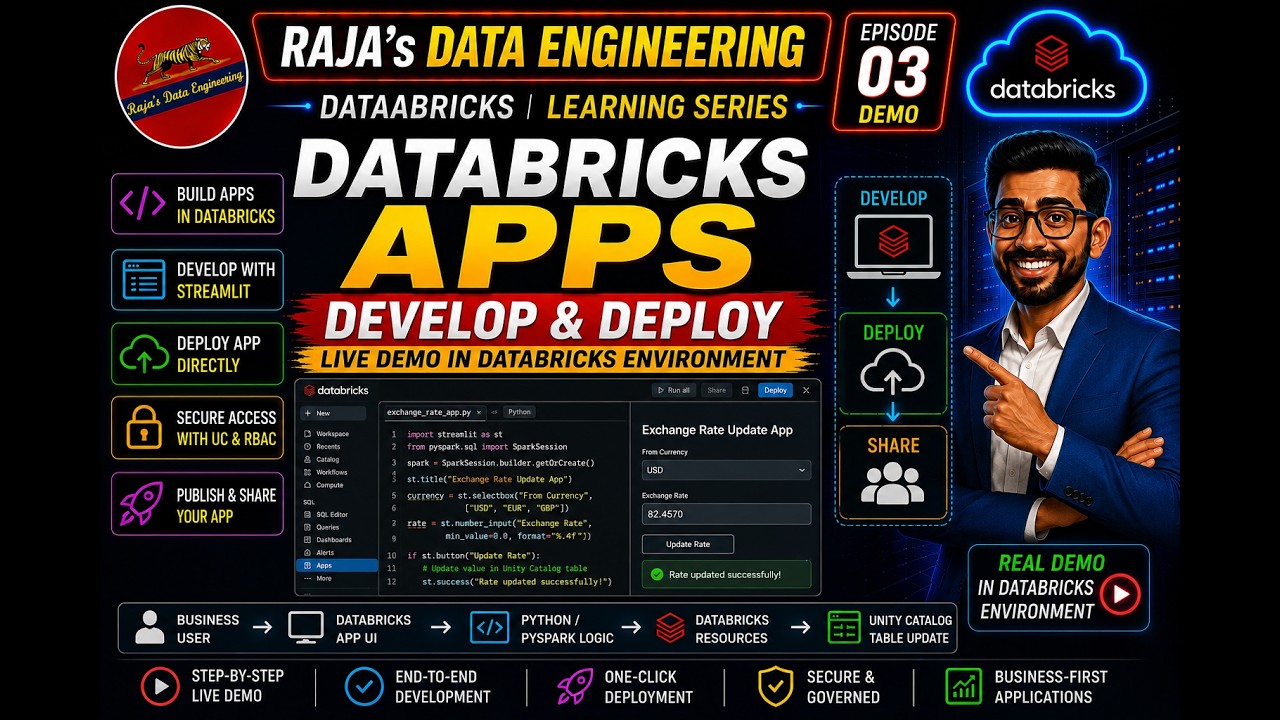
139: Databricks Apps Explained | Part 3: Deploy a Real App in Databricks
 Tutorials
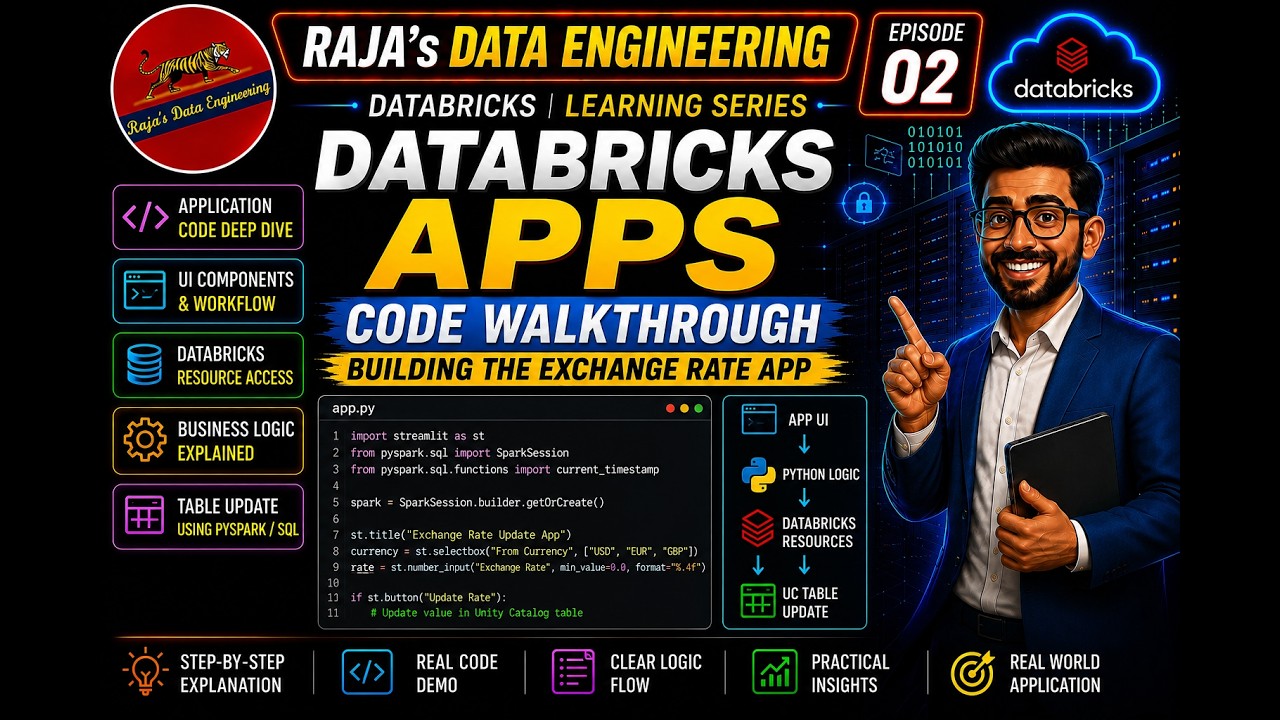
138: Databricks Apps Explained | Part 2: Code Walkthrough
The video demonstrates how to build and structure a custom self-service data application using Databricks Apps and Streamlit. It walks through the required configuration files and Python logic used to connect a front-end portal to a backend Delta table for live data updates.
 News
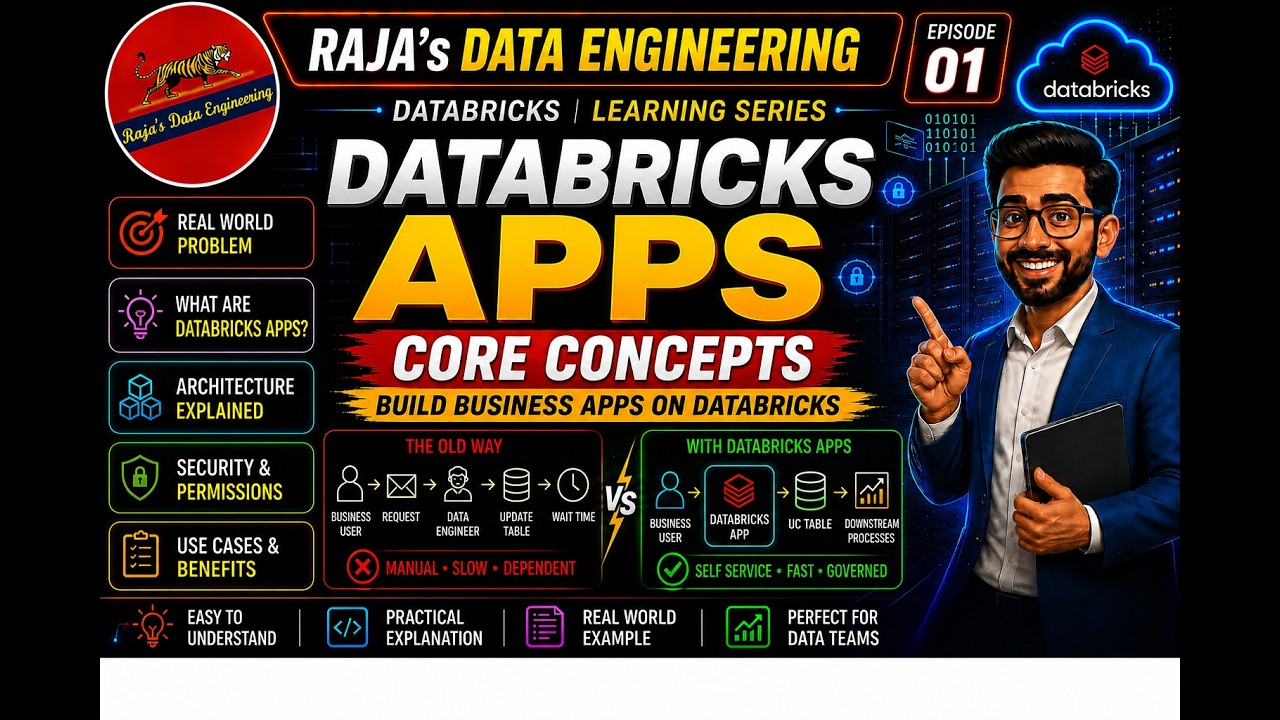
137: Databricks Apps Explained | Part 1: The Problem Every Data Team Faces
Databricks apps allow teams to build and run serverless web applications directly on the Databricks platform using frameworks like Streamlit. This feature eliminates manual data engineering bottlenecks by enabling business users to interact securely with lakehouse data and tables through a self-service interface governed by Unity Catalog.
Did anyone get an hands on Databricks apps
Hoping a discussion and insights from an individual who had an hands on databricks apps submitted by /u/BugSquare4344 [link] [comments]
Databricks Apps / AppKit
Hi, what do u use for creating user facing apps, we are primary using Python, i see that Databricks recommends AppKit for such use cases which is written in TS. For teams which deploys apps that are customer facing, what is your stack? submitted by /u/ptab0211 [link] [comments]
Open Sharing protocol of Databricks Apps and SaaS sharing
I want to understand the open sharing protocol, how it is sharing the apps, what artefact is shared when app is shared, is it sharing the app files from Workspace path directly? Secondly, how the SaaS is shared and what artefact is shared and how? Could not find documentation. Thanks
This release adds git integration support to Databricks Apps with auto-deploy capabilities and enhanced git repository configuration options. New customUdf field for functions and effectiveServerlessComputeId field for pipeline responses enable better resource tracking and custom function capabilities.
 News
Building Agents on Databricks with Custom Apps and Omnigent
This video demonstrates how to build, update, and govern custom AI agents on Databricks using Agent Bricks, Databricks Apps, and Omnigent. The tutorial shows how to integrate Model Context Protocol servers, track execution with MLflow traces, schedule automated agent tasks, and manage security policies through Unity AI Gateway.
 Tutorials
Detect Energy Theft Faster with Genie
Databricks demonstrates an end-to-end AI application that detects energy theft, automates investigations, and generates executive reports using Unity Catalog and Genie. The video walks through an architecture featuring Lakebase for transactional storage, model serving for machine learning and LLMs, and AI gateways for governance and cost control.
Databricks Apps - "App Not Available" error with locationId parameter missing
How NorthStar Anesthesia built a scheduling app for a workforce of 3,000 clinicians in weeks
NorthStar Anesthesia built and deployed a custom, mobile-friendly scheduling app for 3,000 clinicians across 25+ states in just weeks using Databricks Apps. The solution filled critical visibility gaps left by their commercial platform while leveraging the data and security infrastructure they already had in place.
Databricks Apps (Streamlit) - How to Implement Proper Logout Functionality?
Simplify AI agent orchestration with Lakebase Postgres
Lakebase Postgres can serve as a durable, crash-resilient task queue for long-running AI agent workflows without requiring an external broker, cache, or scheduler. This native reference architecture connects Databricks Apps, Lakeflow Jobs, MLflow, and Unity Catalog Volumes into an end-to-end agentic pipeline featuring real-time task and cost tracking via Postgres LISTEN/NOTIFY triggers.
Databricks Marketplace: IP Protection, Job Compute, and Secret Management
I am planning to publish an application through Databricks Marketplace. The application contains proprietary business logic and processing algorithms that must not be accessible to customers after installation. Customers should be able to use the application to process data in their own Databricks environment, but they should not be able to inspect, copy, or reuse the underlying implementation. Approaches I Have Tried I have considered the following approaches: Packaging the implementation as Python wheels or other artifacts. Hosting the implementation as private Python packages. Deploying the application source from a private Git repository. With the packaging approach, the underlying Python implementation may still be accessible or inspectable from notebooks, workspace files, cluster environments, package caches, or other customer-accessible locations. This does not meet my IP-protection requirements. With private package hosting, the package installation requires an access token or API key. Providing a reusable package-registry credential to an application running in the customer's workspace creates a risk that the credential could be extracted or reused to download the private package outside the intended application flow. I also understand that Databricks Marketplace reviewers may require the submitted application code to be human-readable during the review process. Therefore, I am looking for an architecture that protects the production implementation without relying only on code obfuscation. Current Understanding My understanding is that a Databricks App runs in an isolated, containerized runtime. This provides separation between the application runtime and normal customer workspace resources. However, my workload includes processing large datasets. I understand that Databricks App compute is primarily intended to run the application, API, or user interface, rather than perform large-scale Spark processing. Because of this, I am unsure whether Databricks App […truncated]
What happens in the milliseconds after you tap pay
This sample Databricks App demonstrates how to achieve low-latency real-time fraud scoring by pairing route-optimized Model Serving with Lakebase Postgres for online feature lookups. Under load testing of 5,000 requests, this architecture achieved end-to-end latencies of 27 ms at p50 and 37 ms at p95 while maintaining a 100% success rate.
 Tutorials
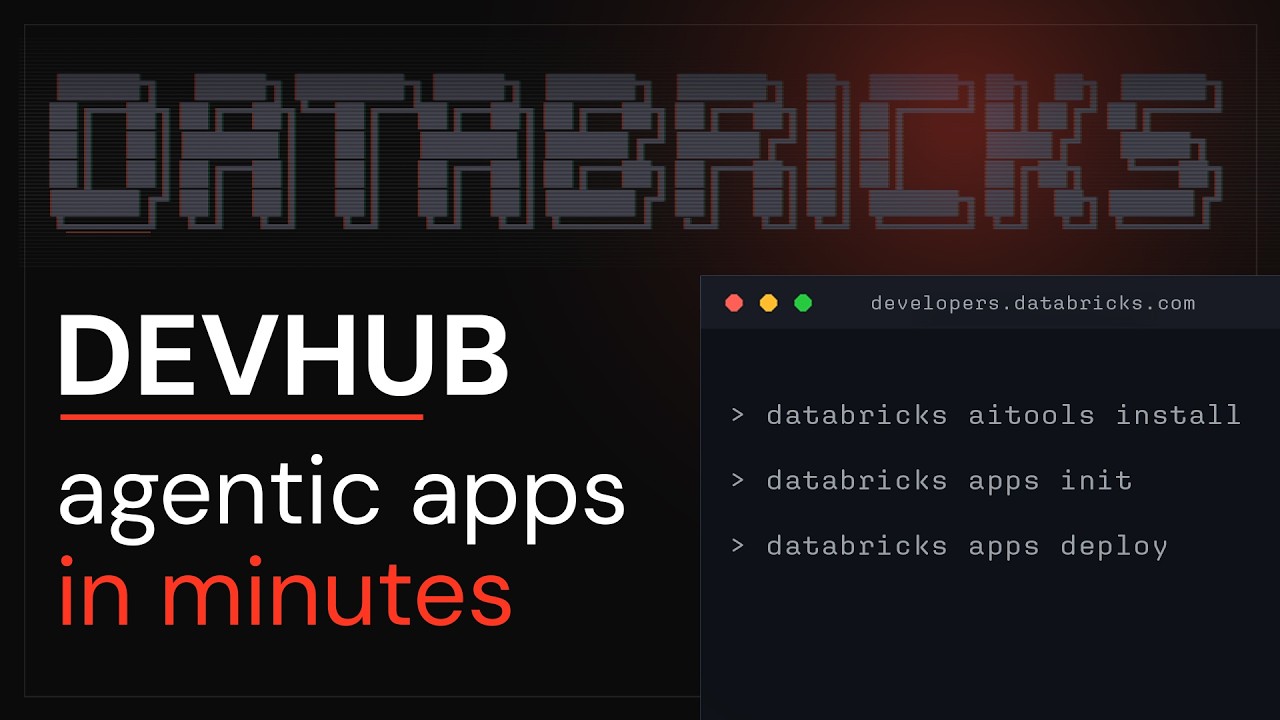
How to Go From an Agent Prompt to a Live Databricks App | Databricks Apps Demo
The Databricks Developer Hub provides copyable agent prompts that developers can paste into coding assistants like Cursor to automatically build, configure, and deploy Databricks applications. Developers can also use specialized template prompts from the hub to add advanced features to their apps, such as integrating a natural language chat interface for querying workspace data.
 Tutorials
How to Build Enterprise Apps on Your Databricks Data Using Replit | Databricks + Replit Demo
This video demonstrates how to build and deploy enterprise applications on Databricks using Replit's AI agent and pre-built templates from the Databricks Developer Hub. Viewers learn how to select a template, connect it to a Databricks dataset via Replit, and deploy the finished application directly to Databricks with built-in security and governance.
 News
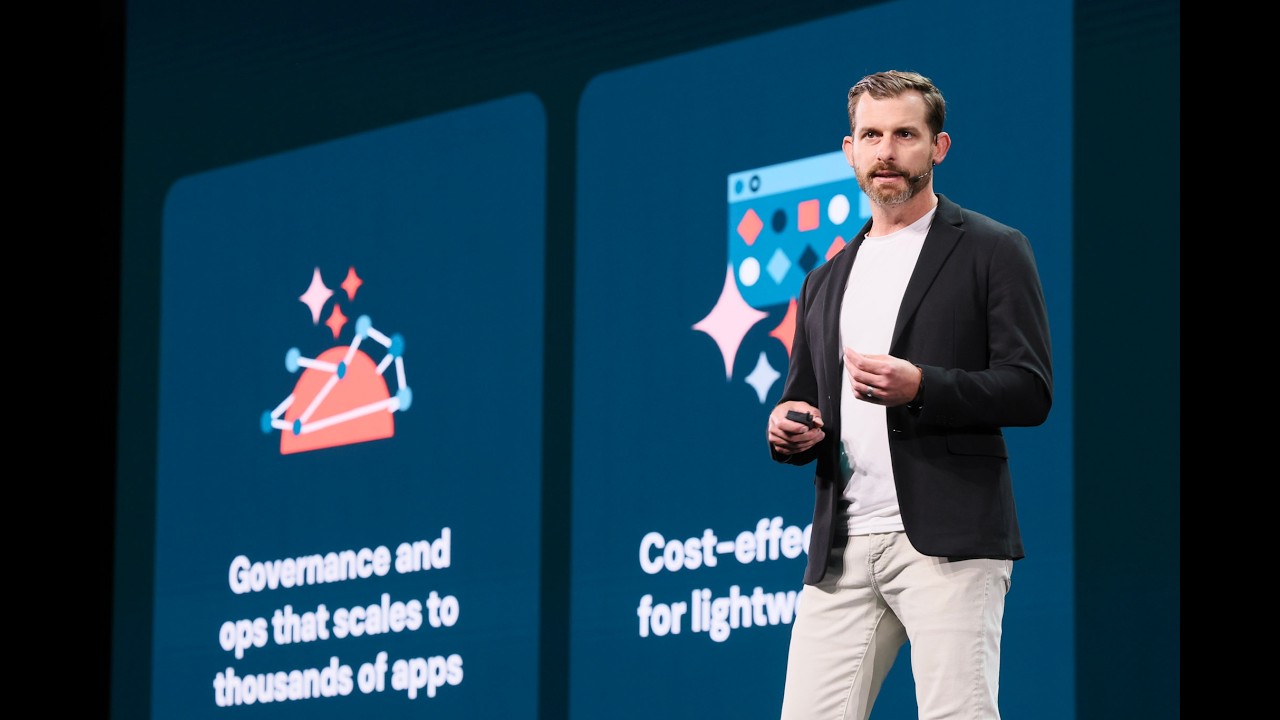
Solving AI development bottlenecks with Databricks App (with demo)
Databricks Apps provides an enterprise app platform with data security and governance at its foundation, enabling users to build and deploy AI-powered applications that access governed data. The platform introduces App Spaces for scalable governance, serverless micro apps for cost-effective lightweight applications, and Genie App Builder for context-aware, production-quality app development from prototypes.