Anthropic
Recent items mentioning Anthropic across the Databricks ecosystem — releases, news, videos, and community Q&A. Updated hourly.
Databricks CLI v1.23.0 and the VS Code extension v2.23.0 now put claude and codex directly into SSH sessions with Unity Gateway preconfigured, so coding agents run against governed endpoints out of the box 32. Unity Gateway also routes tasks across models by cost and capability, with configurable traffic splits and fallbacks 1. Lakeflow Connect added a managed Anthropic connector, which lands AI-provider data in Unity Catalog 6.
Generated daily from the 10 most recent items mentioning Anthropic. Click any [N] to jump to the source.
 News
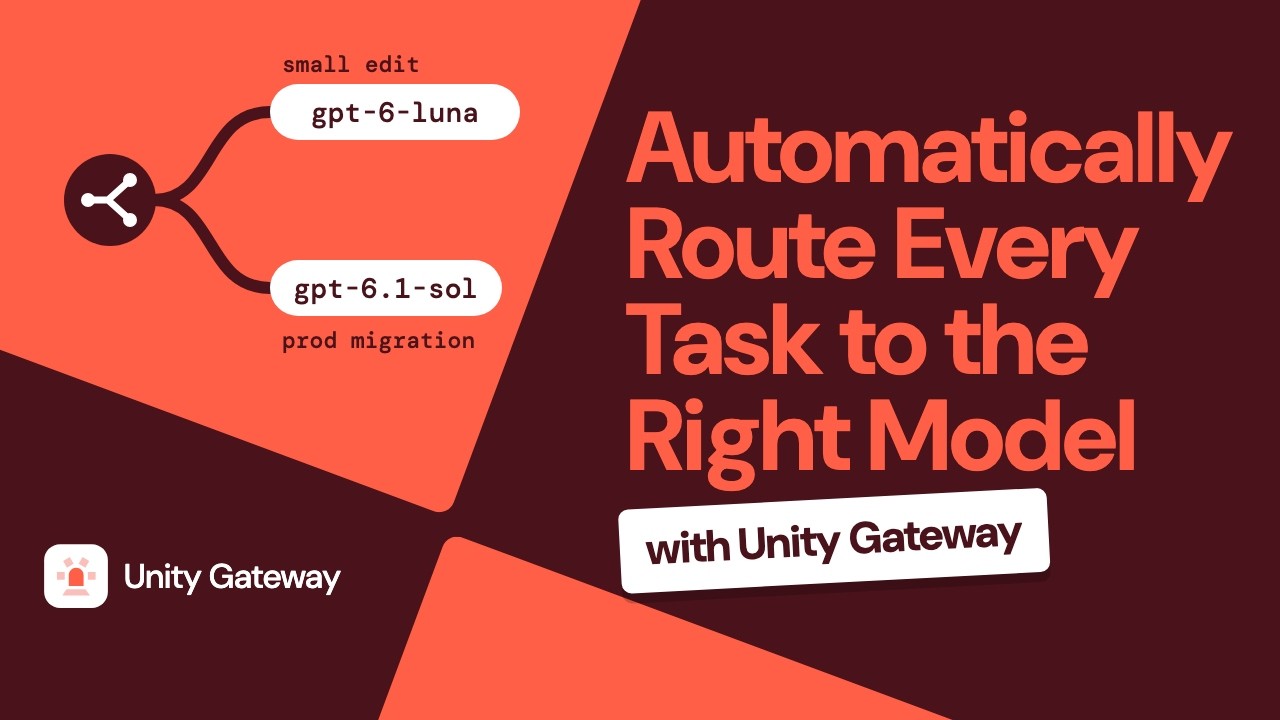
Automatically Route Every Task to the Right Model with Unity Gateway
Unity Gateway manages multiple AI models through a single governed platform and uses smart routing to automatically direct tasks to the most cost-effective and capable model. The demonstration shows how to configure model services, traffic splits, and fallbacks while tracking usage across different development tools.
Release: v2.23.0 (#2277)
The extension now has a databricks.notebooks.configureJupyterCellMarkers setting to stop it writing Jupyter cell-marker settings to workspace settings, and claude and codex are available in SSH tunnel connections with Unity Gateway preconfigured. The bundled Databricks CLI moves to v1.23.0, which restores legacy-import uploads for bundle deploys (so notebooks are no longer uploaded as plain files) and adds workspace.sync_mode, replacing the deprecated presets.source_linked_deployment and experimental.immutable_folder.
Databricks CLI v1.23.0 makes databricks ssh connect provide claude and codex on dedicated clusters and in serverless IDE sessions and non-interactive commands, and adds GPU_1xRTX6000 workload support plus workspace.sync_mode (overwrite, in-place, immutable), which replaces the deprecated presets.source_linked_deployment and experimental.immutable_folder settings. The release also reverts bundle file uploads to the legacy /workspace-files/import-file endpoint to fix notebooks being uploaded as plain files, adds lifecycle.depends_on and bundle deploy --select for deletions, and fixes bundle validate errors when a schedule, trigger, or continuous block is referenced as a whole.
How KOHO built a Claude-powered self-serve analytics tool on years of dbt governance
KOHO built a Claude-powered self-serve analytics tool on top of years of dbt governance, and argues that AI analytics only works when a governed dbt foundation and a strong data culture are already in place. The post walks through why that groundwork, rather than the model itself, is what makes self-serve analytics trustworthy.
How KOHO built a Claude-powered self-serve analytics tool on years of dbt governance
KOHO built a Claude-powered self-serve analytics tool on top of years of dbt governance work, and the post argues that this foundation is what makes AI analytics viable. The takeaway for Databricks teams: a strong data culture and a governed dbt layer need to come before AI self-serve, not after.
Unify your productivity and AI data with Lakeflow Connect
Lakeflow Connect now offers native, fully managed connectors for Atlassian (Jira, Confluence), Microsoft SharePoint, Google Workspace (Drive, Outlook, Gmail), GitHub, and AI providers like OpenAI and Anthropic, with unified governance and no infrastructure to manage. Because both structured and unstructured data land directly in Unity Catalog, teams can power enterprise knowledge bases, AI agents, and developer productivity dashboards without building custom API integrations or pipelines.
What Okta learned governing context for AI agents at scale
Okta moved its AI agent context out of the Snowflake UI and into dbt, using a three-layer framework of agent metadata in model YAML, markdown context docs, and semantic views in dbt's semantic layer spec, all shipped through normal pull requests. The context syncs into Agents Schema, so Claude (over MCP) and Snowflake Cortex read the same governed rules, and an analytics engineer fixes a wrong answer by merging one change that every agent inherits.
How DocuSign cut analytics engineering time in half by pairing Claude Code with dbt v2, dbt MCP, and agent skills
DocuSign combined Claude Code, dbt Agent Skills, dbt MCP, and dbt v2 into a single analytics engineering workflow and measured a 50% productivity gain. The post walks through how these pieces fit together so Databricks practitioners can see what an AI-assisted dbt workflow looks like in practice.
 Tutorials
Building an Agentic Analytics Foundation on the Lakehouse
The video demonstrates how to build an agentic analytics foundation on the Databricks lakehouse platform to ensure AI agents are accurate, secure, and scalable. It explains how to organize data assets into business domains, define metric views, and use Unity Catalog and Unity Gateway for governance and guardrails.
Databricks genie code changes and dbt
Hi I created my first pipeline in Databricks that sits as a .sql file. I've broken up the code into layers (stg, marts) and its working as intended. However, when the code needs to be adjusted (e.g. business definition or logic changes), I often use the genie (it's the databricks in house agent) to help me make the changes. The problem I'm running into is that since those changes are made inside databricks, the dbt files are not adjusted. I currently update the code in databricks then paste the new adjusted code into dbt but this seems backwards to me (Also a challenge when the change ripples throughout the code so I would need to update each individual stg). I imagine the changes should initially happen in dbt then that flows into databricks. We don't have claude that can link with dbt (we're only using genie). Is there a way to link genie onto dbt or is that a limitation? Any best practices in this process I should consider implementing? submitted by /u/Takoyaki_18 [link] [comments]
🚀 Massive updates came to Databricks Unity Gateway this past September!
Enterprise teams gained access to an expanded, multi-provider model hub managed directly through Foundation Model APIs . Whether you needed cutting-edge enterprise reasoning, lightning-fast inference or lightweight task processing, Unity Gateway expanded its lineup with the latest releases from OpenAI, Anthropic, xAI and DeepSeek. Here is a recap of the foundation models that landed on Unity Gateway throughout September 2026: 🤖 OpenAI GPT-6.1 Sol GPT-6 Sol & GPT-6 Luna GPT-6 Astra ⚡ xAI & DeepSeek xAI Grok 4.7 DeepSeek V4.1 Flash 🧠 Anthropic Claude Opus 5.5 Claude Fable 5.1 submitted by /u/Youssef_Mrini [link] [comments]
5 Simple Tips to Supercharge Your Claude SDK Experience with MLflow
Claude SDKs now emit OpenTelemetry traces natively, allowing you to seamlessly monitor and evaluate your agent runs with MLflow. Learn five practical tips to capture unified end-to-end traces, track token usage, score executions, and compare performance across different prompts.
Databricks Asset Bundles now utilize a multipart upload endpoint for improved deployment throughput and automatically retry operations encountering transient server errors. This release also adds uv workspace support for local environment setup alongside fixes for bundle deployment binding, immutable folders, and relative path resolution.
How to trace Claude agents via Native OpenTelemetry Export
Claude now natively emits OpenTelemetry traces across Claude Managed Agents, the Messages API, the Claude SDKs, and Claude Code. Learn how to configure the export for each product using open-source MLflow as your trace backend.
MLflow 3.17.1
MLflow 3.17.1 introduces the mlflow.genai.databricks.review_queues module for managing review queues on Databricks and adds Decision API support to make_judge(). It also fixes Claude Code OpenTelemetry trace rendering in the UI and ensures Databricks evaluation feedback correctly records the latest scorer version.
Letting devs use any AI coding agent against governed data, without keys on laptops. What actually works!!!
Disclosure up front: I'm a forward-deployed engineer at Databricks, so I work on this, but this is a hands-on write-up, not a pitch, and the pattern's the interesting part. The problem I keep hitting at enterprises: devs already use a mix of AI coding agents (Claude Code, Codex, Cursor, Copilot). Leadership wants to "standardize on one," which fights reality. The real question isn't which agent, it's how to let all of them touch enterprise data safely. I spent a week wiring agents through a governed gateway + MCP and trying to break it. What held up: - per-user/per-model entitlement enforced server-side (not a client checkbox) - governed data tools that are fail-closed. no valid identity, no access - reads scoped to the user's catalog permissions. the agent sees only what the human can - human-in-the-loop by default (shows the query before running, no silent writes) Write-up: https://wesdias.medium.com/how-to-connect-any-ai-assistant-to-governed-enterprise-data-with-mcp-0d9cffa14231 How are you handling this? governing agent data access at the gateway/MCP layer, or still per-tool API keys and hope? What's fallen over for you? submitted by /u/wesleydias84 [link] [comments]
 News
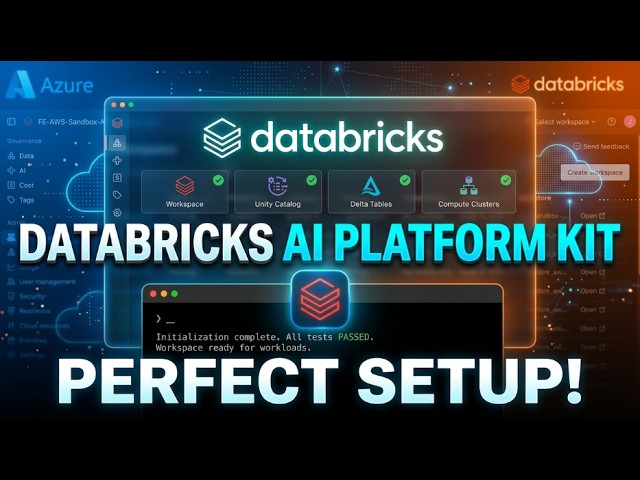
Why Is Everyone Using the Databricks AI Platform Kit?
The Databricks AI platform kit enables users to quickly configure a new workspace through a terminal installation process. The tool generates and executes Terraform scripts to automatically deploy necessary cloud resources, networking, and Unity Catalog structures.
 Releases
Jev, OpenAI Dots, DevDay, and Genie One! | AI Newsround - September 2026
The video covers the rise of Jev and other system one decision-making models that output typed probabilities instead of free text for enterprise workflows. It also highlights OpenAI DevDay announcements including persistent agents called dots, the general availability of the Genie one Model Context Protocol, and several new model releases from Anthropic and OpenAI.
Genie Reading Jira Tickets
Has anyone figured out how to get genie to read Jira tickets? I point cursor/claude code at Jira and they fire away. However sometimes I’d like to develop with Genie. Is this possible? submitted by /u/Known-Delay7227 [link] [comments]
Lakebase and Agentic SDLC: Branching Databases for Coding Agents
Lakebase resolves the database bottleneck for parallel coding agents by providing sub-second, scale-to-zero copy-on-write database branching for each agent. Learn how to implement an end-to-end workflow pairing Claude Code, Git worktrees, and GitHub Actions to run Drizzle migrations, deploy preview environments on Databricks Apps, and test against Unity Catalog-masked data.
MLflow 3.17.0
MLflow 3.17.0 introduces fine-grained access control for runs and traces, links evaluation metrics directly to managed datasets, and adds support for Databricks Unity Catalog model service resources. Self-hosted SQL tracking servers require a coordinated schema migration via mlflow db upgrade with all writers stopped, as rolling deployments are not supported.
Configure Unity Gateway rate limits for system.ai model services
I am trying to configure rate limits for system-provided model services under system.ai where I am unable to set the rate limit for the model. Below is the scenario I tried When I open Unity Gateway, select system.ai.claude-sonnet-5, and try to configure the rate limits, the UI displays: "User does not have permission to access this resource." I see the same behavior for other system.ai models. I have Account Admin access at the Databricks account level. However, when I run the following SQL command: SHOW GRANTS ON SCHEMA system.ai; the result only shows the following permissions for account users: EXECUTE READ VOLUME SELECT USE SCHEMA There is no MANAGE privilege shown on system.ai. Additional observation When I directly call system.ai.claude-sonnet-5, I receive HTTP 403 with the following message: PERMISSION_DENIED: The endpoint is temporarily disabled due to a Databricks-set rate limit of 0. I am not sure whether this is related to the inability to configure the rate limit in the UI or whether it is a separate platform-side restriction. Could someone please help me to understand the distinction between account-level administration and Unity Catalog / metastore-level permissions for system.ai model services, and understand the correct least-privilege configuration needed to manage Unity Gateway rate limits?
What changed on Lakenaut after your feedback, and the site is now an MCP server you can plug into Claude
First of all, I really want to thank you everyone commented my latest post and encourage me to keep update and mantain the website. For the ones who miss my post is this one (for reference): https://www.reddit.com/r/databricks/s/S06gTMmm2P A few of you wrote in over the last two weeks, and most of it is live now. The short version, then one bigger thing. From the feedback "Too many categories, the docs' hierarchy is clearer." The sidebar groups now follow the Databricks documentation's domains (Platform & governance, Data engineering · Lakeflow, Data warehousing & BI, AI & ML), while each area keeps the name the workspace menu gives it. The sidebar is contextual: the doors are always there, the tree opens only where you are. "Finishing a page and moving on is one gesture." It is: Mark as done and Done, next sit together at the foot of every concept. "I want to know what moved." Every concept, area, path and roadmap now opens with a "What changed, and when" box, and /changes/ is the whole log by day: which page, what was done, and whether a person did it by hand or accepted a correction the agent drafted after the documentation changed. Every end-of-support row has its own address now, and search lands on it instead of on the list. A fifth way through the material is taking shape: practices, decision pages filed on the well-architected pillars. When to pick a thing, for whom, what choosing wrong costs. The first one is in draft. The bigger thing: an MCP server, no key Put the MCP URL (page below) into Claude, ChatGPT, Cursor or Claude Code and the assistant reads the published site instead of guessing: 170+ concepts, 8 paths, 5 roadmaps, the news, the resources, and the platform tables (what is in preview, what was renamed, what is ending). Thirteen read-only tools, 60 calls a minute per address, every answer links back to the page it came from. How to connect it: https://lakenaut.dev/developers/ Two questions If you plug it into an assistant, what is the first thing you ask it? I want to know whether people reach for prep, for "what is in preview", or for something I have not thought of. Is there a kind of page you keep wishing existed? The practices came from one comment. The next kind could come from yours. Again, thank you and let's connect! submitted by /u/imthenitto [link] [comments]
Genie Code vs. Omnigent: How to structure workspace instructions, AGENTS.md, and skills without breaking production
Following up on recent discussions around Genie performance I've come across... a lot of us have a similar frustration with Genie. Context bloat, prompt drift, and agents making destructive errors (Junior mistakes like setting a mode to overwrite). Part of this is limitations of genie, some is instruction "stuffing" and some is using the right tool for the right job. Also, guidance on how to structure and create instructions have changed a lot over the summer. With Omnigent being available alongside Genie Code, here is my opinion on what should separate these tools and how to structure context files to keep agent outputs deterministic. I made a table because post sprawl is real... Genie Code vs. Omnigent These are not competing options. They solve problems in different places and scales: Layer Genie Code Omnigent (Meta-Harness) Primary Role Native in-workspace assistant for notebooks, SQL Editor, and Lakeflow Pipelines. Unified meta-harness to run, swap, and persist multi-agent workflows (Claude Code, Codex, Cursor, PI, Hermes) across local runners and cloud sandboxes. (Also, try out Debbie that has the ability to use a /debate skil) Governance Prompt-level instructions, workspace instruction files, and Unity Catalog user permissions. External, stateful policies written in CEL (hard cost limits, network sandboxing, pre-commit git checks). Best For Interactive notebook debugging, quick PySpark logic, end-to-end Lakeflow pipeline scaffolding. (Think StackOverflow, for those of us of that still remember it) Multi-repo refactoring, team co-driving sessions (eg. "Multi-player" agent sessions), and running autonomous CLI agents with guardrails. Execution Model Synchronous, interactive execution tied to your active workspace session and compute. Asynchronous, persistent execution that runs in the background (survives laptop close) with shareable web/desktop sessions. My Rule of thumb: If you are working interactively / ad-hoc in Databricks and need help with syntax, where something is, why something is failing, use Genie Code. If you are doing anything complex, want to be able to get one harness to check another one (like Claude Code checking Codex's response/PR) and need programmatic guardrails that can't be bypassed by prompt injection, go use Omnigent. And if you are using Genie and want it to read your "instructions": Databricks does not natively parse an arbitrary instructions.md dropped in a folder. If you want repo/project-level discovery, the standard Genie Code looks for is AGENTS.md (or CLAUDE.md ). Shoving context for "multiple project islands" into one file guarantees prompt dilution. Workspace defaults ( .assistant_workspace_instructions.md ) belong in under 30 lines. Scoped project rules belong in AGENTS.md . Task-specific behaviors belong in modular skills under .assistant/skills/ called via @skill-name . Andrej Karpathy created a git repo "karpathy-guidelines" that walk through some of the overarching concepts he recommends around creating skills and instructions. Specifically one of the ones that may come as a surprise is that if you repeat a instruction point it will lower the effectiveness of the instructions and cause degradation. submitted by /u/OkImprovement7010 [link] [comments]
Genie is so Dumb and I am tired of Pretending Otherwise
Hey Guys, Data Engineer with 3.2 YOE here, I have been working on and off on databricks for multiple projects across domains like Retail, logistics and Now Pharma. In my current role, I focus on creating end to end pipeline with different data sources which often get refreshed on a bi-weekly basis for pharma related data The client is extremely demanding and has no technical expertise to gauge how much time it really takes to build and maintain something so complex and therefore expect the team to use Claude teams license and also Genie The problem with Genie is that, I can not trust it, It will not listen to my instructions even after having a separate instructions.md which I update on a daily basis, in fact I update this after each session is complete, and no, I do not use AI to update this, every change request that the client and the client's team has goes through my own words of instruction updates, I have an entire markdown file which has contexts for multiple islands of projects, workspace folders and notebooks that I have to maintain and transition to devops team. I also have created 4 different skill family for Genie, in relation to migration, devops, maintainence and review. And it is so disgustingly bad at handling all this context, that it fails me across all 4 areas. I have seen it lie to my face multiple times, Casting columns as null, altering data types without asking consent, never following my work stream and process in a sequential format Having set the wrong notebook paths in a task even though i explicitly tell it exactly what to do. It often confuses streams of works and ends up mixing so many things that remove this knot and fuck up itself costs me so much time!!! It is very poor in adhering to the domain specific instructions that we provide More than 3 requests in a chat, and it is practically useless And branching of chats is the most useless feature that they have introduced. I have created multiple diagnosis queries to check the work of this agent , and it will straight up lie to you, so much, so convincingly, that you know it knows all the biases you have and it even goes a step ahead and just narrates a story that you can provide to your team in the stand-up. My only concern is, after all this bullshit, my team, of nearly 6 (some of them have never worked in databricks or delta table environments like this) was charged $990 dollars in the month of august , for this shit output??? Have some shame Databricks , fix your worthless product or remove that feature or stop charging so much if you are beta testing in actual prod. Today, I am writing this post because of something that I caught live, that pushed me to the edge. Something that is critical, production level issue, which If I was not paying attention while merging could have been a huge disaster, and mind you the pipelines I make are client facing, what is even more distrubing is the fact that it will just make so many unnecessary changes to a simple query or a pyspark function just enough so that the tests are passed. (So basically it does not want to get caught, and makes a mistake so that we can prompt it again to fix this mistake and then Databricks can charge us more, this looks like a dark pattern to me) In your preview (prima-facia), everything is good, the tests are passing, the job is running, but holy!!!, it was casting 3 columns which are essential for downstream processes as null. It boldly suggests that we remove those 3 columns, and or cast them as null. How is this a solution Databricks? The AI is supposed to have more context than me because it is a agent made specifically for Databricks Environment Correct?? That is how it is sold?? And upon spending just 2 mins, I realized that the fix that it is suggesting will blow up critical information that the client team should see in the app because it is not even there in the first place, and all of this is because it can not read the correct notebooks , even if you tag it. It had se […truncated]
I am trying to build an interactive dashboard on the underlying Databricks. Which of these are the best?
I’m thinking of 4 options here 1. Build an MCP (a custom MCP) that can access custom tools on Databricks and interface it on Claude.ai or Claude desktop Advantage- Claude is very good at inferencing, multi-turn conversation and multi-step processing Disadvantage - custom MCP and tools needs to be built accurately and validated. It should have full context of schema and unity catalog Build a semi-custom MCP - this will use “askGenie “ as one of its tools with additional custom tools Advantage- complexity decreases as we leverage genie space Disadvantage- double inference by genie and Claude Use custom Databricks connector in Claude. Not sure if this uses genie and therefore double inference but it’s more reliable than custom build because this is a native offering by vendor Use only genie and build custom dashboard without needing Claude interface What’s the thought on this? submitted by /u/Bala_Devaraj [link] [comments]
 News
Parallel Coding Agents with Lakebase | Claude Code + GitHub Actions
This video demonstrates how to run multiple coding agents in parallel by combining git worktrees, GitHub Actions, and Lakebase database branching. It shows how each agent automatically receives an isolated database branch for safe experimentation and schema migrations, followed by dedicated preview environments for pull requests.
The CLI introduces a preview image push command for the Databricks Artifact Registry, preconfigures coding assistants in serverless SSH sessions, and adds expiration flags for Postgres branch creation. In Asset Bundles, clusters now support library configurations, Terraform deployments migrate to the direct engine prior to execution, and Postgres snapshot schedules are restricted to YAML.
Azure Databricks, two-week-old account: partner pay-per-token endpoints (Claude, Grok) have never once succeeded — "Databricks-set rate limit of 0" — and the Assistant has "no daily token allowance". Open models work. What gates this?
Azure Databricks, Premium, one account with three workspaces, Unity Catalog, Azure Marketplace billing (no card, no trial credits left). The account was bootstrapped on a trial workspace about two weeks ago and moved to Premium six days later. I've spent two days on this and want a sanity check from anyone who has seen it. The facts, from system.serving.endpoint_usage: • Every open-weight pay-per-token endpoint has worked since the trial: gpt-oss-120b has ~50 successful calls going back to the trial period, Llama 3.3 70B likewise, zero refusals. • No partner pay-per-token endpoint has ever returned a success on this account. The very first call anyone made to databricks-claude-sonnet-5 was refused, and every call since, on every Claude endpoint and on Grok, in all three workspaces, for users and service principals alike: 403 PERMISSION_DENIED: The endpoint is temporarily disabled due to a Databricks-set rate limit of 0. • It is not our AI Gateway config: I removed every rate limit from one Claude endpoint and invoked it — same 403. The endpoints' config shows nothing else. • The notebook Assistant worked during the trial. On the paid account it refuses everyone, admins included: *"This workspace has no daily token allowance for the assistant."* Underneath, /ajax-api/2.0/conversation/llmproxy/ returns 429 {"type":"daily_token_limit_reached","daily_limit_tokens":0,"message":"…Daily token limit of 0 reached. Resets at midnight UTC. (DTB)"} and it recomputes to 0 every midnight. • Once, the Databricks Apps in the workspace were stopped by the platform with *"App compute was stopped due to workspace or account status"* while every workspace showed RUNNING. apps start brought them back. Red herring, for completeness: we also created a Unity AI Gateway per-user budget whose first version had a $0 threshold with BLOCK_USAGE. That blocked Genie for a day, exactly as documented, and was fixed. It was created a day *after* the first Claude refusal, so it isn't the cause of any of the above. What I've found: two Community threads describe "Databricks-set rate limit of 0" as a workspace trust-tier gate — trial-born accounts sit in TRIAL_VERIFIED, pay-per-token partner models are gated to PAYABLE_VERIFIED, a card alone doesn't flip it, only Databricks Sales/Support moves the tier. Both were AWS/personal accounts, neither resolved on-page. The account console's own API reports our account's feature_tier as STANDARD_W_SEC_TIER although the workspaces are Premium; I can't find what that field means. Questions • Does Azure Databricks with Marketplace billing go through the same PAYABLE_VERIFIED gate? Does it clear on its own after the first settled invoice, or does someone have to move it? • If you were moved: who did you contact (account team, or "Contact us" in the console) and how long did it take? • Is the Assistant's "daily token allowance" the same gate, or a trial allowance that simply goes to 0 when the trial ends on an unverified account? • Does feature_tier: STANDARD_W_SEC_TIER on the account object mean anything to anyone? submitted by /u/sumit671 [link] [comments]
Let's talk about AI rate limits
Databricks Unity Gateway is great and getting even better very quickly. It now has nearly everything we could hope for. New frontier models are usually available within 24 hours of release. But...the models aren't really available . They all come with extremely low rate limits, way too low to support a team of engineers in any sizable enterprise using the models. If you have a sizable agents.md even 1 person hits the limits. Why is it like this? Sure we can raise a ticket to request higher limits but that takes weeks and the highest we've gotten is 1M tok/min. We can (and do) go to Bedrock and get 5M+ tok/min by default, no special request needed. Is the expectation that we hook up other providers? Are the key frontier labs (OpenAI, Anthropic, Google) limiting Databricks as a whole? For such a great product this seems like a glaring limitation that's holding us back. Make it make sense. submitted by /u/degenbets [link] [comments]
Claude Academy's Using Databricks for Data Analysis - This official documentation from Anthropic on Claude Academy for how to work with Databricks is really underwhelming, so I wanted to share a guide that properly explains everything.
Hey Databricks community! I have been working with Databricks as an admin for over 4 years and I was attempting to follow this official tutorial from Anthropic for how to connect Claude with Databricks https://academy.claude.com/tutorials/using-databricks-for-data-analysis And I encountered multiple significant frustrations with doing it, as the tutorial is very underexplained and outdated for how to get Claude working with Genie One and other functions within Databricks. Therefore, I thought this video on Youtube would be valuable content to share to help solve this problem, for other people that are encountering similar difficulties when getting these two tools connected and building out systems that work for Claude to properly interact with Databricks. Let me know if this video is helpful! submitted by /u/k_kool_ruler [link] [comments]
 Releases
The Unity Gateway Cli
The Unity Gateway CLI allows users to configure and manage governed AI coding agents directly from the terminal with workspace authentication and budget tracking. Administrators can centrally configure smart routing, model selections, MCP servers, and skills via JSON to distribute standardized AI tools across development teams.
Deploy and manage coding agents at scale with the Unity Gateway CLI
The new Unity Gateway CLI enables organizations to centrally deploy, configure, and govern coding agents and frontier models at scale. Developers can launch approved agents with a single command, while admins manage models, shared MCP tools, spending policies, and lakehouse trace exports from a unified interface.
Databricks Cost Optimisation 3rd Party Tools
Does anyone have experience with third party optimisation tools like espresso.ai or Zipher? Espresso has an enticing pricing model but I wonder if dumping a whole heap of logs and system stats into Claude would get me 80% of the way there. submitted by /u/Agitated-Western1788 [link] [comments]
Genie One MCP is now GA
The Genie One MCP server is now GA. It exposes Genie One over MCP, allowing any agent to communicate with Genie One as a peer agent. The MCP exposes tools for asking questions to Genie One, getting query results, checking on incremental progress, and steering responses. These capabilities allow you to integrate Genie One into whatever agent you want without changing your workflow. And you get all of the semantics built-in instead of having to use raw SQL APIs with fragmented skills/stale markdown repos/additional semantic layers like we used to with ai devtools. Here are the docs: https://docs.databricks.com/aws/en/agents/mcp/genie-mcp I've seen some pretty cool use cases with integration into ChatGPT/Claude, but also headless agent workflows where you want to delegate the data questions to Genie One so it can use agents/ontology. Interested in folks' thoughts on the right/wrong use cases for this feature. submitted by /u/lakehouse_vacation [link] [comments]
Can Jev replace your LLM judge? Evaluating quality, cost, and latency
Benchmarking Jev against GPT, Claude, and DeepSeek using MLflow reveals how it measures up as an alternative LLM judge. Review side-by-side performance across quality, cost, and latency to see if Jev can replace your current evaluation models.
The Web Search Your Agent Inherited Isn't Good Enough
Omnigent lets you define an agent once—model, tools, policies, limits—and deploy it across Claude Code, Codex, or the raw API instead of rebuilding it per harness, with model calls routed through Databricks Foundation Model APIs for unified cost tracking and governance. Swapping in Nimble for web search lifted benchmark accuracy from 46% to 71% while cutting search costs in half.
 News
AI Watermarking, Databricks AI Extract, Hugging Face, and Unity Catalog | AI Newsround - Summer 2026
Claude and other AI models will invisibly watermark generated text to ensure content traceability, while Databricks AI Extract achieves 94.7% accuracy on complex documents and extracts charts as structured data. Databricks added skills to Unity Catalog as governed assets and launched AI Gateway to centralize access to multiple AI models, enabling rapid evaluation and swapping without code changes.
Show HN: Like LeetCode, but multi-file and multi-step
On LeetCode you write one function, it passes, and you're done. Most AI labs such as Anthropic and OpenAI, as well as some big tech companies such as Meta, Snowflake and Databricks, don't stop in one function and instead ask multi-step questions that are closer to real-world problems. Say you're building a key-value store. Step 1 is get, set, delete, count. Once your tests pass, Step 2 unlocks: expiring keys. Then nested transactions. Then atomic batches. I built this because I couldn't find a good place to practice for multi-step, multi-file questions. The questions are based on ones people have reported from those loops. Check it out at https://loopprep.dev. There are 24 questions, 3 free, and no signup to try them. Happy to answer questions. --- top comments --- [MiroslavPokorny] Writing code in a browser like this or leet code is wrong on so many levels its not funny.
Where Omnigent Fits Alongside ChatGPT Work, Claude Cowork and Cursor Projects
datatf: Automate importing Databricks workspace into Terraform
DataTf , bring an existing Databricks Workspace into Terraform (IaC). generates dynamic terraform.tfvars + import code built on the Databricks Go SDK compatible with Terraform or OpenTofu compatible with Databricks Omnigent, Claude Code, opencode, OpenAI Codex and others native support for Azure, with GCP and AWS support upcoming Disclosure: I am the Author/Founder, 536 Technologies. submitted by /u/536tech [link] [comments]
SSH sessions now automatically reattach and replay missed bytes when the tunnel connection drops temporarily, preventing session interruptions and eliminating manual reconnect workarounds. The CLI adds PyDABs secrets support, JSON output for aitools install with error categorization for CI automation, and displays bundle sync progress by default.
Omnigent Local Coding Model Rec
After watching Matei's webinar and the post on controlling spend , been trying to use the other harnesses and models folks are suggest and trying out Qwen 2.5 coding and 3.6 with Polly in local Omnigent (not connected to a workspace). I have Codex and Claude but ideally thinking best to use paid higher model to plan and then have the local Ollama based Qwen model on my Mac build but so far I haven't seen Polly use it much. What are folks experience, is there a good local model I should use, should I be giving Polly and the sub-agents more direction? (This is on a MacBook M5 btw) submitted by /u/ecp5 [link] [comments]
MLflow 3.16.0
MLflow 3.16.0 makes the redesigned trace explorer the default interface, introducing natural-language custom trace views via the MLflow Assistant, session grouping for multi-turn conversations, and span links. The update also adds Unity Catalog model service support for built-in evaluation judges, per-user AI Gateway budget policies, and fail-closed authorization by default.
Databricks SSH Tunnel for connecting your coding agents and IDEs to your workspace
Just made a video about a feature I'm pretty excited about. tldr: You can use an SSH tunnel to connect your coding agents and IDE (VSCode/Cursor) to your Databricks workspace. See the video for a full walkthrough. Some notes on things I forgot to mention in the video: - claude/codex isn't natively installed when you connect to your workspace, so you'll have to install if you want use them (Ex: curl -fsSL https://claude.ai/install.sh | bash ). We're working on better native support in the future, but I wanted to make sure you know this is an option in the meantime. - For the base environment YAML file. You'll have to set a base environment of '4' for it to work when using the SSH tunnel. Our example yaml ( https://docs.databricks.com/aws/en/admin/workspace-settings/base-environment#example-environment-specification ) shows '5' so don't let this trip you up! As always, please feel free to leave questions and feedback in the comments! Docs: https://docs.databricks.com/aws/en/dev-tools/ssh-tunnel Previous post with more info: https://www.reddit.com/r/databricks/s/kCFBEfPTC6 YT link: https://www.youtube.com/watch?v=rHoGWVpb6kg submitted by /u/tony-dang [link] [comments]
 Tutorials
How to Connect Your Coding Agent and IDE to Databricks Compute | Databricks SSH Tunnel Demo
Databricks workspaces can be connected to local IDEs and coding agents via an SSH tunnel using the Databricks CLI or IDE extensions. This setup allows developers to write code, use AI coding agents, and run workloads on remote Databricks compute while keeping workspace files automatically synchronized.
External price control
In the Unity AI gateway, it is also possible to register an external model for which we pay the provider directly (OpenAI, Anthropic, etc.). In that case, Databricks now knows the prices for those models and can calculate, monitor usage, and alert or block based on budgets. more news https://medium.com/databrickscommunity/databricks-news-serverless-genie-code-ltap-lakeflow-61853d8e422a submitted by /u/hubert-dudek [link] [comments]
 Tutorials
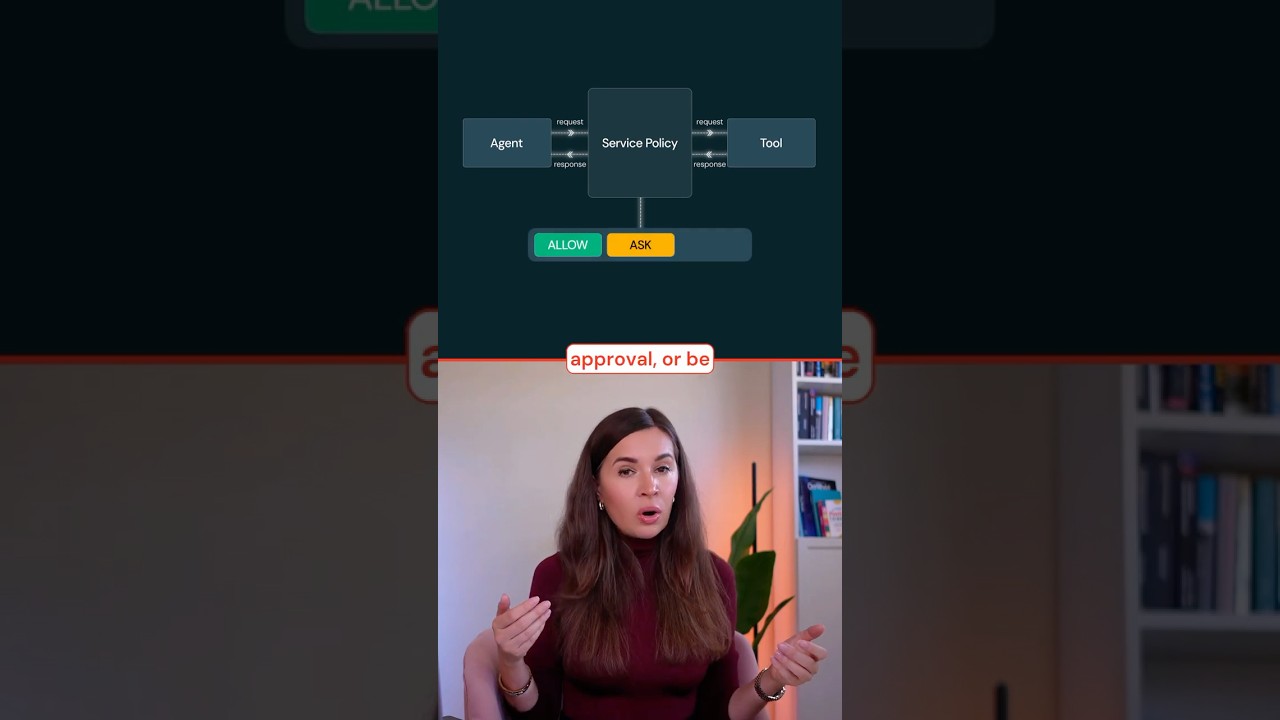
2. AI Agent Policies: How to Control What Agents Can Do
AI agent policies sit between agents and their tools to evaluate actions and enforce spending limits, tool usage restrictions, and risk scores. Using the open-source Omnigent framework, developers can configure these policies to automatically pause execution and require human approval when thresholds are crossed.
Any chance we get Genie One a python sandbox env?
Trying to get a python enviornment on genie one to run for the end-user so they can use the xlxs claude skill. I have found a way to get the skill added into genie one with the scripts, however, as I suspected it does not have a python sandox yet. submitted by /u/BoiBoii619 [link] [comments]
Databricks Unity AI Gateway
If I am an AI decision maker for an Enterprise, why should I choose Claude or GPT or any other enterprise subscriptions with seat based pricing where some of my colleagues are power users and some still learning effective AI use? Instead, I could just use Databricks Unity AI Gateway with the options of getting all of these at one place with PayG pricing along with state of the art free Open Source models, budget controls, smart routing, usage dashboard everything at one place. And the cherry on the top is if my enterprise data is also on Databricks!! What are your thoughts? Why would I do that? submitted by /u/myth-buster9999 [link] [comments]
Multiple Databricks Genie MCP connectors in one Claude workspace collapse into a single shared connector, anyone solved this?
We're connecting Claude (Cowork/Claude Desktop) to several separate Databricks workspaces, each with its own Genie space. Running into a platform-level snag and hoping someone's hit this before. Setup: each workspace exposes the standard Genie MCP endpoint ( https:// /api/2.0/mcp/genie ). We add each as its own connector in Claude so we can ask natural-language questions against the right workspace's data. Problem 1, generic connectors are indistinguishable: every Genie MCP server reports the same tool names and the same generic description, regardless of which workspace it's pointed at. Claude has no way to tell them apart from metadata alone, so it either has to probe each one (asking a neutral "what workspace is this?" question and checking the returned deep_link ) before it can route a question correctly, or it guesses wrong. Problem 2, trying to fix it with named connectors backfires: we tried building a Claude plugin that declares each of the seven as a distinct, fixed-name MCP server (e.g. genie-workspace-a , genie-workspace-b , ...), hoping deterministic names would remove the need for probing entirely. Turns out Claude's client recognizes Databricks Genie as a "verified" connector type in its directory, and collapses all seven fixed-name declarations into a single shared authorization instead of keeping them independent. Authorizing one silently becomes "the" Genie connection, and the others just reflect that same state rather than getting their own. Problem 3, working around the collapse trades one problem for another: we found that changing the declared URL slightly (adding a harmless query param) makes the client stop recognizing it as the verified type, which does force it down the plain custom-connector path and keeps it independent. But then it needs an actual registered OAuth client ID against that Databricks workspace, since it no longer gets whatever implicit OAuth handling the verified integration has. That means registering an app per workspace in Databricks/Azure just to get back to where the plain manual setup already was, more infrastructure, not less. So right now we're back to manually-added generic connectors plus a routing skill that probes and caches per conversation, which works, but costs a lookup the first time each workspace is used per session, and never scales cleanly as we add more workspaces. Has anyone gotten multiple Genie MCP connections into the same Claude account/org without them colliding into one shared authorization? Is there a way to deploy or configure the Genie MCP endpoint itself so each workspace reports distinguishable tool names or descriptions, rather than relying on the client to differentiate them? Btw, in Codex/chatgpt this is not an issue, because we can edit the description/name, and it automatically discovers the right plugin to use. It seems this is a very claude thing issue submitted by /u/Akroma188 [link] [comments]
 Events
From Primitives to Production: How Anthropic Builds Agents
Anthropic defines agents as LLMs in loops with tool access, leaning on model intelligence over rigid workflows, and uses domain-specific skills, MCPs, and evals to build effective agents across sectors. A demo showed a site reliability agent autonomously identifying a database pool issue, fixing the code, and generating a postmortem.
Databricks Cost Optimizer: Audit Spend with Codex or Claude Code
Managing AI Coding Costs at Scale
--- top comments --- [extr] I would be really curious to hear from devs at Databricks what the experience of development is like internally. I work at a small startup with essentially unlimited AI spend budget - the entire point is that I should be turning to it at every opportunity since our human labor is so expensive relative to tokens. So generally it's like: - Spend most time prioritizing/discussing what to do. - Once that's agreed, use Fable 5 High + 5.6 Sol XHigh come up with a design + plan. Agree on the high level plan. (Usually this just comes down to choosing where the change belongs on the spectrum between minimal patch <-> full redesign) - Use Opus 5 or Sol Med to execute - Auto-fix bugs and CI until green + thermonuclear review skill x3. - Manual interrogation of change/nits - Come up with QA plan and have Codex Computer Use execute on it - Manually spot check the final result (usually a sizable diff, thousands of lines, complete feature E2E, etc) I probably spend like $80 a day at least but I produce the output of 3 or 4 2022 engineers and probably at better quality. So it's easily worth it. Would I save money by switching to GLM 5.2 and such...perhaps? IDK. At our scale it's not worth the time spent building the eval harness to actually understand the performance tradeoff. [lbriner] There are a surprising number of articles like this along the lines of, "we started using AI tools and ended up spending millions per year". On what planet do people start paying for things without keeping an eye on the costs and no-one notices until you have spent a crazy amount? I don't understand. You are either paying a fixed amount which you are happy about in-advance or you are PAYG in which case you would ballpark how much it costs. Otherwise it reads a bit like a fake problem, because it didn't really happen, you just foresaw it (as you should) and added a few guide rails. [sashank_1509] I suspect that when it comes to hard complex software products, you’re better off ignoring agents and doing “trad coding”. What you lose in short term speed you gain in manageable complex codebases. If you have a 500k line codebase and even > 50% is written by agents, you are in a world of pain that won’t justify the costs longer term. Now of course, there are products that just involve lots of code but are not actually complex. This is generally the project with like hundreds or thousands of features but most of the features are separate and don’t actually interact in complex ways. Think a task management app with hundreds of features like calendar, email integration etc. there I think agents gives you more bang for the buck. Just my thought, using agents at work. [platinumrad] Careful. If you admit to using models that weren't trained by OpenAI or Anthropic then you might hauled in front of Congress: https://www.scmp.com/news/china/diplomacy/article/3362616/us... [dgellow] What I take from this is that models are already commoditized, and it’s pretty clear nobody has a moat: routing for the models, they can be swapped whenever new models are released, AI labs will have to continue to run on the treadmill non stop or be replaced. Long term I cannot imagine that business will be high margin. Routing for the harness, so anything that differentiate a provider vs another isn’t exposed to the user and isn’t too relevant. One more datapoint for the thesis that OpenAI and anthropic aren’t viable, sustainable businesses, and cannot justify their $1T valuation and the level of compute commitment (reminder that OpenAI committed to >$750B in infra spending for 2030)
Pi, Minimal and Performant
--- top comments --- [zhinit] Im looking forward to trying out Pi this week. It seems like anthropic just keeps adding more features that I don't really want and now is ignoring my claude.md and hooks. It feels like i'm adding more and more guardrails just to get to the place i used to be at before all the new features. Hopfully Pi helps
 News
Claude vs GPT: Live AI Debate with Omnigent
OmniGen is a new open-source project that orchestrates different AI agents like ChatGPT and Claude to collaborate and communicate within a single system. The architecture consists of a runner that sandboxes agents into uniform sessions and a server that manages control layers, policies, and chat history.
MLflow 3.15.0 introduces an MCP Registry for registering and sharing Model Context Protocol servers, enhances the Assistant with multi-provider LLM support and per-session token usage tracking, and enables proxy-less artifact transfers via presigned URLs to reduce server load and timeouts on large files. Additional improvements include sharable Runs table views, multi-modal image attachments for LLM judges to evaluate vision tasks, and numerous bug fixes across tracing, evaluation, gateway, and UI components.
 Tutorials
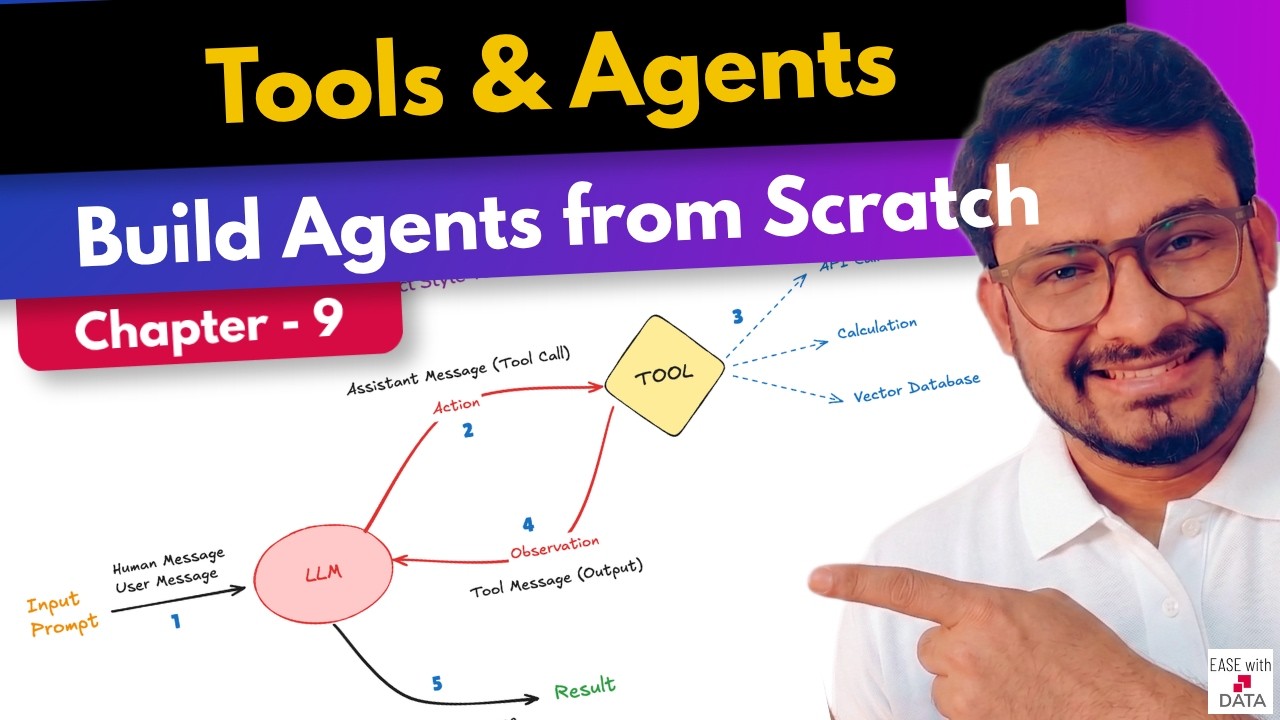
Build Your First AI Agent + LLM Tool Calling Explained | Chapter 09
Agents operate through tool-calling loops where the LLM requests specific tool execution with arguments, code executes the tools, and observations return for the LLM to process. The video demonstrates building a Python agent using Grok API with two tools that execute sequentially: retrieving weather for a city and suggesting an activity based on temperature.
 News
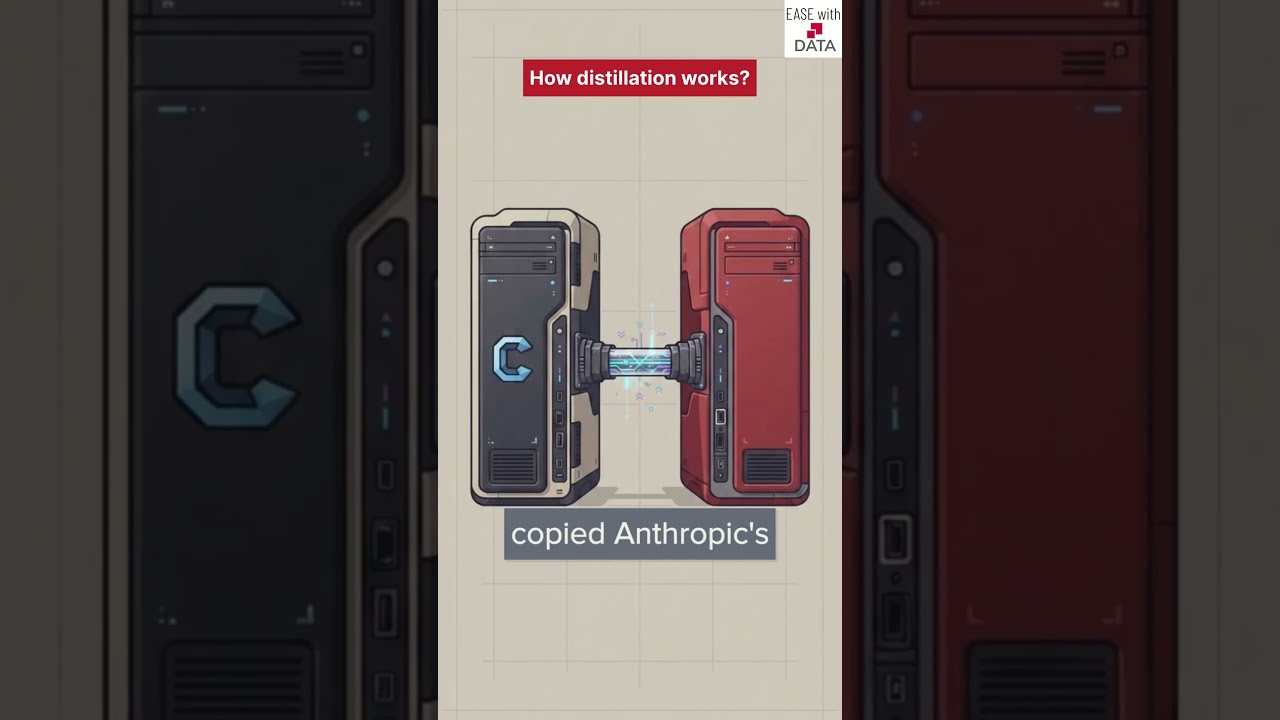
How Distillation Works? #claude #kimik3
Knowledge distillation trains a smaller student AI model by using prompts and reasoning outputs from a larger, more advanced teacher model. This process allows the cheaper student model to replicate the expensive teacher's advanced capabilities at a fraction of the computational cost and without accessing its source code.
The databricks genie ask command is now stable (promoted from experimental), enabling practitioners to ask natural-language questions about their data directly from the CLI. Multiple reliability and usability improvements ship, including auth profile validation timeouts, fixes for GCS-backed UC Volumes deletion, bundle validation for sql_warehouse configurations, opt-in spark_python_task file downloads in bundle generation, and instance_pools resource support in Declarative Automation Bundles.