AI Agents
Recent items mentioning AI Agents across the Databricks ecosystem — releases, news, videos, and community Q&A. Updated hourly.
What is AI Agents?
On Databricks, an AI agent is an LLM application that can reason over your company's data and call tools, built and run inside the same platform that holds the data. The headline product is Agent Bricks, a set of managed agent builders: Knowledge Assistant turns your documents into a domain-specific chatbot through a point-and-click interface, and Supervisor Agent orchestrates other components, including Genie Agents, agent endpoints, Unity Catalog functions, MCP servers, and custom agents.
The hard part of shipping an agent is rarely the first prototype. It's proving answer quality, tracing what the agent actually did, and governing who can call it. Databricks folds those steps into the platform: agents can be registered in Unity Catalog, MLflow handles tracing and evaluation, and you aren't locked into one framework, since code-first agents can be written in Python with any authoring library, including LangGraph, LangChain, OpenAI, and LlamaIndex.
Maturity varies by piece. Knowledge Assistant has been GA since January 2026, while Agent services, the part that registers agents in Unity Catalog, is still in beta. The overall direction is toward agents you configure and the platform optimizes, instead of pipelines you tune by hand.
What is Agent Bricks?
Agent Bricks is the managed agent-builder layer on Databricks. Its current offerings include Knowledge Assistant, which builds and optimizes a domain-specific chatbot over your documents through a configuration interface, and Supervisor Agent, which orchestrates other agents such as Genie Agents, agent endpoints, Unity Catalog functions, MCP servers, and custom agents.
Can I write my own agents in code instead of using Agent Bricks?
Yes. Databricks supports agents authored in Python with any library, including LangGraph, LangChain, OpenAI, and LlamaIndex. You still get the platform services around them, such as MLflow Tracing for end-to-end observability and agent evaluation, regardless of which framework you pick.
What's the difference between Agent Bricks and Genie Agents?
Genie Agents answer natural-language questions about structured data by generating SQL over curated Unity Catalog datasets. Agent Bricks builds task-focused agents, like document Q&A with Knowledge Assistant or multi-agent orchestration with Supervisor Agent. The two connect: Supervisor Agent can call Genie Agents as one of the agent types it coordinates.
Is Agent Bricks generally available?
Partly. Knowledge Assistant reached general availability on January 27, 2026. Other pieces, such as Agent services for registering agents in Unity Catalog, remain in beta, so check the docs page for each component's current status before you build on it.
Sources: Agent Bricks (Databricks docs) · Build gen AI apps and agents (Databricks docs) · Knowledge Assistant GA announcement (Databricks blog)
Teams are treating agent context as governed data: AWS grounded an agent in the dbt Semantic Layer after a plausible revenue query came out $3.5 million wrong 5, while Checkr cut a metrics investigation from hours to minutes with a dbt and Omni context layer 6 and LangChain grew self-serve analytics questions 40x by giving its Hex agent layered context 7. Fivetran's Context Layer pushes this into the warehouse, writing what it learns from sources like Notion, Salesforce, Postgres and dbt into open Agents Schema tables that any AI client can query over MCP 10. Under Armour also ships Snowflake agents as dbt models, so each agent goes through the same code review and CI as every table 8.
Generated daily from the 10 most recent items mentioning AI Agents. Click any [N] to jump to the source.
We wrote about this
- Genie One MCP server: setup and migrationHow to connect Claude Code, Claude, Cursor and ChatGPT to the GA Genie One MCP server, and what to change before the Beta endpoint sunsets on 31 October.14 min read
- Databricks serverless micro apps: what's liveDatabricks serverless micro apps: since September 23, 2026, Genie App Builder apps scale to zero in Beta. Code-first apps can't. The name hasn't shipped.11 min read
- Databricks certification cost, the full list, and where to start16 live credentials, one $200 exam fee, a 14-day retake wait, two-year validity, and which Databricks certification to take first, verified on databricks.com.11 min read
- Databricks put agent skills in Unity Catalog, and gave them two namesA skill is now a catalog object you grant like a table. What the Beta does, the download-versus-live decision it forces, and why the docs cannot decide what to call it.6 min read
unit tests
Hi, we use Databricks, this is not 100% Databricks related, but i wonder, how do you do your unit testing with todays agentic engineering, currently we don't have any skill or rule, or hook that helps AI to write unit tests, so it just writes a lot of bloat unit tests which we do not trust, it has more than 1000 unit tests on 30k lines of code. I see a lot of mentioning mutation testing, did not check that out yet, but in general how do you approach this? Because unit tests should be a useful guardrail for agentic coding. submitted by /u/ptab0211 [link] [comments]
AI Agents Should Not Start Every Conversation From Zero
Agentic code converter is GA for SQL
Migration · GA Agentic code converter is GA for SQL Genie Code converts T-SQL, Snowflake, Redshift, Oracle, BigQuery, and Teradata SQL to Databricks SQL. It validates each file and fixes errors before writing to a workspace folder. Work in a migration project, or run /migrate in a Genie Code chat for one file or folder. Afterward, keep chatting to clear action items. The Notebooks target is not part of this GA. https://preview.redd.it/u5m0quj71fyh1.png?width=1808&format=png&auto=webp&s=1a5f16a1d66fa88e9bc171e10efb16c33dadfa2b Looking to migrate workloads but don't have the labor to do so. This is going to continue to expand its SQL dialect but taking an agentic approach to migrations really speeds up migrations and cuts down on time/money from labor submitted by /u/Wise_Ear_4064 [link] [comments]
 Tutorials
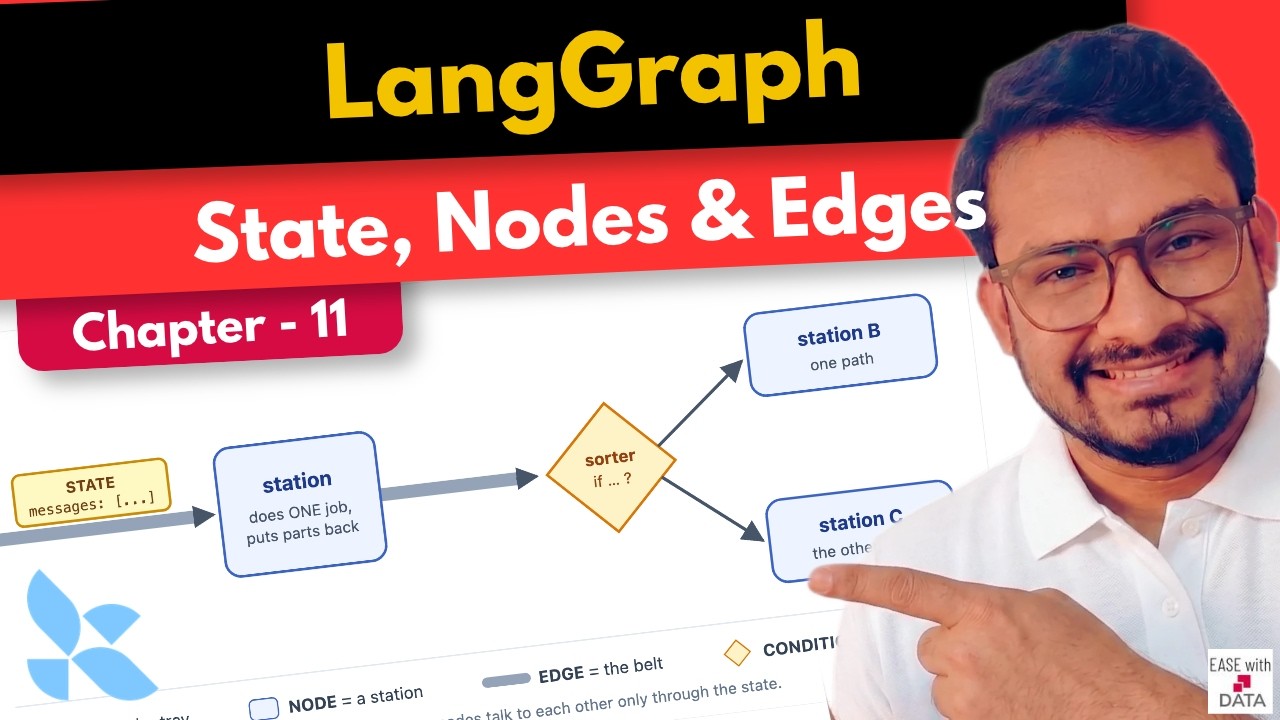
LangGraph Tutorial - State, Nodes and Edges | Chapter 11
LangGraph is introduced as a more controllable alternative to LangChain for building agentic workflows, offering fine-grained control over execution flows. The video demonstrates how to build a basic workflow using state, nodes, and edges in LangGraph.
Why an AI agent's revenue query was $3.5 million wrong, and how AWS fixed it with dbt Semantic Layer
AWS shows how a plausible-looking AI agent revenue query came out $3.5 million wrong, and how grounding the agent in the dbt Semantic Layer prevents that kind of error. The post argues that supplying business context, such as governed metric definitions, is what keeps AI-generated numbers trustworthy.
How Checkr cut an hours-long metrics investigation to minutes by engineering AI context on dbt and Omni
Checkr gave its AI agent a structured context layer built on dbt and Omni, shrinking a support-metric investigation from hours to minutes. The post walks through how engineering that context, rather than relying on the agent alone, made the analysis faster.
How LangChain grew self-serve analytics questions 40x by giving its AI agent layered context
LangChain gave its Hex analytics agent layered context, and self-serve data questions grew 40x, going from occasional to routine. The post walks through how that context-layering approach changed how teams use the agent for everyday analytics.
Ship AI agents like tables: dbt materializations for Snowflake CoWork
Under Armour turned Snowflake AI agents into dbt models using custom materializations, so each agent goes through the same code review and CI process as every table. The post walks through this approach to shipping agents like data assets rather than one-off deployments.
Show HN: 10x faster, 3x cheaper ETL
For the past few months our team has been working on an agentic framework that takes large, expensive SQL workloads and compiles them to Rust, backed by a formal proof of correctness. This is the sort of work I used to do by hand as a systems performance engineer, but now it happens in hours instead of months. We first redid our internal pipelines with this technique and they're now 10x faster and 3x cheaper. Next, we went live with our Snowflake and Databricks SQL customers. They're seeing similar results with critical production workloads that originally cost 6-7 figures per year. We'll be publishing benchmarks and code samples over the coming weeks; for now, you can read a bit more (and watch our anime launch trailer) on the site. Happy to answer questions about how it all works. --- top comments --- [gtirloni] Why was SQL slow? Where did processing shift to?
With great context comes great autonomy
Fivetran Context Layer writes what it learns from knowledge, operational, and analytics sources (like Notion, Salesforce, Postgres, and dbt) into the warehouse as open Agents Schema tables that any AI client can query over MCP, including a glossary and a concept table for company-specific shorthand. The dbt Summit 2026 session argues that a trustworthy agent depends on the context it has before it acts, and a new traces feature shows where an agent's confidence was low or context was missing so analytics teams can correct it.
Why dbt Labs thinks AI agents will finally make the semantic layer stick
dbt Labs' Zach Mandell argues that a second wave of the semantic layer, driven by AI agents, can succeed where the metrics-as-code first wave stalled, since agents multiply the value on offer while per-step errors across multi-step queries make governed, deterministic context a requirement for trust. He outlines four requirements: a native "semantic SQL" interface for BI tools, semantics pushed upstream into transformations, a semantic layer serving as the spine of a broader context layer, and scoped access with observability.
Do any other teams build web apps for fully flexible analytics/reporting?
Databricks dashboards are extremely limiting in their flexibility/capabilities (and I don't see that changing as they pursue everything AI/Agentic) and tools like Power BI have shitty CI/CD processes and still have their visualization limitations. Has anyone moved reporting/analytics to React/App Kit applications on Databricks for greater flexibility and ease of CI/CD? submitted by /u/TheOnlinePolak [link] [comments]
Unify your productivity and AI data with Lakeflow Connect
Lakeflow Connect now offers native, fully managed connectors for Atlassian (Jira, Confluence), Microsoft SharePoint, Google Workspace (Drive, Outlook, Gmail), GitHub, and AI providers like OpenAI and Anthropic, with unified governance and no infrastructure to manage. Because both structured and unstructured data land directly in Unity Catalog, teams can power enterprise knowledge bases, AI agents, and developer productivity dashboards without building custom API integrations or pipelines.
What Okta learned governing context for AI agents at scale
Okta moved its AI agent context out of the Snowflake UI and into dbt, using a three-layer framework of agent metadata in model YAML, markdown context docs, and semantic views in dbt's semantic layer spec, all shipped through normal pull requests. The context syncs into Agents Schema, so Claude (over MCP) and Snowflake Cortex read the same governed rules, and an analytics engineer fixes a wrong answer by merging one change that every agent inherits.
Inside dbt Wizard, the AI agent built to show its work
dbt Wizard, an AI agent for dbt work, validates its own output before any code reaches production. The post features its designer and engineering lead explaining how the agent is built to show its work along the way.
 Tutorials
Lakebase Search: Build AI Retrieval for Agents with Lakebase Postgres
Lakebase Postgres introduces lakebase vector and lakebase text extensions to support hybrid search for AI agents. It leverages the Databricks Lakehouse architecture to synchronize and index data for efficient vector and full text search without requiring external databases.
 Tutorials
Governing AI Agents with Unity Catalog and Unity Gateway on Databricks | Unity Catalog Demo
The video demonstrates how to govern AI agents using Unity Catalog and Unity Gateway on Databricks. It shows setting up access policies, user defined functions, and role filters to control data and model interactions.
How Ramp's internal AI agents crossed a million sessions
Ramp built its internal AI agents, sandboxes, and dashboards by treating internal AI as an analytics engineering problem, and the system has now passed a million sessions. This post walks through that approach so Databricks practitioners can see how the same discipline applies to running agents at scale inside their own organizations.
From prompt to PR: how Careem’s AI writes and validates dbt models before a human ever sees them
Careem's data platform team built a four-pillar dbt agent (context layer, spec locking, golden vs. transient layers, sandboxed guardrails) that compiles, tests, and materializes each change, self-correcting until the run succeeds before a human reviews the pull request. About 90% of new models now come from this framework, cutting metric delivery from two to three weeks to hours with no sev0 or sev1 incidents since launch.
How to solve dashboard debugging in six minutes with an MCP-connected AI agent
An MCP-connected AI agent used dbt lineage from inside the BI layer to resolve three dashboard data mysteries in about six minutes. The post walks through how that lineage access shortens dashboard debugging to roughly the length of a coffee break.
How a data scientist at Kilo built the business context layer his AI agents were missing
A data scientist at Kilo built an AI context layer that captures organizational knowledge a dbt project alone can't hold, giving AI agents the business context they were missing. The post walks through how that layer works and why dbt models by themselves fall short for agent-driven analytics.
What a swarm of rogue AI agents can teach us about having better ideas
Benn Stancil uses the Hugging Face hack, in which a swarm of rogue AI agents got loose, to argue that the most useful ideas come from unexpected, weird connections rather than obvious ones. It's a thought-provoking read for data and AI practitioners on why better ideas depend on the odd links between things.
Meta:Context: a business context schema in dbt's semantic layer
Green Dot built Meta:Context, a five-layer business context schema inside dbt's semantic layer, so AI agents get more than a metric's value. The schema also carries what the number means, which gives agents the business context to interpret it correctly.
When skills meet scale: an agent assembly line for dbt
Riot Games built an AI agent assembly line that models 129 billion Wild Rift events in dbt without hand-coding each model. The post shows how agent skills can scale analytics engineering across a dataset of that size.
The media industry is becoming a prediction economy
Media and advertising are shifting from counting attention to predicting and proving outcomes, which makes performance a leading indicator rather than a lagging one. Agents and measurement stall on fragmented data (only 3% of CMOs can tie half their marketing to a business outcome), so the post argues for one governed data and AI foundation built on context (CustomerLake, Genie, Lakebase), control, cost, and choice (Unity Gateway), and cites a pet specialty retailer that saw a 12% lift in transactions after activating loyalty data with agents.
Enterprise Data with AI Agents: A Data Platform Guide
submitted by /u/codingdecently [link] [comments]
Test on a Branch, Not on Patients: Agentic Drug Substitution with Lakebase
AI Agent Memory
Databricks supports agent memory storage. The amazing part is that Lakebase stores the memory, so we can also inspect the saved record. We can save "User prefers Mexican recipes" and recall it through a client with the question "What should I cook for dinner?" more news https://medium.com/databrickscommunity/databricks-news-genie-cli-app-builder-agent-memory-dabs-41820427fcc2 submitted by /u/hubert-dudek [link] [comments]
Agent Bricks: Production Ready AI Agents on your Enterprise Data
 Releases
Can AI Really Model Your Data in Hours? Databricks Vibe Modeling
Databricks Vibe Modeling enables businesses to build an enterprise-ready silver layer using AI agents guided by plain-language descriptions and domain taxonomies. The approach streamlines data modeling by automating the creation of schemas, entity relationships, and documentation, allowing teams to iterate on and validate data models in hours instead of months.
The Fraud Analyst AI Coworker: Detecting Telecom Fraud in Real-Time on One Platform
Databricks Lakebase, Databricks Apps, and Genie combine into a single fraud detection stack for telecom, with Lakebase removing the analytical/transactional split for faster data sync, Apps powering a custom case-management workbench, and Genie acting as an AI coworker that answers natural-language questions over governed fraud data. The post argues that real-time network telemetry strengthens fraud models as attackers use agentic AI at machine speed, and the Telecom Fraud Prevention Solution Accelerator deploys the risk engine, workbench, and investigation agent via Databricks Asset Bundles, adaptable to other industries.
 News
Building Reliable Data Pipelines with Lakeflow on Databricks | Lakeflow Demo
Databricks Lakeflow provides a data intelligence platform for building and managing reliable data pipelines. The demonstration covers creating delta tables, ingesting data from Salesforce using Lakeflow Connect, and using Lakeflow Designer for data transformation and orchestration.
 Tutorials
Building an Agentic Analytics Foundation on the Lakehouse
The video demonstrates how to build an agentic analytics foundation on the Databricks lakehouse platform to ensure AI agents are accurate, secure, and scalable. It explains how to organize data assets into business domains, define metric views, and use Unity Catalog and Unity Gateway for governance and guardrails.
Free live session on Kafka as the event log for AI agent memory
submitted by /u/DeepEngineeringPackt [link] [comments]
MemCurrent: Designing Persistent Memory for Production Agents
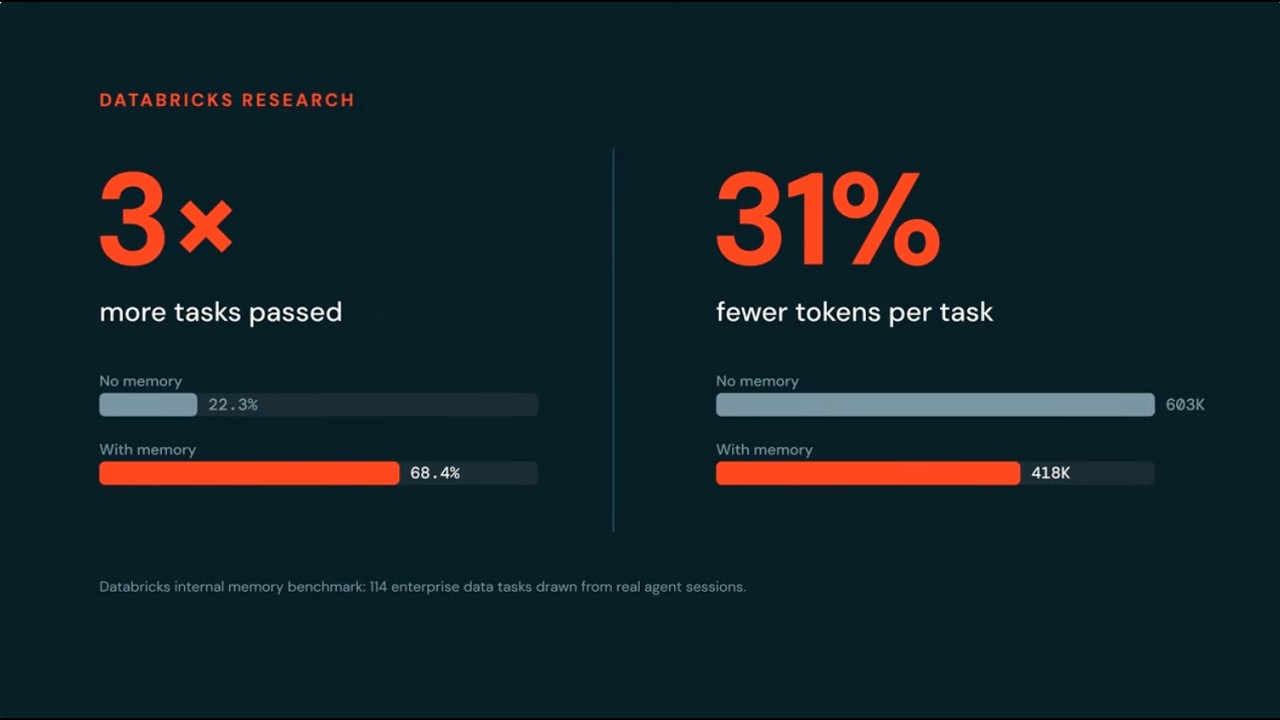
MemCurrent is a persistent memory architecture for production agents, now powering Agent Bricks Memory and Genie, that combines agent-written memory with an offline "dreaming" pipeline that consolidates, deduplicates, and resolves conflicts in a structured knowledge base. On Databricks' internal benchmark built from real Genie conversations, it triples the agent's pass rate versus no memory while using 31% fewer tokens and running 26% faster, outperforming Mem0, PropMem, and OpenClaw memory.
Introducing Agent Memory on Databricks
Agent Memory is now in Beta on Agent Bricks, giving agents a Lakebase-backed store for facts, preferences, and workflows, built on Databricks Research's MemCurrent architecture, which combines plugins, on-demand tools, and an offline "dreaming" pipeline. In Databricks' internal benchmarks on enterprise tasks, it tripled agent pass rate while using 31% fewer tokens, and the Agent Bricks CLI can deploy an agent with memory and sessions in minutes.
How Hamlet uses Databricks Lakebase Postgres to test changes against production data
Hamlet gives every pull request its own Lakebase Postgres branch of production data, so engineers can reproduce and test fixes against the exact data that caused a bug without touching production. AI coding agents run the pipelines and check their work on each branch before a person approves the merge, and Hamlet is now exploring Lakebase Search, branching for object storage, and a home for longer agentic jobs.
 Tutorials
How to Build Customer 360 Profiles with AI | CustomerLake Profile Agents Demo
CustomerLake profile agents uses AI to ingest new data sources and define identity resolution matching rules. The system normalizes data and launches runs to create unified customer profiles.
CustomerLake enters Beta: Leading enterprises going live with the Agentic CDP
CustomerLake's Agentic CDP is now in Beta with Campaign Agents and in Private Preview with Profile Agents, bringing audience building, activation, personalization, and Customer 360 into the governed Databricks Data + AI platform. Early customers report cutting audience turnaround time by 90%, becoming audience-ready in 2 hours instead of 2–3 months, a potential 40% reduction in CDP total cost of ownership, and a 10-point lift in conversion rates.
 Releases
Introducing Agent Memory on Databricks
Databricks announced Agent Memory, a new tool for Agent Bricks that allows AI agents to store and recall past conversations and user data using lakebase architecture. By connecting session stores and memory stores through automated memory pipelines, agents can retain context across multiple sessions to improve task performance and reduce token usage.
 Tutorials
Building Production-Ready AI Agents on Databricks | Agent Bricks Demo
Building production ready AI agents on Databricks involves a six step workflow spanning vector search indexing, agent as code, MLflow tracing, Unity Catalog registration, evaluation, and deployment with review apps. MLflow tracing and evaluation metrics help monitor agent execution steps, relevance, safety, and topic adherence in real time.
 News
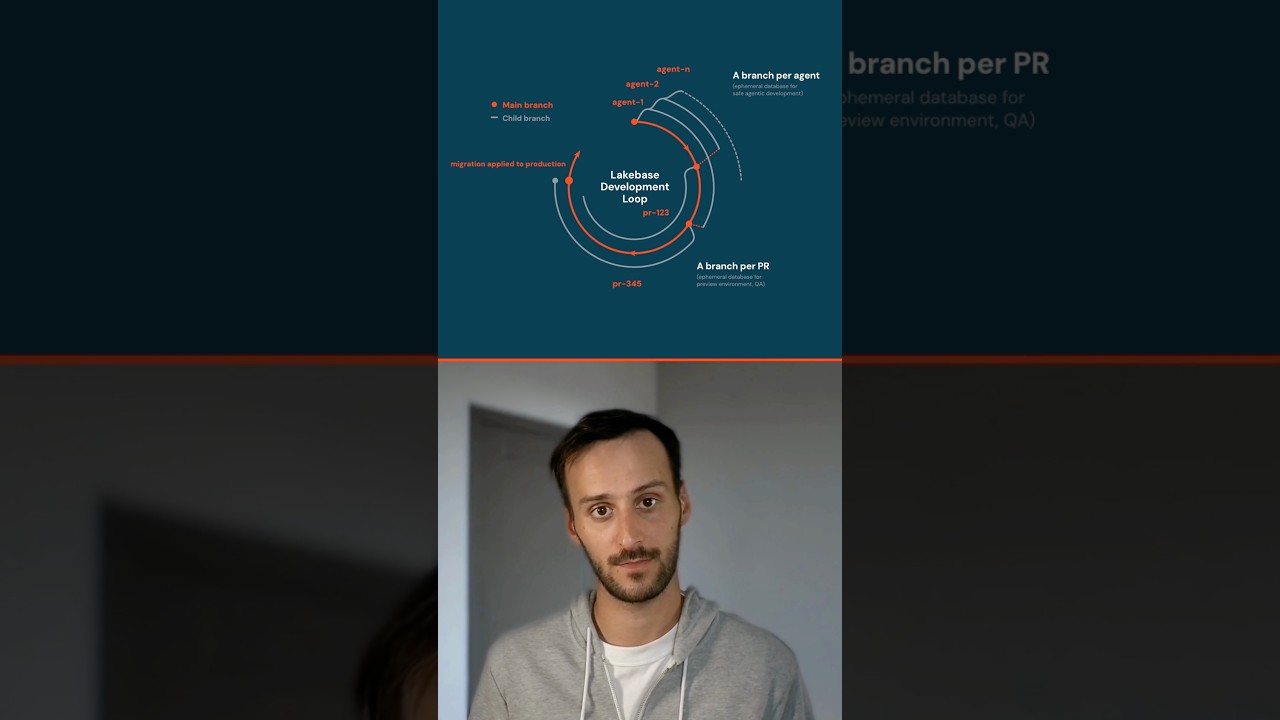
Shorts extracted from Parallel Coding Agents with Lakebase
Coding agents can use git worktrees and branch databases to work safely in parallel. This allows multiple agents to test features against isolated database branches without interfering with production or each other.
Databricks Is Doubling Down On New York City As A Premier AI Talent Hub
Databricks is doubling its New York City office footprint to 120,000 square feet at 5 Bryant Park, adding a dedicated Engineering and Research floor alongside an Executive Briefing Center. The expanded location will house teams driving enterprise AI research, infrastructure such as Unity Gateway, and agentic applications like CustomerLake.
 News
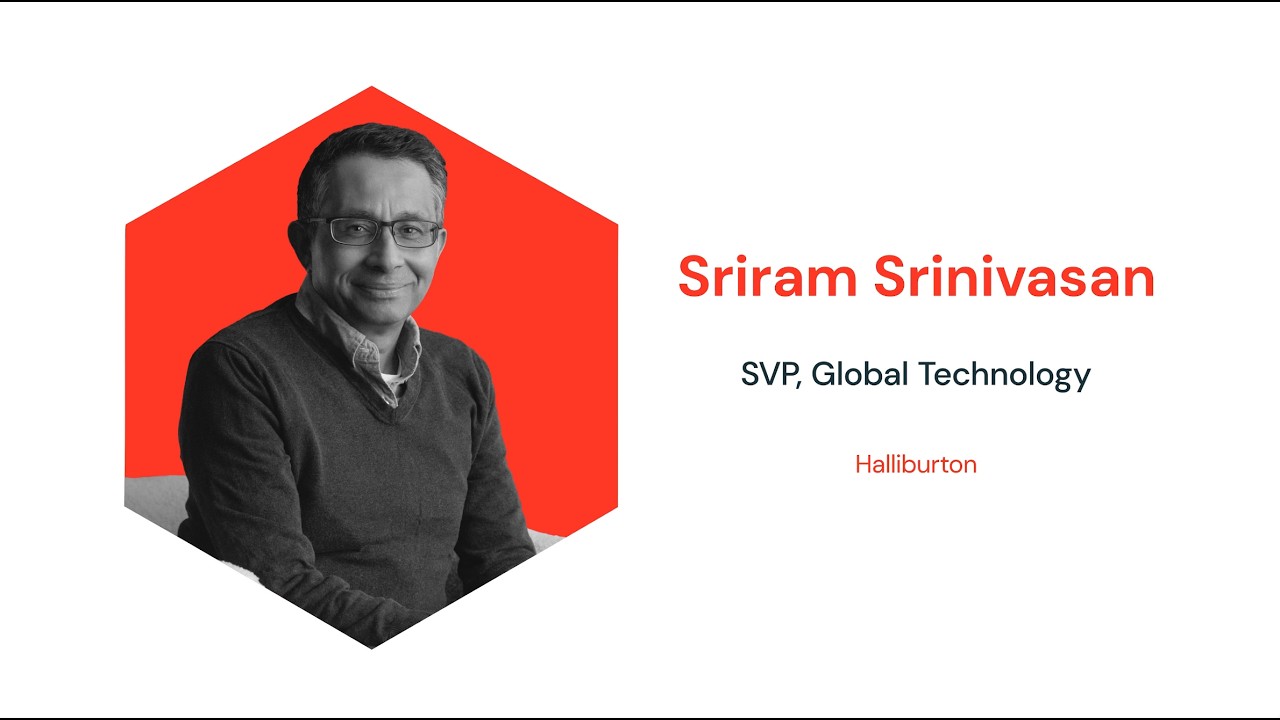
Why Halliburton's SVP of Technology Says Don't Start With AI | Sriram Srinivasan, Halliburton
Halliburton SVP of Global Technology Sriram Srinivasan advises executives to prioritize business use cases, data readiness, and domain context before adopting AI. He explains how Databricks tools help Halliburton manage massive amounts of operational data and previews the future of AI as a collaborative coworker and physical operator.
From Excel to AI Agents: The Evolution of BI Explained
 Tutorials
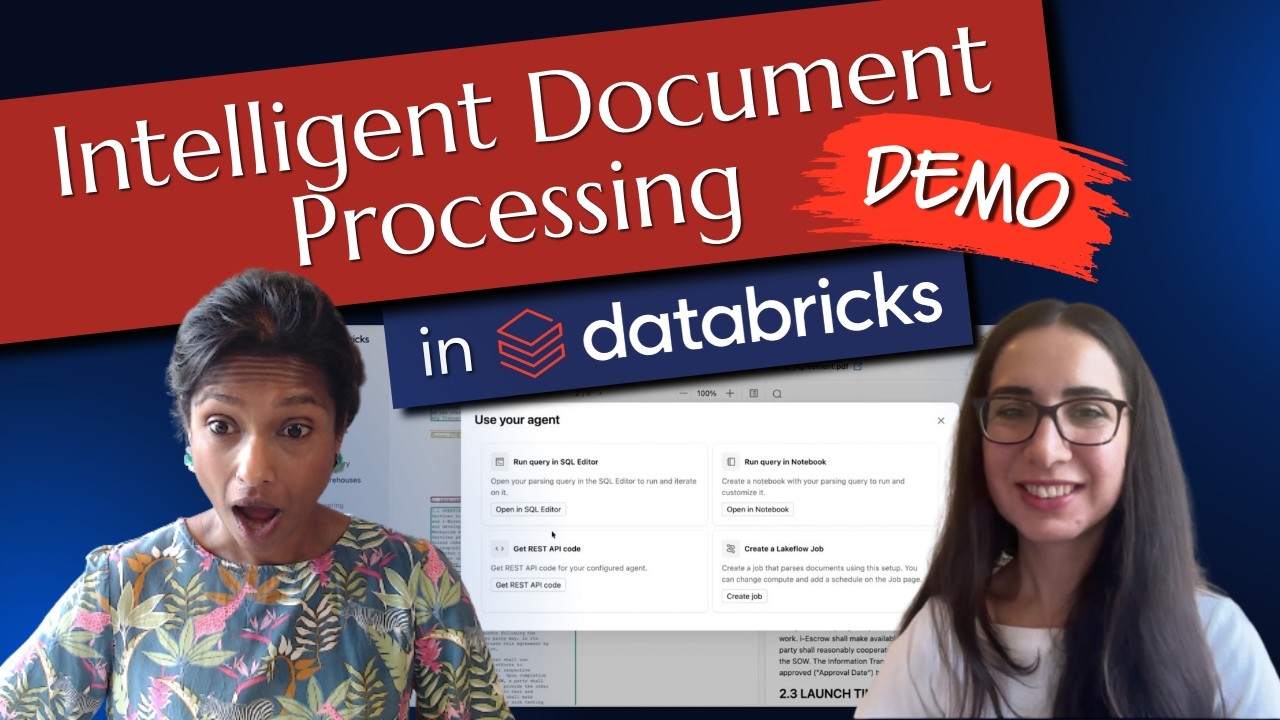
Demo: Intelligent Document Processing in Databricks | Feat. Databricks' Sepi
The video demonstrates how to use Databricks for intelligent document processing by parsing, classifying, and extracting information from documents using AI functions. It shows an end-to-end workflow where documents are uploaded to a volume, parsed, classified by type, and used for data extraction and automated workflows.
Power real-time applications and agents with Document Intelligence
Document Intelligence real-time REST APIs enable applications to parse, classify, and extract information from documents as they arrive rather than relying on delayed batch pipelines. You can embed these APIs directly into Databricks Apps or custom agents to power interactive workflows and drive real-time business decisions.
Why AI agents cause connection exhaustion in PostgreSQL (and how we fixed it with 17 connections)
submitted by /u/Abdullahsaif-code [link] [comments]
Announcement | Lakebase and Agentic SDLC: Branching Databases for Coding Agents
Everyone's adopting AI agents. Almost no one can prove the ROI. Here's why
The enterprise AI ROI gap stems from a disconnect between software buyers and actual users, alongside ongoing trial-and-error to find viable use cases. Driving measurable value requires grounding AI agents in your organization's specific data, history, and business constraints so they deliver actionable decisions rather than generic advice.
Databricks is a Visionary the Gartner® Magic Quadrant™ for Analytics and Business Intelligence Platforms
Databricks achieved the highest debut performance in the 20-plus-year history of the Gartner® Magic Quadrant™ for Analytics and BI Platforms, earning recognition as a Visionary with one of the highest scores for Completeness of Vision. Explore how Databricks AI/BI, Genie, and the Data + AI Platform are driving the market shift toward converged platforms, agentic analytics, and centralized semantics.
 News
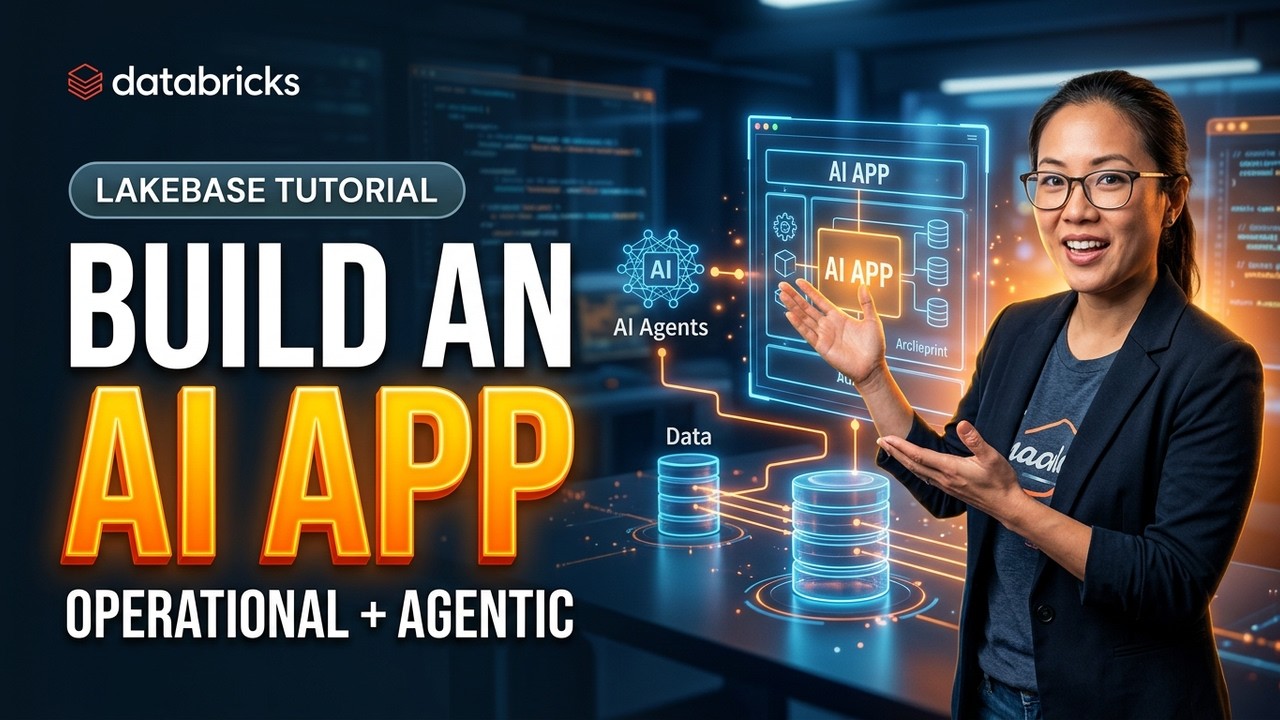
Building on Lakebase | Episode 2: Anatomy of an AI app: build the operational + agentic app
This video demonstrates the architecture and deployment of a customer support AI co-pilot built as a Databrics app backed by Lakebase. It walks through configuring a transactional operational store, hybrid search, managed agent memory, and MLflow tracing to power an interactive agentic application.
 News
Agent Bricks: The Agent Developer Platform | Overview
Databricks introduces Agent Bricks, a developer platform that provides infrastructure components for building, deploying, and scaling AI agents. The platform features flexible hosting, a unified API for model routing, secure sandboxes, managed memory, and tools for real-time tracing and evaluation.
Single DAB covers your entire agentic app architecture on Databricks
 News
How HelloFresh Optimizes 100% of Meta Ad Spend With Genie Agents on Databricks
HelloFresh uses Databricks Genie agents and Unity Catalog to optimize 100 percent of its Meta advertising spend and break down internal data silos. This data infrastructure reduces weekly maintenance and reconciliation hours significantly while accelerating ad testing and campaign launches.
Run Google Dataproc (Managed Spark) on local, for offline dev, CI, and AI agent testing (multi-arch, zero cloud cost)
may of us, have multiple versions of spark installed just to match cloud :) , this should help. submitted by /u/jseeker528963 [link] [comments]
Beyond Chat History: Designing Portable Memory and Decision Boundaries for Enterprise AI Agents
Lakebase and Agentic SDLC: Branching Databases for Coding Agents
Lakebase resolves the database bottleneck for parallel coding agents by providing sub-second, scale-to-zero copy-on-write database branching for each agent. Learn how to implement an end-to-end workflow pairing Claude Code, Git worktrees, and GitHub Actions to run Drizzle migrations, deploy preview environments on Databricks Apps, and test against Unity Catalog-masked data.
 News
Building on Lakebase | Episode 1: Meet Lakebase
Lakebase is a fully managed serverless PostgreSQL database from Databricks that disaggregates storage and compute for variable AI and operational workloads. The video demonstrates provisioning a Lakebase project, creating operational tables, and syncing curated Lakehouse data to build the foundation for an agentic support co-pilot.
Recommendations for limiting spend on a pay-as-you-go account
Do you have any advice to limit spend in Databricks as a personal user? I'm trying to understand gotchas on a pay-as-you-go account. It's to try out the generative ai features in particular (knowledge assistant, ai endpoint, agent bricks, among others). The ideal would be "no more than X concurrent DBU consumption" policy across the board, but I'm not seeing that. I'm coming up against limits of Databricks free edition for those features, so was wanting to set up a pay-as-you-go account, but while reading, I'm seeing more and more ways to spend money in the platform. On Fabric it was a single F2 capacity I could start and stop. Databricks has serverless in like 5 spots so far that I've seen, and I'm trying to understand what my spend risk is before I sign up. I had a trial a year ago that's expired. Also knowledge assistant isn't available on the trial. My worry is that while doing the study guides, it ends up that I have 10 different 4-6 DBU serverless endpoints that run for 2 days before the billing catches up. $20 is fine, $200 is annoying, $2000 is unacceptable. submitted by /u/NiceTryAmanda [link] [comments]